
A Complete Guide to HVAC Refrigerants (Types, Uses, Safety & Future Trends)
HVAC refrigerants are the lifeblood of modern air conditioning and refrigeration systems. Whether you’re a homeowner, technician, or HVAC dealer, understanding refrigerants is essential for efficient cooling, regulatory compliance, and long-term sustainability.
This covers everything. It explains the basics and types. It also covers environmental impact, regulations, retrofitting, and future trends.
What Are HVAC Refrigerants?
HVAC refrigerants are specialized fluids used in cooling systems to absorb heat from indoor air and release it outside, enabling temperature control.
They work through phase changes:
- Liquid → absorbs heat → becomes gas
- Gas → releases heat → becomes liquid
This continuous cycle is what powers air conditioners, refrigerators, and heat pumps.
How Refrigerants Work in HVAC Systems
The Refrigeration Cycle (Simplified)
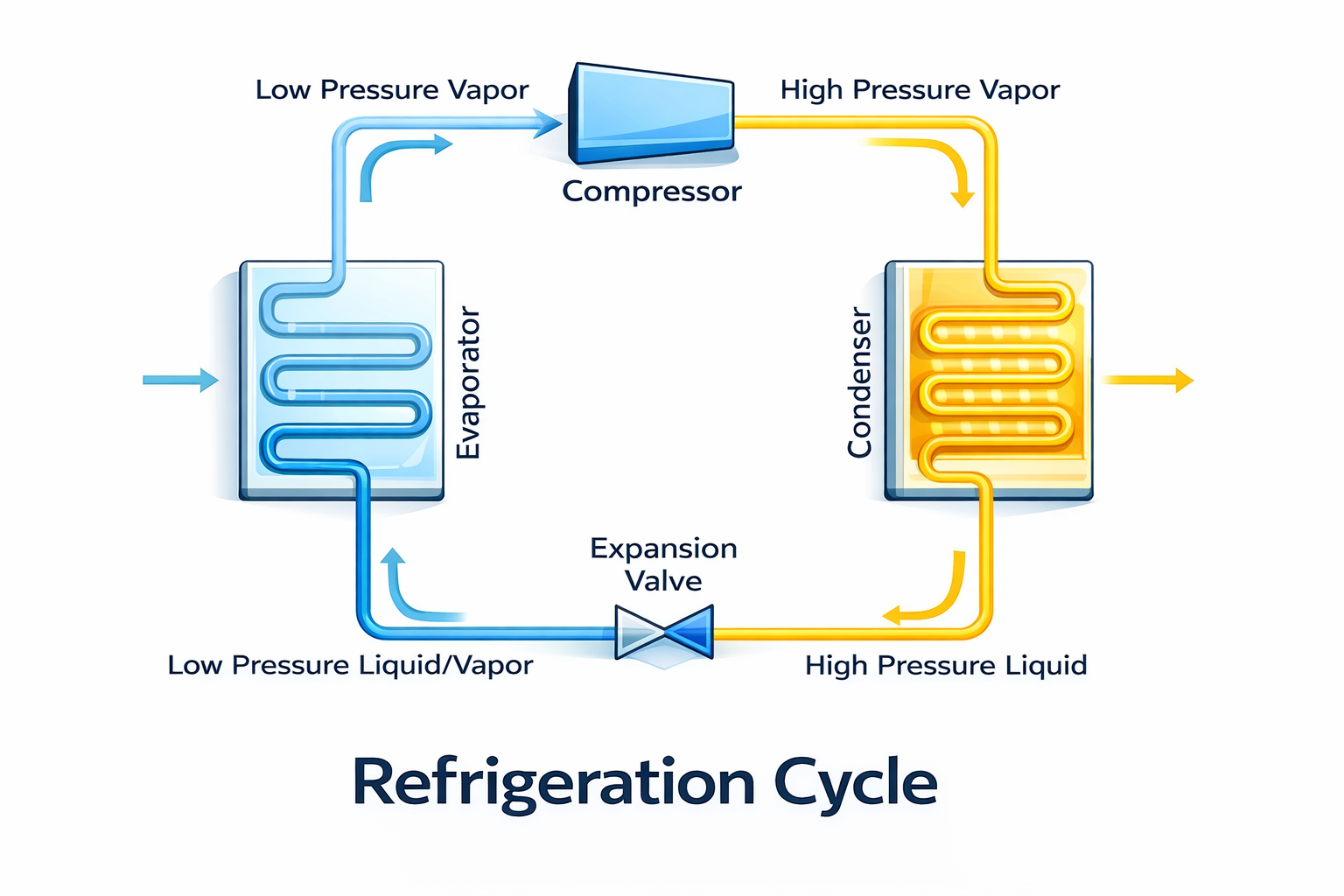
The refrigeration cycle consists of four key components:
1. Evaporator Coil
- Refrigerant absorbs heat from indoor air
- Converts from liquid to gas
2. Compressor
- Compresses refrigerant gas
- Increases temperature and pressure
3. Condenser Coil
- Releases heat outdoors
- Converts gas back to liquid
4. Expansion Valve
- Reduces pressure
- Prepares refrigerant for next cycle
Types of HVAC Refrigerants
1. Chlorofluorocarbons (CFCs)
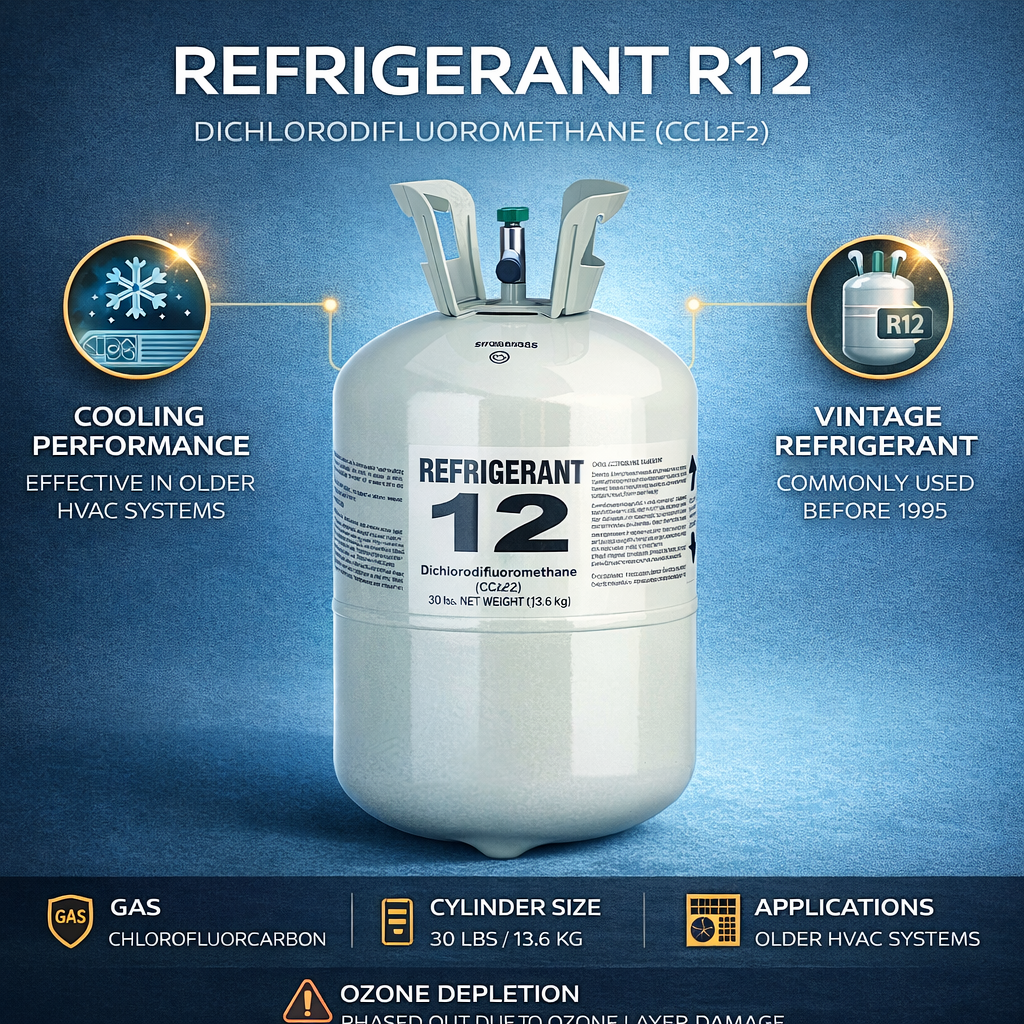
- Example: R-12
- Highly harmful to ozone layer
- Now banned globally
2. Hydrochlorofluorocarbons (HCFCs)
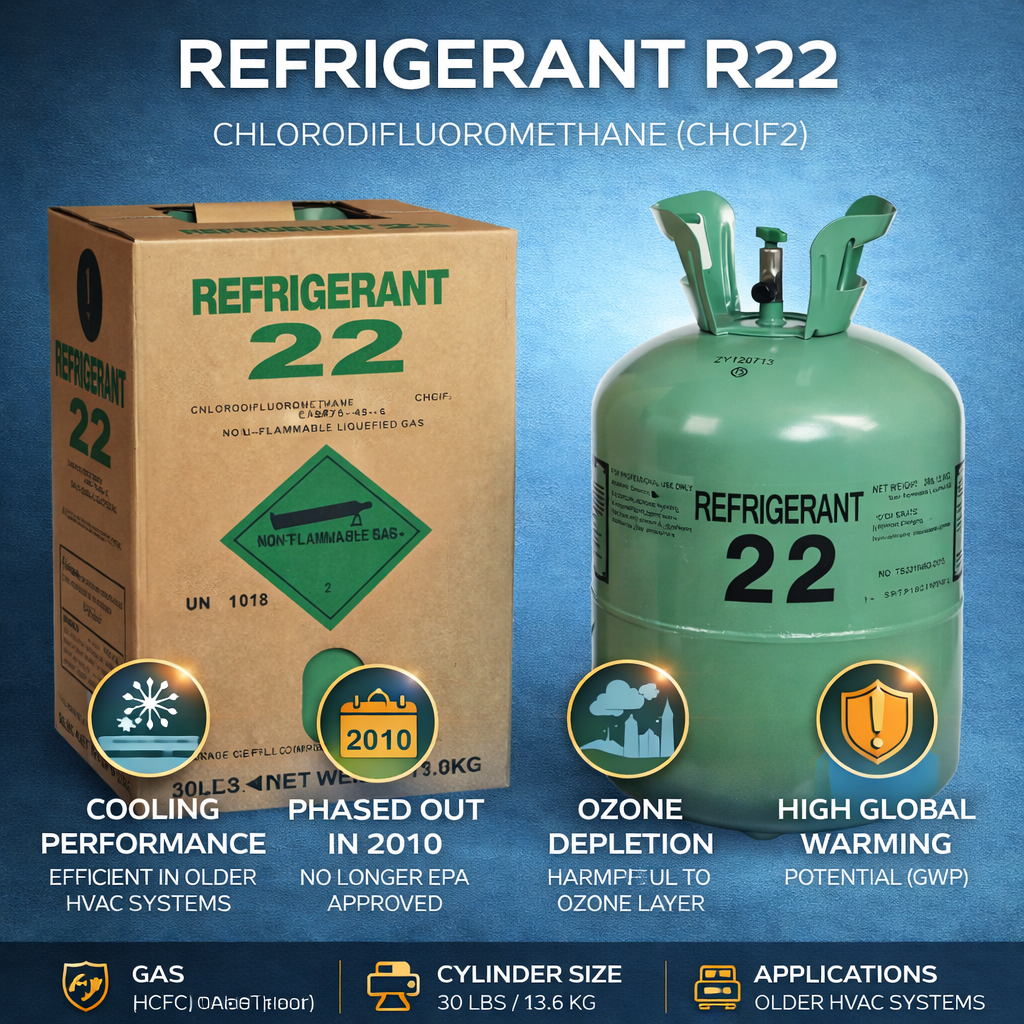
- Example: R-22
- Less harmful than CFCs but still ozone-depleting
- Being phased out worldwide
3. Hydrofluorocarbons (HFCs)
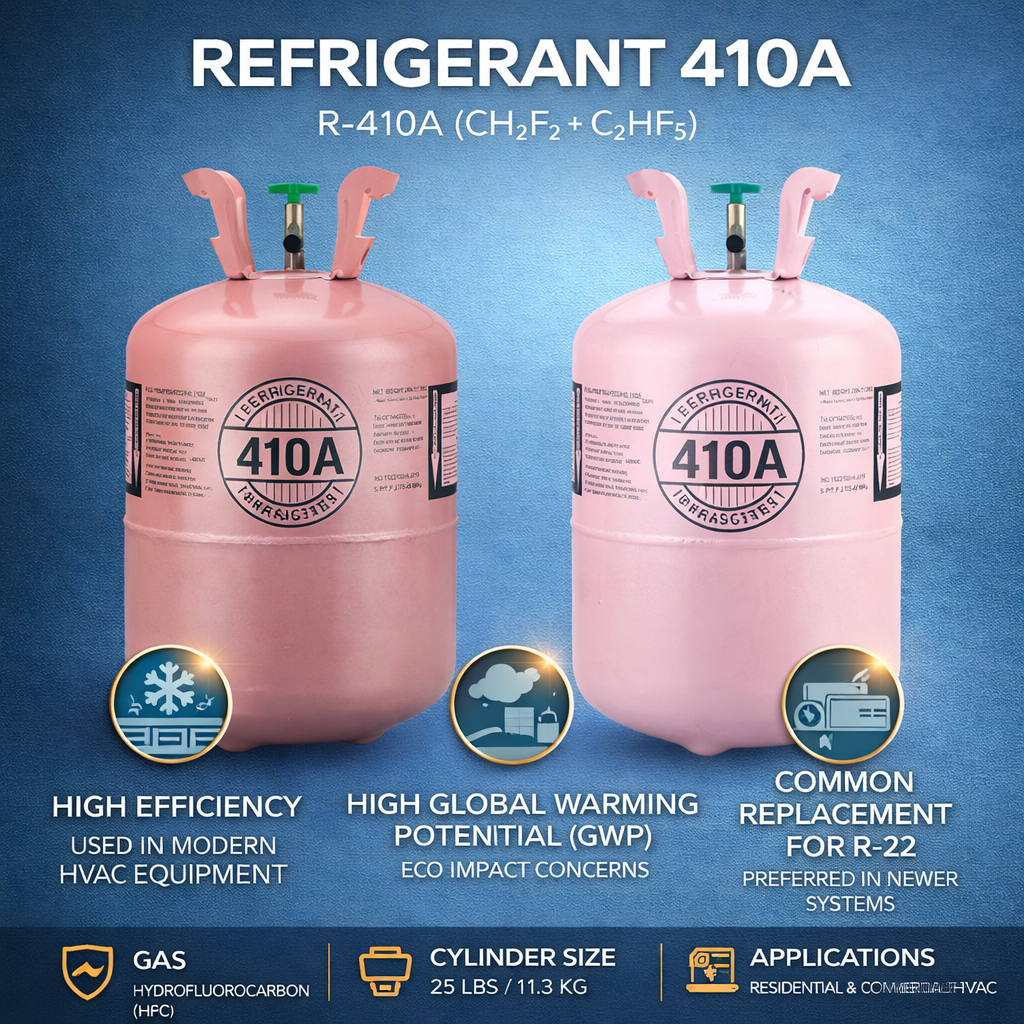
- Examples: R-410A, R-134a
- No ozone depletion
- High global warming potential (GWP)
4. Hydrofluoroolefins (HFOs)
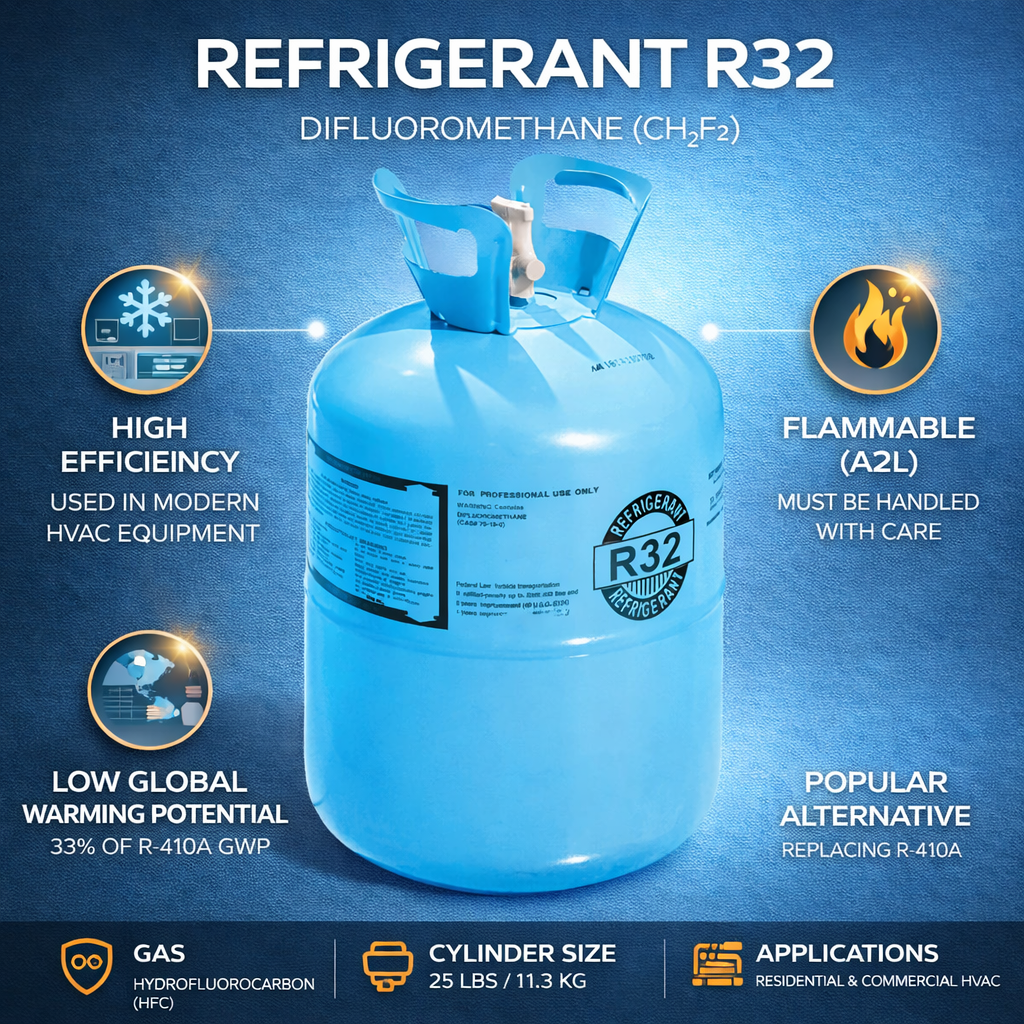
- Examples: R-32, R-1234yf
- Low GWP
- Environmentally friendly
5. Natural Refrigerants
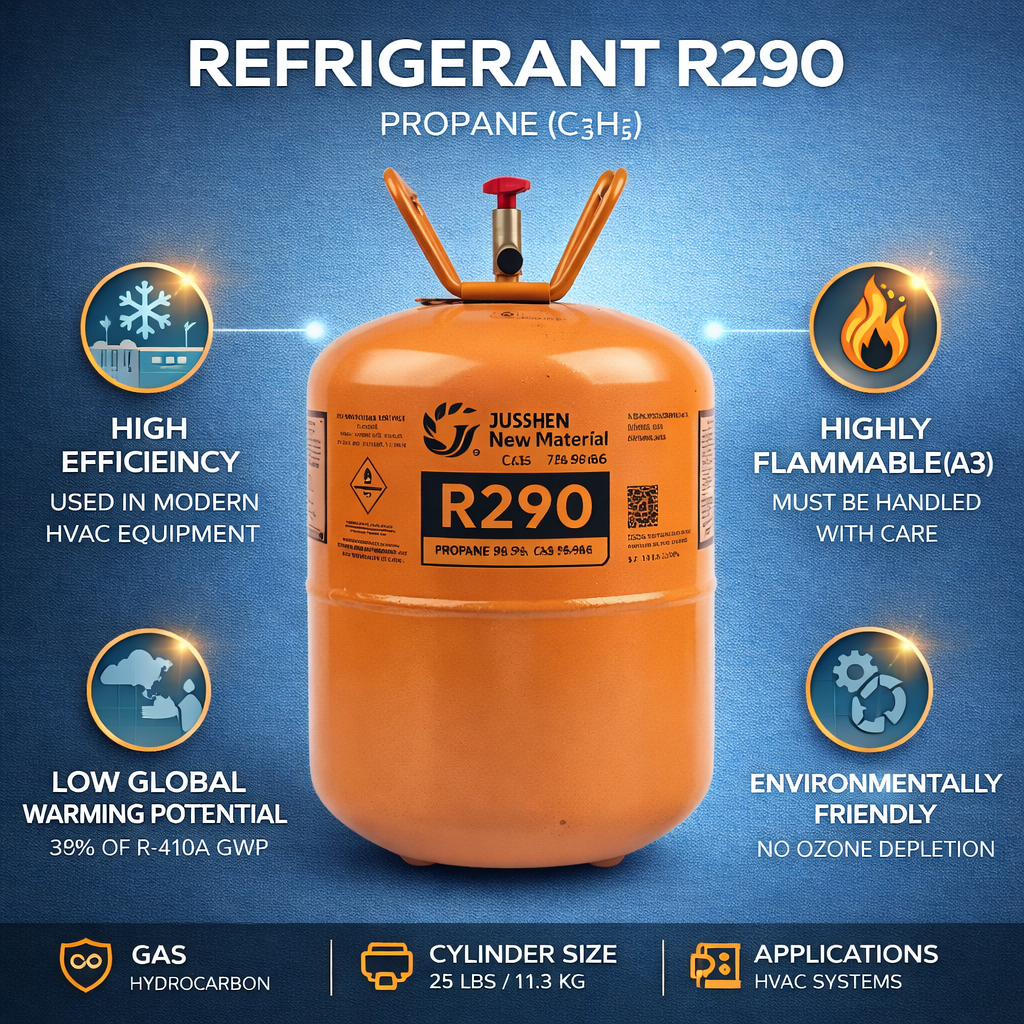
- Examples:
- CO₂ (R-744)
- Ammonia (R-717)
- Propane (R-290)
- Highly efficient
- Low environmental impact
- Some are flammable or toxic
Most Common Refrigerants Used Today
| Refrigerant | Type | Usage |
|---|---|---|
| R-22 | HCFC | Old AC systems |
| R-410A | HFC | Modern split AC |
| R-32 | HFO/HFC | Inverter AC |
| R-134a | HFC | Refrigerators, cars |
| R-290 | Natural | Eco AC systems |
Why Refrigerants Matter in HVAC
Refrigerants directly impact:
Cooling Efficiency
Better refrigerants = faster cooling, less energy
Environmental Impact
Some refrigerants harm ozone or contribute to global warming
Operating Cost
Efficient refrigerants reduce electricity bills
System Lifespan
Wrong refrigerant can damage compressors
Environmental Impact of Refrigerants
Ozone Depletion Potential (ODP)
- CFCs & HCFCs damage ozone layer
Global Warming Potential (GWP)
- HFCs contribute to climate change
Global Regulations on Refrigerants
Montreal Protocol
- Phased out CFCs and HCFCs
Kigali Amendment
- Targets reduction of HFCs
Refrigerant Phase-Out Timeline (Simplified)
- CFCs → Fully banned
- HCFCs (R-22) → Phase-out ongoing
- HFCs → Gradual reduction
- HFOs & natural refrigerants → Future
R-22 vs R-410A vs R-32 (Comparison)
| Feature | R-22 | R-410A | R-32 |
|---|---|---|---|
| ODP | High | 0 | 0 |
| GWP | Medium | High | Low |
| Efficiency | Medium | High | Very High |
| Status | Phasing out | Widely used | Future-ready |
Refrigerant Safety Classifications
ASHRAE classifies refrigerants based on:
Toxicity
- A: Low toxicity
- B: High toxicity
Flammability
- 1: Non-flammable
- 2L: Mildly flammable
- 3: Highly flammable
Example:
- R-410A → A1 (safe)
- R-32 → A2L (mildly flammable)
Refrigerant Charging Methods
1. Superheat Method
Used for fixed orifice systems
2. Subcooling Method
Used for TXV systems
3. Weighing Method
Most accurate method
Signs of Low Refrigerant
- Poor cooling
- Ice formation on coil
- High electricity bills
- Hissing sound (leak)
Refrigerant Leak Detection Methods
- Soap bubble test
- Electronic leak detector
- UV dye method
Refrigerant Recovery & Recycling
Proper handling is critical:
- Use recovery machines
- Store in approved cylinders
- Avoid venting (illegal)
Future of HVAC Refrigerants
Key Trends:
- Low GWP refrigerants
- Natural refrigerants adoption
- Smart HVAC systems
- AI-based energy optimization
Best Refrigerant for Modern AC Systems
Currently:
- R-32 is becoming most popular
- Better efficiency
- Lower environmental impact
HVAC Dealer Insights (For Your Business)
Since you are an HVAC dealer, here’s a business advantage section:
High Demand Opportunities
- R-32 inverter AC sales
- Retrofit services
- Refrigerant recovery services
Upselling Ideas
- Annual maintenance contracts
- Leak detection services
- Energy-efficient upgrades
Common Mistakes to Avoid
- Mixing refrigerants
- Using wrong refrigerant
- Overcharging system
- Ignoring leaks
Frequently Asked Questions (FAQs) – HVAC Refrigerants
1. What is an HVAC refrigerant?
An HVAC refrigerant is a special fluid used in air conditioning and refrigeration systems to absorb and release heat. It enables cooling by continuously cycling between liquid and gas states.
2. How do refrigerants work in an AC system?
Refrigerants absorb heat from indoor air in the evaporator coil, then get compressed and release that heat outside through the condenser. This cycle repeats to maintain cooling.
3. What are the most common HVAC refrigerants?
Common refrigerants include:
- R-22 (older systems)
- R-410A (modern ACs)
- R-32 (energy-efficient systems)
- R-134a (refrigerators and cars)
- R-290 (eco-friendly option)
4. Why is R-22 being phased out?
R-22 is being phased out because it damages the ozone layer. Environmental regulations worldwide are replacing it with safer alternatives.
5. Which refrigerant is best for modern AC systems?
R-32 is currently one of the best options due to its higher efficiency, lower environmental impact, and better cooling performance.
6. What is the difference between R-410A and R-32?
R-32 has:
- Lower global warming potential (GWP)
- Higher energy efficiency
- Better heat transfer
Compared to R-410A, it is more environmentally friendly.
7. Can refrigerants be mixed?
No, refrigerants should never be mixed. Mixing can damage the compressor, reduce efficiency, and create safety hazards.
8. What are the signs of low refrigerant in an AC?
Common signs include:
- Weak cooling
- Ice formation on coils
- Increased electricity bills
- Hissing or bubbling sound (possible leak)
9. Are modern refrigerants environmentally friendly?
Yes, newer refrigerants like R-32 and natural options (R-290, CO₂) have lower environmental impact compared to older ones like R-22.
10. What is the future of HVAC refrigerants?
The future focuses on:
- Low GWP refrigerants
- Natural refrigerants
- Energy-efficient HVAC systems
- Eco-friendly cooling technologies
Conclusion
HVAC refrigerants are evolving rapidly due to environmental regulations and technological advancements. From harmful CFCs to eco-friendly HFOs and natural refrigerants, the industry is moving toward sustainability.
Understanding refrigerants helps you:
- Choose the right AC
- Improve efficiency
- Stay compliant
- Grow your HVAC business
One Response