
HVAC Tools List
Home > HVAC Tools List
Heating, Ventilation, and Air Conditioning (HVAC) technicians rely on a wide range of specialized tools to install, repair, and maintain HVAC systems.
From diagnosing electrical problems to measuring refrigerant pressure, having the right HVAC tools ensures efficient and safe work.
All Services
- AC Installation
- Heating Service
- Heat Pump
- Furnace
- Air Conditioning
- A/C Repair
need any help ?
24/7 direct call
0800-0392-000
24/7 direct call
hvacinexpert@gmail.com
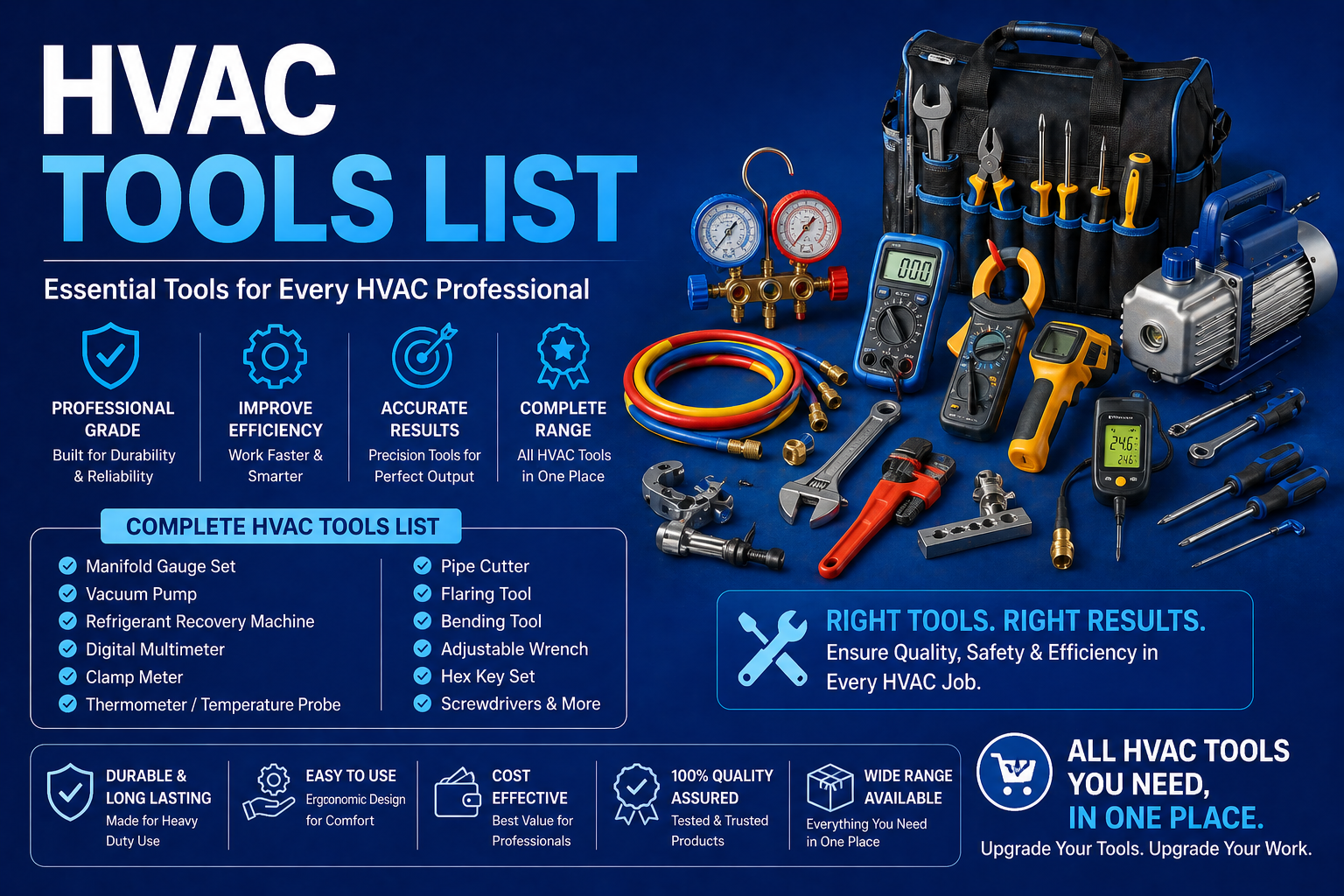
HVAC Tools List (2026) – Must-Have Tools for Every Technician
If you’re serious about building a successful HVAC career or business, having the right tools is non-negotiable. Whether you’re installing AC units, repairing systems, or handling refrigerant charging, your efficiency and income depend heavily on your toolkit.
In this guide, we’ll cover the essential HVAC tools every technician must have in 2026, along with Amazon affiliate links so you can quickly check prices and upgrade your setup.
Why HVAC Tools Matter
Before jumping into the list, let’s be clear:
- Better tools = Faster job completion
- Faster work = More clients
- More clients = Higher income
As an HVAC dealer or technician, investing in tools is not an expense — it’s profit growth.
Complete HVAC Tools List
Below is a short, powerful list of essential HVAC tools every beginner to professional should own:
| Tool Name | Short Description | Importance | Buy Now |
|---|---|---|---|
| Screwdriver Set (Klein) | Multi-use electrician screwdriver kit | ⭐⭐⭐⭐⭐ | http://amzn.to/2yKMVA6 |
| 4-in-1 Precision Screwdriver | Small electronics & control work | ⭐⭐⭐⭐ | http://amzn.to/2AWOH74 |
| 6-in-1 Ratcheting Screwdriver | Fast tightening & loosening | ⭐⭐⭐⭐ | http://amzn.to/2AYa4EW |
| Wire Cutter (Klein) | Cuts wires cleanly | ⭐⭐⭐⭐⭐ | http://amzn.to/2yKg7ak |
| Wire Stripper (Klein 11045) | Strip insulation easily | ⭐⭐⭐⭐⭐ | http://amzn.to/2AYzqmt |
| Lineman Pliers | Heavy-duty gripping & cutting | ⭐⭐⭐ | http://amzn.to/2zh1TkS |
| Terminal Crimper | Crimp connectors securely | ⭐⭐⭐⭐ | http://amzn.to/2AXTk0I |
| Adjustable Wrench Set | Tighten bolts & fittings | ⭐⭐⭐⭐ | http://amzn.to/2CIsU00 |
| Allen Key Set (Tekton) | Hex bolts adjustment | ⭐⭐⭐ | http://amzn.to/2AVzenI |
| Utility Knife (Bosch) | Cutting insulation & materials | ⭐⭐⭐⭐⭐ | http://amzn.to/2yJAOD6 |
| Digital Multimeter | Measure voltage, current, resistance | ⭐⭐⭐⭐⭐ | Check Price |
| Tubing Cutter (Rigid) | Cut copper pipes cleanly | ⭐⭐⭐⭐⭐ | http://amzn.to/2BwnuaL |
| Drill/Driver (Milwaukee M12) | Drilling & screw fastening | ⭐⭐⭐⭐⭐ | http://amzn.to/2CAGBNI |
| Hammer Drill | Heavy drilling work | ⭐⭐⭐ | http://amzn.to/2CCykcd |
| Driver Bit Set | Multi-bit drilling tasks | ⭐⭐⭐⭐⭐ | http://amzn.to/2BnB7d9 |
| Gloves (Safety) | Protect hands during work | ⭐⭐⭐⭐ | http://amzn.to/2BRekG7 |
| Safety Glasses | Eye protection | ⭐⭐⭐⭐⭐ | http://amzn.to/2DfiWUo |
| Pipe Wrench | Tighten large pipes | ⭐⭐⭐⭐⭐ | http://amzn.to/2CFX4QK |
| Heat Gun | Heat shrink & loosening parts | ⭐⭐⭐⭐ | http:o/2AZhUdr |
| Flashlight / Headlamp | Work in dark areas | ⭐⭐⭐ | http://amzn.to/2CGL6Hs |
| Vacuum Pump | Remove moisture from system | ⭐⭐⭐⭐⭐ | Check HVAC Store |
| Refrigerant Scale | Accurate gas charging | ⭐⭐⭐⭐⭐ | Check HVAC Store |
| Leak Detector | Detect refrigerant leaks | ⭐⭐⭐⭐⭐ | Check HVAC Store |
| Manifold Gauge Set | Measure pressure in HVAC | ⭐⭐⭐⭐ | Check HVAC Store |
Best HVAC Tools for Beginners
If you’re just starting, don’t try to buy everything at once. Focus on these:
- Screwdriver Set
- Wire Stripper
- Multimeter
- Tubing Cutter
- Drill Machine
These tools alone can help you handle 80% of HVAC service jobs.
Best HVAC Tools for Professionals
For advanced technicians or business owners:
- Vacuum Pump
- Refrigerant Scale
- Leak Detector
- Manifold Gauge Set
These tools help you increase job quality and charge premium prices.
How HVAC Tools Help You Earn More
Let’s be practical:
- Cheap tools → Slow work → Low income
- Professional tools → Fast work → More jobs → More money
If you want to scale your HVAC business, tools are your first investment priority.
Where to Buy HVAC Tools?
You have two options:
- Amazon (Best for basic tools)
- Fast delivery
- Easy returns
- Good pricing
- HVAC Suppliers (Best for advanced tools)
- Professional-grade equipment
- Reliable performance
We recommend using Amazon for daily tools and suppliers for technical equipment.
Important Buying Tips
- Always choose trusted brands (Klein, Milwaukee, Rigid)
- Avoid extremely cheap tools
- Focus on durability, not price
- Invest once, use for years
What tools do HVAC technicians need?
HVAC technicians need tools like screwdrivers, multimeters, vacuum pumps, manifold gauges, and tubing cutters for installation and repair work.
Which brand is best for HVAC tools?
Top brands include Klein, Milwaukee, Rigid, and Fieldpiece due to their durability and reliability.
Can I start HVAC work with basic tools?
Yes, beginners can start with essential tools like screwdrivers, wire strippers, and multimeters.
Where to buy HVAC tools online?
Amazon is best for basic tools, while HVAC suppliers are recommended for advanced equipment.