AC Power Consumption
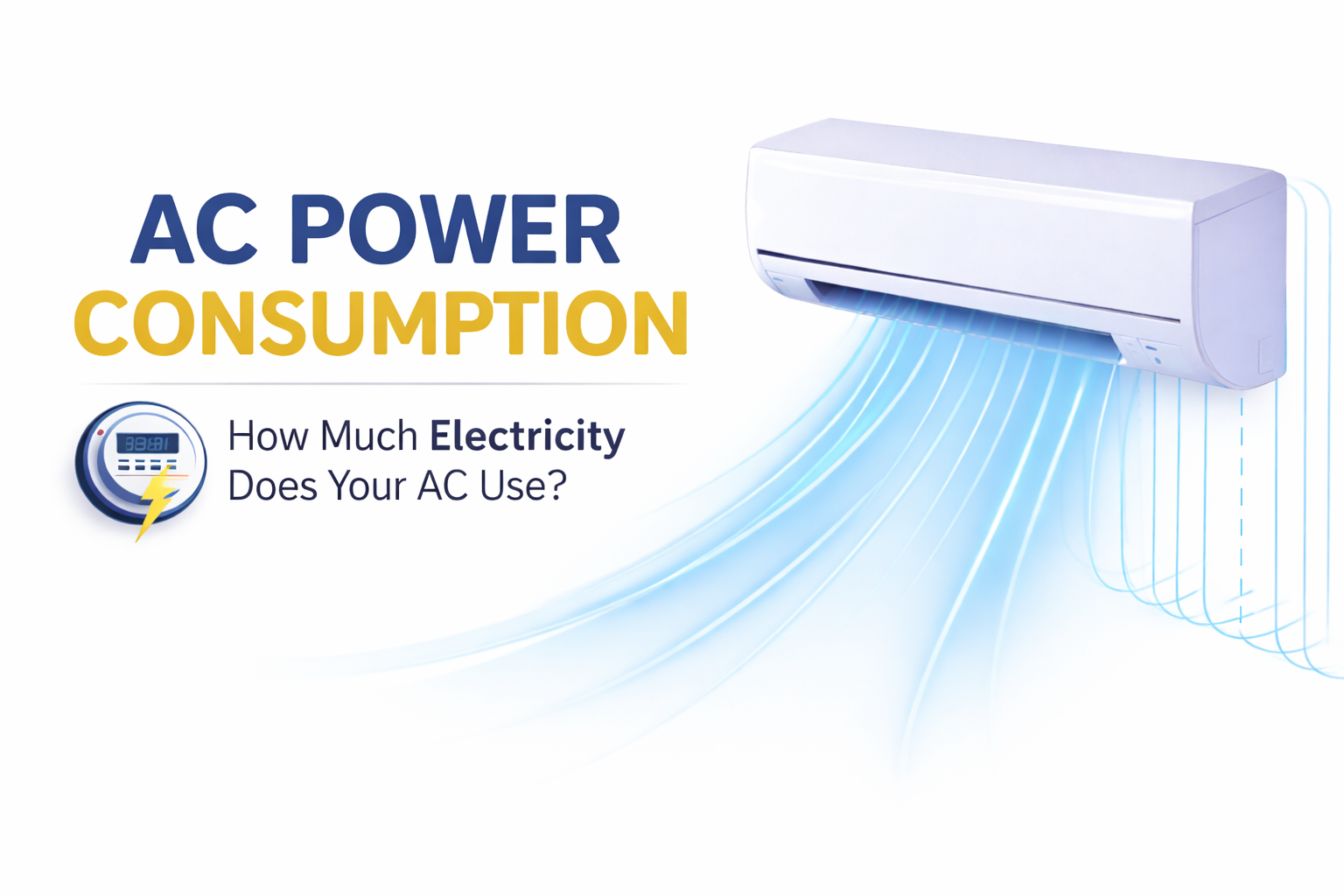
AC Power Consumption – Complete Guide to Electricity Usage, Units & Cost Calculation
How much power does an AC consume?
Understanding AC power consumption helps you:
-
Estimate monthly electricity bill
-
Choose the right tonnage
-
Compare inverter vs non-inverter models
-
Select 3-star vs 5-star AC
-
Plan solar system capacity
-
Reduce unnecessary energy usage
In this detailed, guide, you will learn:
-
AC power consumption formula
-
Units consumed per hour
-
1 ton, 1.5 ton & 2 ton comparison
-
Inverter vs non-inverter consumption
-
Monthly bill calculation
-
How to reduce electricity cost
Let’s start from the basics.
What Is AC Power Consumption?
AC power consumption refers to the amount of electrical energy an air conditioner uses to operate.
Electricity is measured in:
-
Watts (W)
-
Kilowatts (kW)
-
Kilowatt-hour (kWh) → also called “unit”
1 unit = 1 kWh
If your AC consumes 1000 watts (1 kW) and runs for 1 hour:
Electricity used = 1 unit
Basic AC Power Consumption Formula
Electricity consumption depends on:
-
AC capacity (tonnage)
-
Star rating
-
Inverter technology
-
Usage hours
-
Temperature setting
The general formula is:
Energy(kWh)=Power(kW)×Time(hours)Energy (kWh) = Power (kW) × Time (hours)
This formula helps you calculate electricity usage easily.
How Many Watts Does an AC Consume?
Below is average power consumption of different AC sizes:
| AC Capacity | Avg Power Consumption |
|---|---|
| 1 Ton | 800 – 1200 watts |
| 1.5 Ton | 1200 – 1800 watts |
| 2 Ton | 1800 – 2500 watts |
⚠ These values vary depending on inverter technology and star rating.
AC Power Consumption Per Hour
Let’s understand practically.
Example 1: 1 Ton AC
Average consumption = 1 kW
Running 1 hour = 1 unit
Example 2: 1.5 Ton AC
Average consumption = 1.5 kW
Running 1 hour = 1.5 units
Example 3: 2 Ton AC
Average consumption = 2 kW
Running 1 hour = 2 units
AC Monthly Electricity Bill Calculation
Let’s assume:
-
1.5 Ton AC
-
Average load = 1.4 kW
-
Usage = 8 hours per day
-
Electricity rate = ₹8 per unit
Using formula:
Daily usage = 1.4 × 8 = 11.2 units
Monthly usage = 11.2 × 30 = 336 units
Monthly bill = 336 × ₹8 = ₹2688
So your monthly AC bill ≈ ₹2500–₹3500 depending on conditions.
Inverter vs Non-Inverter AC Power Consumption
Inverter AC
- Compressor speed adjusts automatically
- Lower power consumption after cooling
- Saves 20–35% electricity
- Better temperature control
Average hourly usage:
0.7 – 1.4 units (depending on tonnage)
Non-Inverter AC
Air conditioner compressor
- Compressor runs at full speed
- Frequent ON/OFF cycles
- Higher electricity usage
Average hourly usage:
1 – 1.8 units
Inverter AC is more energy-efficient.
3-Star vs 5-Star AC Power Consumption
Star rating in India is governed by:
Bureau of Energy Efficiency
3-Star AC
-
Moderate efficiency
-
Lower initial price
-
Higher long-term electricity cost
5-Star AC
-
High ISEER rating
-
Lower electricity consumption
-
Higher upfront cost
Savings can be ₹500–₹1500 per month for heavy usage.
AC Power Consumption in Different Cities
Power usage increases in:
-
Ahmedabad
-
Delhi
-
Nagpur
-
Jaipur
Due to extreme heat.
In humid cities like Mumbai & Kolkata, AC works harder to remove moisture.
Climate directly affects consumption.
AC Power Consumption by Popular Brands
Daikin AC
Daikin
Energy-efficient inverter models.
LG AC
LG
AI inverter with smart load control.
Voltas AC
Voltas
Budget-friendly with decent efficiency.
Samsung AC
Samsung
Digital inverter technology.
Power usage varies by model and star rating.
Factors That Affect AC Electricity Consumption
1. Room Size
Oversized or undersized AC increases usage.
2. Temperature Setting
Recommended setting: 24–26°C
Every 1°C lower increases power usage by 5–7%.
3. Insulation
Poor insulation increases compressor workload.
4. Outdoor Temperature
Higher ambient temperature = Higher load.
5. Maintenance
Dirty filters increase electricity consumption.
Annual AC Power Consumption
Assume:
-
1.5 Ton inverter AC
-
8 hours daily
-
6 months usage
-
1.3 kW average
Daily = 1.3 × 8 = 10.4 units
Monthly = 10.4 × 30 = 312 units
6 months = 1872 units
Yearly cost @ ₹8/unit = ₹14,976
This shows why energy-efficient AC matters.
AC Power Consumption & Solar Panel Planning
To run AC on solar:
1 Ton → 2–3 kW solar system
1.5 Ton → 3–4 kW system
2 Ton → 4–5 kW system
Battery backup increases cost significantly.
How to Reduce AC Electricity Bill
- Set temperature at 24–26°C
- Clean filters monthly
- Use ceiling fan with AC
- Close doors & windows properly
- Service AC annually
- Choose inverter 5-star model
You can save 15–30% electricity with proper usage.
Common Myths About AC Power Consumption
- Lower temperature cools faster
It only increases compressor workload - Turning AC ON/OFF frequently saves power
Inverter AC works better when running continuously - Bigger AC always consumes more
Correct sizing is more important
Real-Life Example Calculation
Suppose:
2 Ton AC
Power consumption = 2.2 kW
Running 6 hours daily
Electricity rate = ₹9
Daily = 2.2 × 6 = 13.2 units
Daily cost = 13.2 × ₹9 = ₹118.8
Monthly ≈ ₹3564
This helps plan your electricity budget.
Frequently Asked Questions (FAQ)
How many units does AC consume per hour?
1 Ton: 0.8–1.2 units
1.5 Ton: 1.2–1.8 units
2 Ton: 1.8–2.5 units
Which AC consumes less electricity?
Inverter 5-star models consume least.
Does inverter AC save electricity?
Yes, 20–35% compared to non-inverter.
Is 24°C best temperature?
Yes, for comfort and efficiency.
Does servicing reduce electricity bill?
Yes, improves efficiency by 10–15%.
Final Summary
It depends on:
-
Tonnage
-
Star rating
-
Inverter technology
-
Usage hours
-
Climate
-
Maintenance
Key Takeaways:
- 1 unit = 1 kWh
- Use formula: Energy = Power × Time
- Inverter AC saves electricity
- 24–26°C is ideal setting
- Regular servicing reduces cost
Conclusion
Understanding AC power consumption helps you make smarter buying decisions and control electricity expenses.
Whether you’re choosing a 1 Ton AC for a bedroom or a 2 Ton AC for a living room, selecting the right capacity and energy-efficient model ensures long-term savings.
Smart usage + proper maintenance = Lower electricity bills + Comfortable cooling.
Stay cool. Stay energy-efficient.