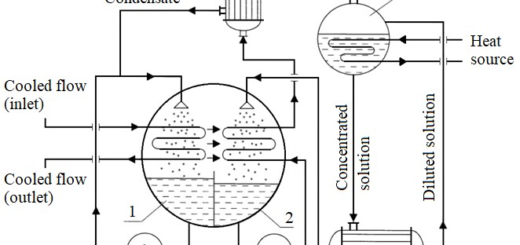
Types of Chillers in HVAC
Types of Chillers in HVAC (Complete Guide for Commercial & Industrial Cooling)

Chillers are the backbone of large-scale HVAC systems. From shopping malls and hospitals to factories and data centers, chillers provide centralized cooling for commercial and industrial applications.
If you’re planning a project or working in HVAC, understanding the types of chillers in HVAC is essential for correct system selection, energy efficiency, and long-term reliability.
In this fully guide, you will learn:
-
What a chiller is and how it works
-
Main types of chillers
-
Air-cooled vs water-cooled chillers
-
Types based on compressor
-
Absorption chillers explained
-
Industrial vs commercial applications
-
Energy efficiency comparison
-
Selection factors
-
Advantages and disadvantages
-
Which chiller is best for your project
Let’s start with the basics.
What Is a Chiller in HVAC?
A chiller is a machine that removes heat from water using a refrigeration cycle and transfers that heat to air or water.
The chilled water is then circulated through:
-
Air Handling Units (AHU)
-
Fan Coil Units (FCU)
-
Cooling coils
-
Industrial process equipment
Chillers are mainly used in:
-
Commercial buildings
-
Hospitals
-
Hotels
-
Data centers
-
Industrial plants
Main Types of Chillers in HVAC
Chillers are classified in two major ways:
- Based on heat rejection method
- Based on compressor type
- Based on refrigeration technology
Let’s explore each type in detail.
1. Air-Cooled Chillers
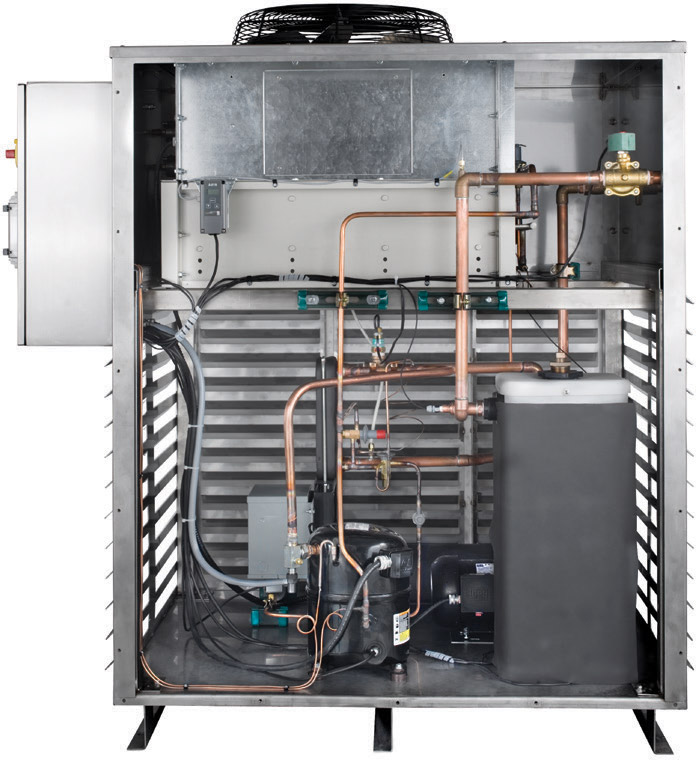
What Is an Air-Cooled Chiller?
An air-cooled chiller uses ambient air to remove heat from the refrigerant through condenser coils and fans.
It does NOT require a cooling tower.
How It Works:
-
Refrigerant absorbs heat from water.
-
Compressor compresses refrigerant.
-
Heat is rejected through condenser coils using air.
Advantages
- Easy installation
- Lower initial cost
- No cooling tower required
- Less water consumption
- Suitable for water-scarce areas
Disadvantages
- Slightly lower efficiency
- Noisy operation
- Requires outdoor installation
Best For:
-
Small to medium commercial buildings
-
IT offices
-
Small factories
-
Projects with limited water supply
2. Water-Cooled Chillers
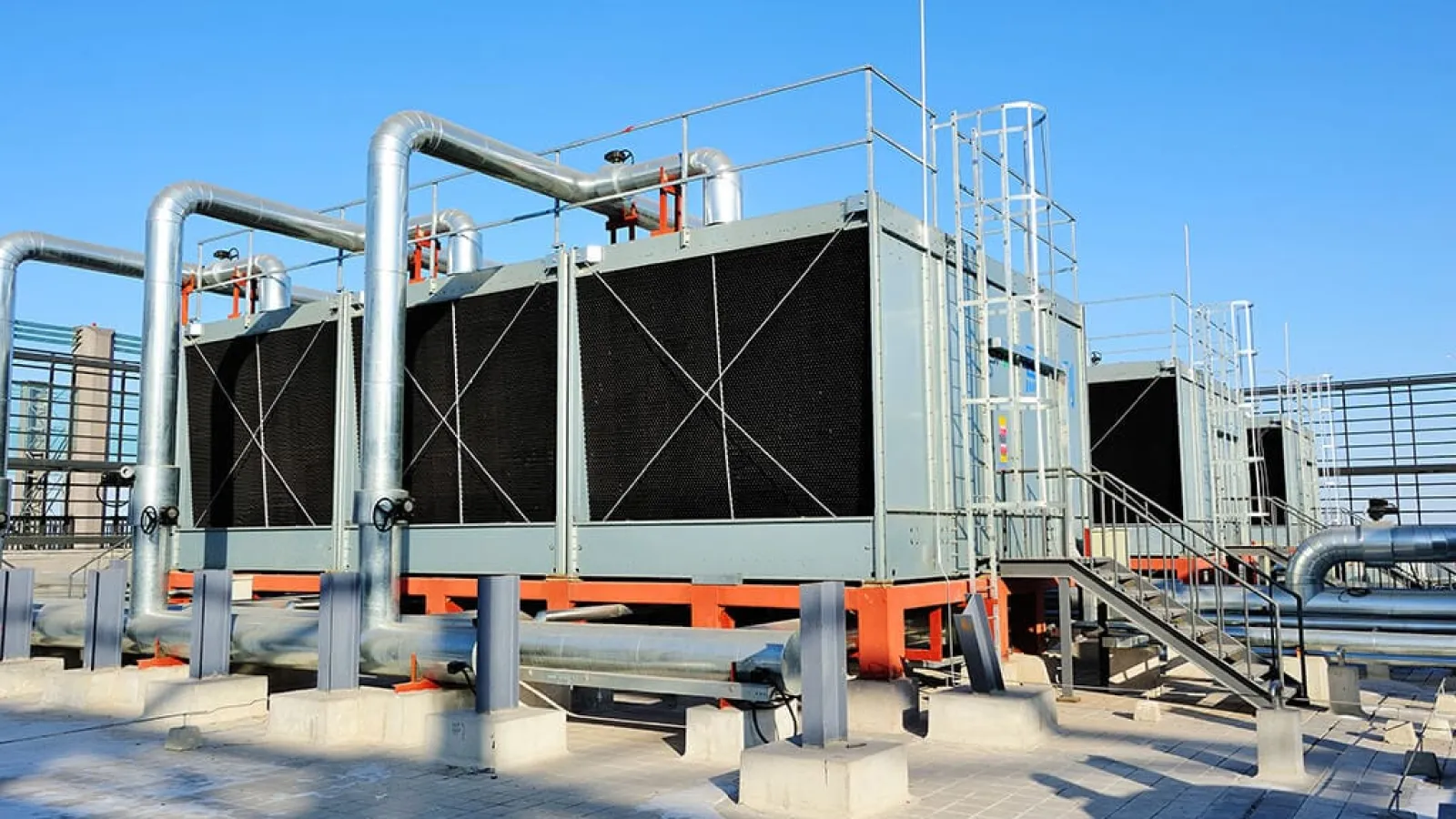
What Is a Water-Cooled Chiller?
A water-cooled chiller uses water from a cooling tower to remove heat from refrigerant.
How It Works:
-
Heat absorbed from chilled water.
-
Refrigerant compressed.
-
Heat transferred to condenser water.
-
Cooling tower releases heat to atmosphere.
Advantages
- Higher energy efficiency
- Ideal for large capacity systems
- Longer lifespan
- Quieter indoor operation
Disadvantages
- Higher installation cost
- Requires cooling tower
- Requires more maintenance
Best For:
-
Shopping malls
-
Hospitals
-
Airports
-
Large hotels
-
Industrial plants
3. Absorption Chillers
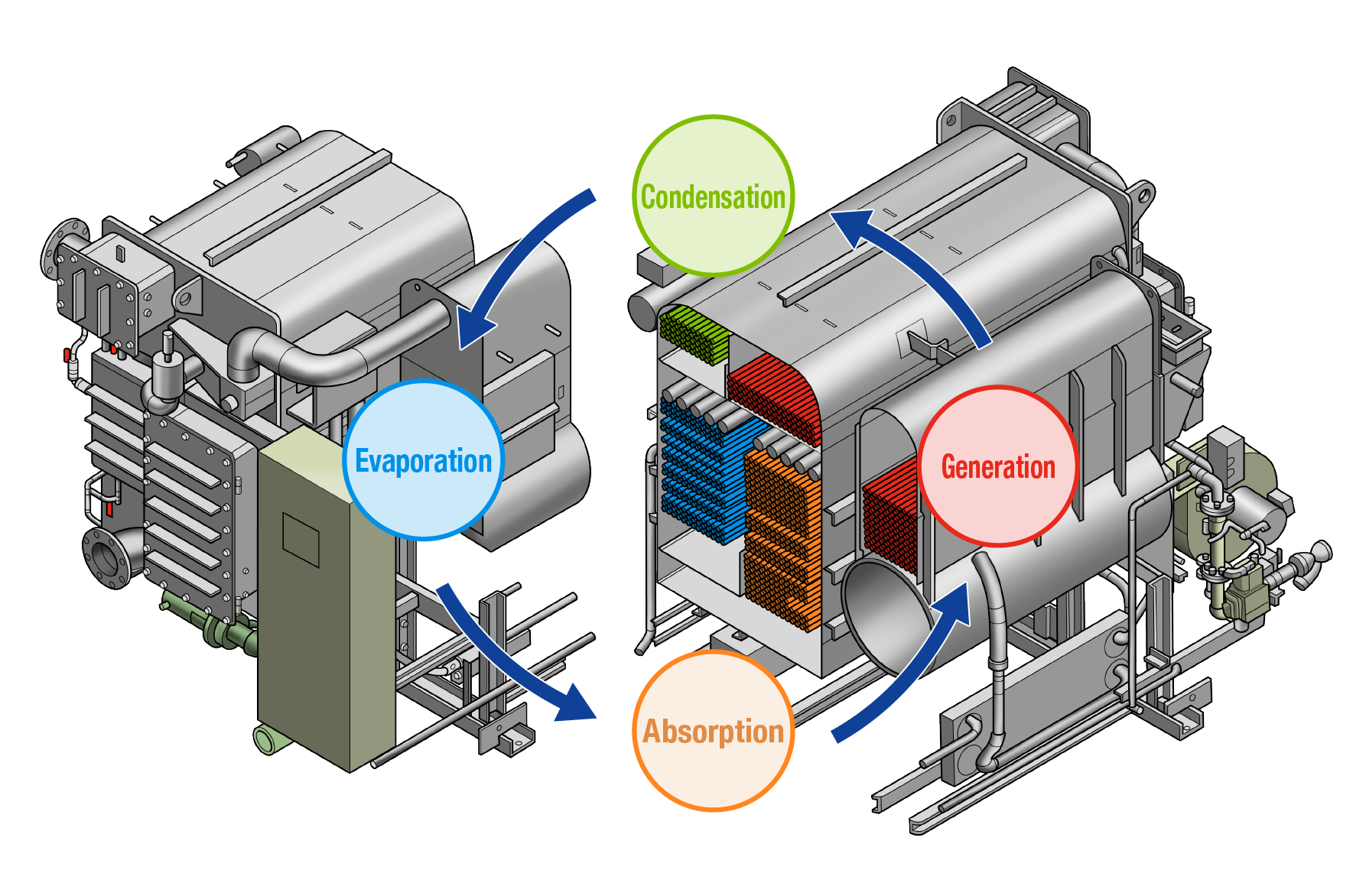
What Is an Absorption Chiller?
Absorption chillers use heat energy (steam, hot water, or gas) instead of electricity to drive the cooling process.
They use:
-
Lithium bromide (water as refrigerant)
OR -
Ammonia-water mixture
Advantages
- Uses waste heat
- Low electricity consumption
- Suitable for cogeneration plants
Disadvantages
- Large size
- High initial cost
- Complex maintenance
Best For:
-
Industrial facilities
-
Power plants
-
Chemical factories
-
Sites with waste steam
Types of Chillers Based on Compressor
Chillers are also classified by compressor technology.
1. Scroll Chiller
- Used in small capacity systems
- Compact design
- Lower cost
- Common in air-cooled chillers
Best for: 20–200 TR systems
2. Screw Chiller
- Medium to large capacity
- High efficiency
- Reliable for continuous operation
Best for: 100–500 TR systems
3. Centrifugal Chiller
- Very large capacity
- Highest efficiency
- Used in mega projects
Best for: 300 TR and above
Air-Cooled vs Water-Cooled Chiller Comparison
| Feature | Air-Cooled | Water-Cooled |
|---|---|---|
| Installation Cost | Lower | Higher |
| Efficiency | Moderate | High |
| Maintenance | Lower | Higher |
| Water Usage | No | Yes |
| Space Required | Less | More |
| Ideal Capacity | Small-Medium | Large |
Industrial vs Commercial Chillers
Commercial Chillers
Used for comfort cooling:
-
Offices
-
Malls
-
Hotels
-
Schools
Industrial Chillers
Used for process cooling:
-
Injection molding
-
Pharmaceutical plants
-
Data centers
-
Food processing
Industrial chillers require precise temperature control.
Energy Efficiency Considerations
Key performance indicators:
-
COP (Coefficient of Performance)
-
EER (Energy Efficiency Ratio)
-
IPLV (Integrated Part Load Value)
Water-cooled centrifugal chillers typically have highest efficiency.
Factors to Consider Before Selecting a Chiller
- Cooling load calculation (TR)
- Ambient temperature
- Space availability
- Water availability
- Electricity tariff
- Maintenance budget
- Project type (industrial or commercial)
Improper sizing can increase electricity cost by 20–30%.
Approximate Chiller Cost
| Type | Approx Cost |
|---|---|
| Air-Cooled (100 TR) | ₹25–40 Lakhs |
| Water-Cooled (200 TR) | ₹45–70 Lakhs |
| Absorption Chiller | ₹1 Crore+ |
Costs vary based on brand and specifications.
Which Type of Chiller Is Best?
There is no single “best” chiller.
Choose:
-
Air-cooled → Smaller projects, low budget
-
Water-cooled → Large commercial projects
-
Absorption → Industrial waste heat applications
-
Centrifugal → Mega commercial buildings
Advantages of Using Chillers in HVAC
- Centralized cooling
- Better efficiency
- Long lifespan (15–25 years)
- Suitable for large loads
- Stable temperature control
Common Problems in Chillers
-
Low refrigerant pressure
-
Compressor failure
-
Fouled condenser
-
Cooling tower scaling
-
Sensor malfunction
Regular preventive maintenance is essential.
Maintenance Tips for Chillers
- Clean condenser tubes
- Monitor refrigerant pressure
- Check compressor oil level
- Inspect cooling tower
- Annual performance testing
Proper maintenance extends chiller life significantly.
Frequently Asked Questions (FAQ)
What are the main types of chillers?
Air-cooled, water-cooled, and absorption chillers.
Which chiller is more efficient?
Water-cooled centrifugal chillers are most efficient.
What is the lifespan of a chiller?
Typically 15–25 years with proper maintenance.
Which chiller is best for malls?
Water-cooled screw or centrifugal chillers.
Do air-cooled chillers need cooling towers?
No.
Final Summary
The main types of chillers in HVAC are:
-
Air-cooled chillers
-
Water-cooled chillers
-
Absorption chillers
-
Scroll, screw, and centrifugal chillers
Each type serves a different application.
Correct selection depends on:
-
Cooling load
-
Budget
-
Water availability
-
Project scale
-
Energy efficiency goals
Conclusion
Understanding the types of chillers in HVAC is essential for designing efficient commercial and industrial cooling systems.
Whether you choose an air-cooled, water-cooled, or absorption chiller, proper sizing and professional installation are critical.
Selecting the right chiller can:
- Reduce electricity bills
- Improve system efficiency
- Increase equipment lifespan
- Ensure reliable cooling performance
Always consult an experienced HVAC engineer before finalizing your chiller system.
Stay efficient. Stay cool.