
HVAC Static Pressure Explained (Guide for Technicians & Beginners)
Introduction
Static pressure is one of the most misunderstood yet critical concepts in HVAC. Many technicians focus only on refrigerant, compressor, or airflow—but ignore static pressure, which silently affects:
- Cooling performance
- Energy efficiency
- Equipment life
- Customer comfort
If your AC:
- Isn’t cooling properly
- Has weak airflow
- Makes noise
- Trips frequently
👉 Static pressure could be the hidden problem.
This guide will take you from basic understanding to advanced field application, so you can diagnose and fix issues like a pro.
What is Static Pressure in HVAC?
Static pressure is the resistance to airflow inside an HVAC system.
👉 Think of it like blood pressure in the human body
- Air = blood
- Ducts = veins
- Fan = heart
If pressure is too high → airflow struggles
If pressure is too low → system underperforms
Types of Static Pressure
1. Positive Static Pressure
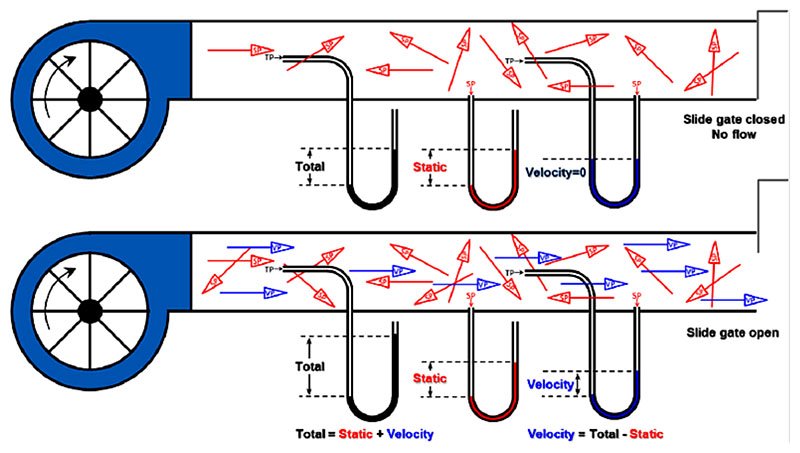
- Occurs after the blower
- Found in supply ducts
- Air is being pushed
2. Negative Static Pressure
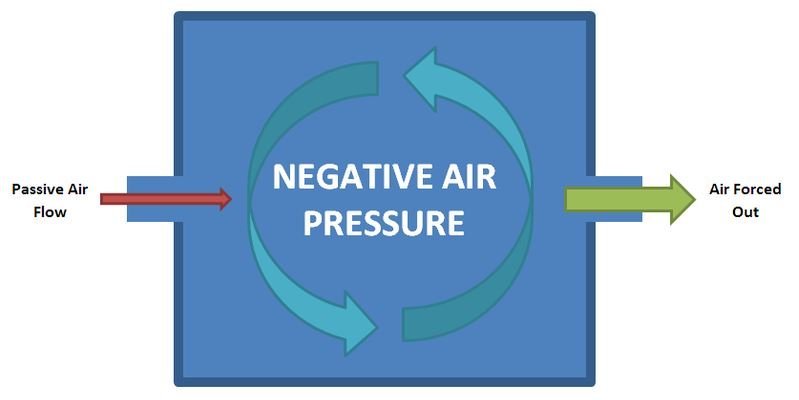
- Occurs before the blower
- Found in return ducts
- Air is being pulled
3. Total External Static Pressure (TESP)
👉 Most important measurement in HVAC
TESP = Supply Static + Return Static
This is what manufacturers specify.
Static Pressure vs Airflow (CFM)
Many people confuse these two.
| Static Pressure | Airflow (CFM) |
|---|---|
| Resistance | Volume of air |
| Measured in inches WC | Measured in CFM |
| High = restricted | High = good flow |
👉 Key relationship:
Higher static pressure = Lower airflow
Why Static Pressure Matters
1. Comfort
- Poor airflow → uneven cooling
2. Energy Efficiency
- High pressure → more power consumption
3. Equipment Life
- Overworked blower motor
- Compressor stress
4. Noise Reduction
- High pressure → duct noise
Ideal Static Pressure Range
Most residential systems:
👉 0.5 inch WC (Water Column)
Typical Range:
- 0.3 – 0.6 inch WC → Normal
-
0.8 inch WC → High (problem)
- < 0.2 inch WC → Low airflow issue
How Static Pressure is Measured
Tools Required:
- Manometer (digital preferred)
- Static pressure probes
Measurement Points
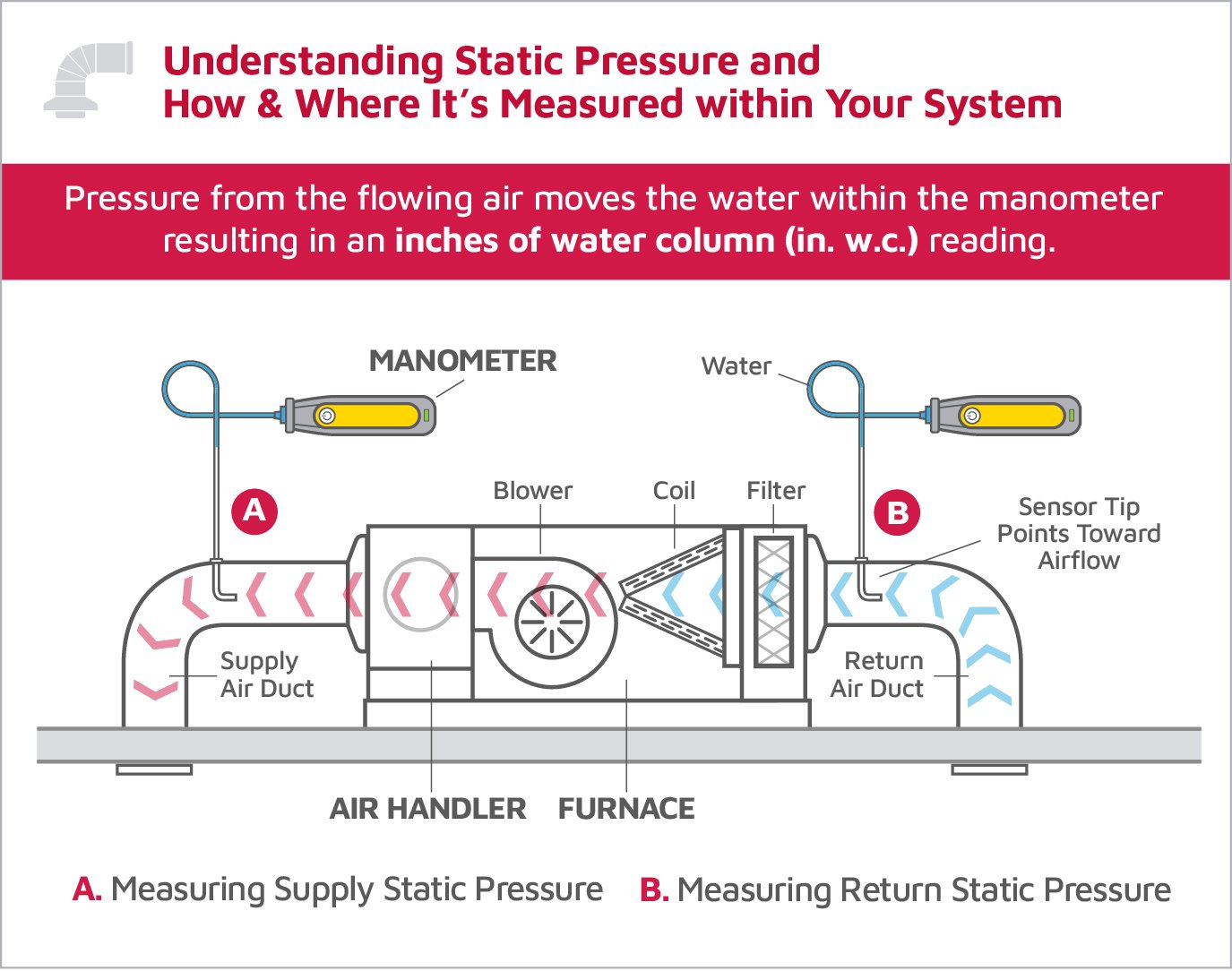
Steps:
- Drill test holes:
- Before blower (return)
- After blower (supply)
- Insert probes
- Measure:
- Return pressure (negative)
- Supply pressure (positive)
- Add values
Example:
- Return = -0.3
- Supply = +0.4
👉 TESP = 0.7 inch WC
Static Pressure Formula
TESP = Psupply + |Preturn|
Where:
- Psupply = Supply pressure
- Preturn = Return pressure
Causes of High Static Pressure
1. Dirty Air Filter
- Most common issue
2. Undersized Ductwork
- Poor design
3. Closed or Blocked Vents
- Reduces airflow
4. Dirty Evaporator Coil
- Airflow restriction
5. Flexible Duct Kinks
- Physical blockage
Causes of Low Static Pressure
- Duct leakage
- Oversized ducts
- Weak blower
- Open system leaks
Symptoms of High Static Pressure
- Weak airflow
- Noisy ducts
- Hot rooms
- High energy bills
- Short cycling
Real Field Example
A 1.5 Ton Split AC:
- Expected TESP: 0.5
- Measured: 0.9
Problem:
- Dirty filter + blocked return
Solution:
- Clean filter
- Open return
Result:
- Cooling improved 30%
Static Pressure vs Refrigerant Issues
| Problem | Static Pressure | Refrigerant |
|---|---|---|
| Weak airflow | Yes | No |
| Ice formation | Yes | Yes |
| High amp | Yes | Yes |
👉 Always check airflow before gas
Static Pressure and Blower Motor
- High pressure → Motor overload
- Low pressure → Inefficient operation
Advanced Concept: Fan Curve
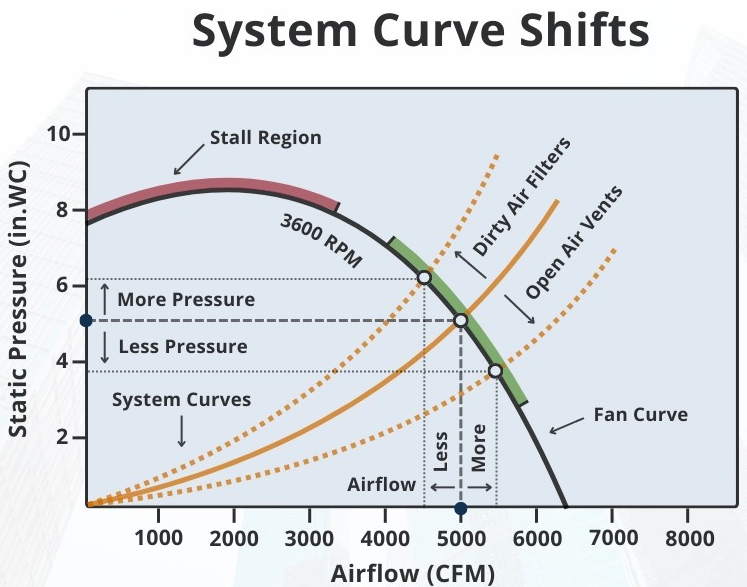
- Shows relation between airflow and pressure
- Used for system design
Static Pressure in Different Systems
Split AC
- Lower pressure systems
Ductable AC
- Medium pressure
VRF Systems
- Controlled airflow
AHU Systems
- High static pressure handling
How to Reduce Static Pressure
Quick Fixes:
- Clean air filters
- Open vents
- Clean coils
Advanced Fixes:
- Resize ducts
- Add return ducts
- Upgrade blower
Static Pressure Testing Checklist
- Check filter
- Check coil
- Check duct
- Measure TESP
- Compare with manufacturer
Common Mistakes
- Ignoring return side
- Only checking supply
- Not sealing ducts
- Wrong probe placement
Pro Tips (From Experts)
- Always measure both sides
- Keep TESP within manufacturer range
- Use digital manometer
- Combine airflow + pressure diagnosis
Static Pressure and Energy Efficiency
- High pressure → 20–40% efficiency loss
- Proper airflow → optimal performance
Troubleshooting Flowchart
- Poor cooling?
- Check airflow
- Measure static pressure
- Identify restriction
- Fix issue
Frequently Asked Questions (FAQ)
1. What is static pressure in HVAC?
Static pressure in HVAC is the resistance to airflow inside ducts and system components.
2. What is TESP in HVAC?
TESP stands for Total External Static Pressure, which is the sum of supply and return static pressure.
3. How do you calculate TESP?
TESP is calculated using the formula: supply pressure plus the absolute value of return pressure.
4. What is normal static pressure in HVAC?
A normal static pressure for most residential HVAC systems is around 0.5 inch water column.
5. What causes high static pressure?
High static pressure is usually caused by dirty filters, blocked ducts, closed vents, or undersized ductwork.
6. What happens if static pressure is too high?
High static pressure reduces airflow, increases energy consumption, and can damage the blower motor.
7. Where is static pressure measured in HVAC?
Static pressure is measured before and after the blower in the return and supply ducts using a manometer.
8. Can I check static pressure without a manometer?
You can estimate airflow issues without tools, but accurate static pressure measurement requires a manometer.
Conclusion
Static pressure is the backbone of HVAC airflow performance. Ignoring it leads to:
- Poor cooling
- High bills
- System failure
👉 Mastering static pressure = Becoming a skilled HVAC technician.
Partner with the Best HVAC Turnkey Contractor for AHU Systems
If you need a reliable, efficient, and compliant HVAC system with integrated AHU, reach out to Vipul AC for a complete turnkey experience.
 Call: +91 9825636606
 Email: vipulaircondition@gmail.com
 Visit: www.vipulac.in
Vipul AC – Gujarat’s Trusted HVAC Turnkey Contractor for AHU Solutions