Samsung vs Hisense AC
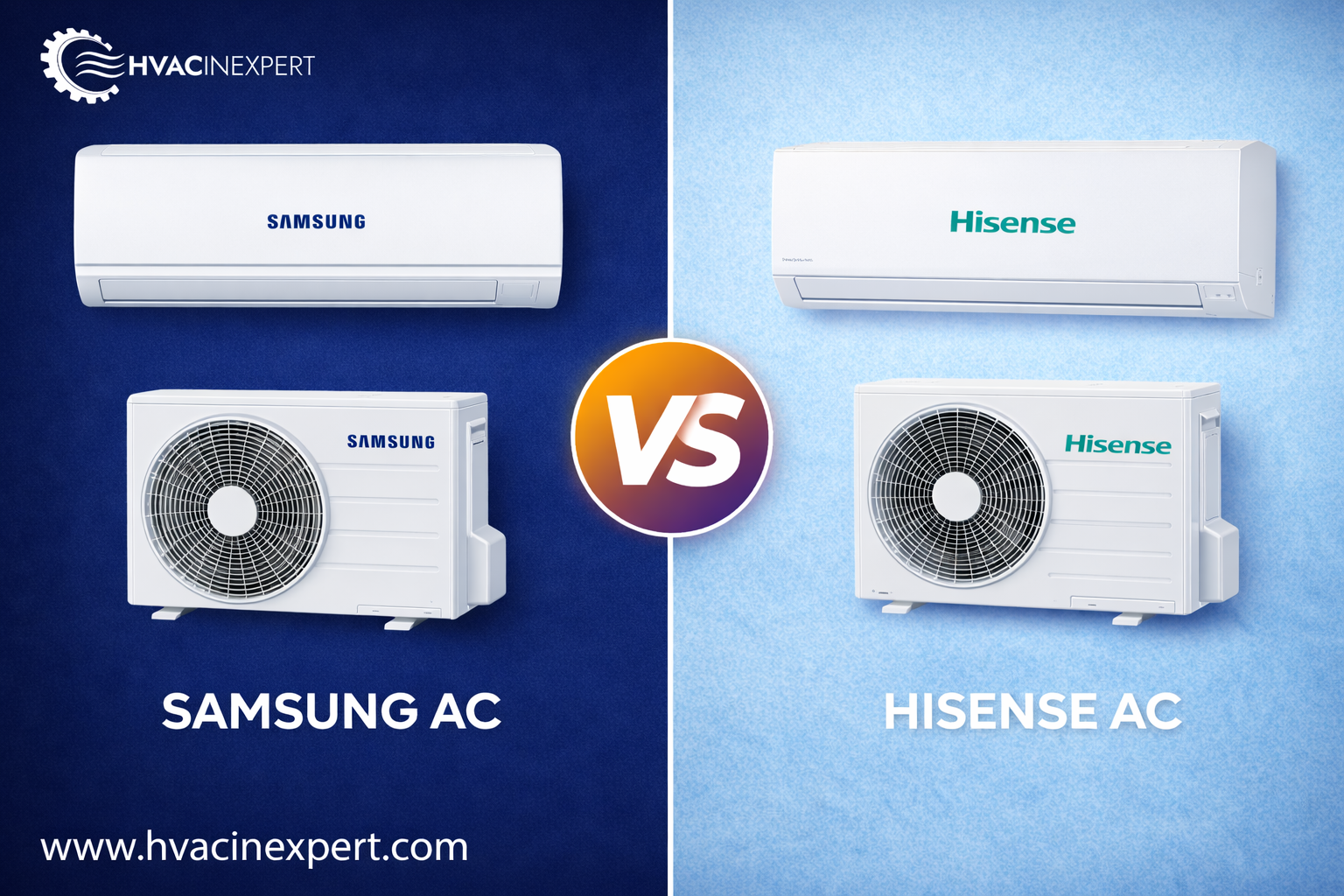
Samsung vs Hisense AC: Which Air Conditioner Is Better?
But which one is better for your home or office?
In this fully comparison guide, we will analyze Samsung vs Hisense AC based on:
-
Cooling performance
-
Energy efficiency
-
Build quality
-
Smart features
-
Noise levels
-
Price comparison
-
Reliability and lifespan
-
After-sales service
-
Best AC models from both brands
By the end of this guide, you’ll know which brand suits your needs.
Brand Overview
Samsung Air Conditioners
It is a global technology company known for innovation in consumer electronics. Samsung ACs are widely recognized for:
-
Digital inverter compressors
-
Wind-Free cooling technology
-
Smart connectivity and AI features
-
Premium design and build quality
Samsung focuses on high-tech and energy-efficient cooling solutions.
Hisense Air Conditioners
It is one of the fastest-growing appliance manufacturers worldwide. Hisense ACs are popular for:
-
Competitive pricing
-
Solid cooling performance
-
Inverter technology
-
Smart features in budget models
Hisense focuses on affordable yet reliable cooling systems.
Samsung vs Hisense AC – Quick Comparison
| Feature | Samsung AC | Hisense AC |
|---|---|---|
| Technology | Advanced inverter & AI | Inverter technology |
| Cooling Performance | Excellent | Good |
| Energy Efficiency | High | Moderate to High |
| Price | Premium | Budget-friendly |
| Smart Features | Extensive | Limited |
| Noise Level | Very quiet | Moderate |
| Service Network | Strong globally | Growing |
Cooling Performance Comparison
Cooling efficiency is the most important factor when choosing an AC.
Samsung Cooling Technology
Samsung air conditioners use Digital Inverter Boost compressors that:
-
Adjust compressor speed automatically
-
Cool rooms faster
-
Maintain stable temperatures
It also offers Wind-Free cooling technology, which distributes air gently through thousands of micro holes.
Benefits:
- Faster cooling
- Uniform air distribution
- Less temperature fluctuation
Hisense Cooling Technology
Hisense air conditioners also use inverter compressors that provide energy-efficient cooling.
Key features include:
-
Rapid cooling mode
-
Smart airflow control
-
Multi-stage filtration
Although Hisense performs well, Samsung typically delivers more consistent cooling performance.
Energy Efficiency Comparison
Energy efficiency directly affects electricity bills.
Samsung Energy Efficiency
Samsung inverter ACs offer:
-
High ISEER ratings
-
Energy-saving compressor technology
-
AI energy control in smart models
Typical power consumption for a 1.5-ton Samsung inverter AC:
≈ 1.3 – 1.5 kW per hour.
Hisense Energy Efficiency
Hisense AC units also feature inverter compressors that improve efficiency.
However:
-
Some models have slightly lower ISEER ratings
-
Energy optimization features are simpler compared to Samsung
Still, Hisense ACs deliver good efficiency for the price range.
Build Quality and Durability
Samsung Build Quality
Samsung ACs typically feature:
- Anti-corrosion condenser coating
- Durable copper condensers
- Premium indoor unit design
These features improve durability and extend lifespan.
Hisense Build Quality
Hisense AC units are built with:
- Copper condenser coils
- Anti-rust outdoor units
- Compact designs
While durable, Samsung often offers slightly better build quality and finish.
Smart Features Comparison
Smart features are increasingly important in modern ACs.
Samsung Smart AC Features
Samsung ACs integrate advanced smart technologies including:
-
Wi-Fi control via the Samsung SmartThings app
-
AI auto cooling
-
Voice control with Alexa and Google Assistant
-
Smart diagnostics
These features allow remote control and automation.
Hisense Smart AC Features
Hisense also provides smart connectivity in selected models:
-
Wi-Fi control
-
Mobile app control
-
Smart scheduling
However, Samsung’s ecosystem is more advanced and widely integrated.
Noise Level Comparison
Noise levels are important for bedrooms and offices.
| Brand | Indoor Noise Level |
|---|---|
| Samsung | 19–24 dB |
| Hisense | 24–30 dB |
Samsung ACs are generally quieter due to advanced compressor design.
Price Comparison
Price is often the deciding factor for many buyers.
Samsung AC Price Range (India)
| Capacity | Price |
|---|---|
| 1 Ton | ₹35,000 – ₹45,000 |
| 1.5 Ton | ₹40,000 – ₹60,000 |
| 2 Ton | ₹60,000 – ₹80,000 |
Hisense AC Price Range (India)
| Capacity | Price |
|---|---|
| 1 Ton | ₹28,000 – ₹35,000 |
| 1.5 Ton | ₹32,000 – ₹45,000 |
| 2 Ton | ₹45,000 – ₹65,000 |
Hisense ACs are more affordable, making them popular in budget segments.
Reliability and Lifespan
Average lifespan depends on usage and maintenance.
| Brand | Average Lifespan |
|---|---|
| Samsung | 12 – 15 years |
| Hisense | 10 – 12 years |
Samsung systems generally last slightly longer due to premium components.
After-Sales Service
Service availability is important when repairs are needed.
Samsung Service Network
Samsung has:
- Extensive service centers worldwide
- Fast spare parts availability
- Professional technicians
Hisense Service Network
Hisense service network is expanding, but availability can vary by region.
In some areas, Samsung offers better support coverage.
Best Samsung AC Models
Popular models include:
-
Samsung Wind-Free Inverter AC
-
Samsung Digital Inverter Split AC
-
Samsung AI Smart AC
These models offer premium performance and features.
Best Hisense AC Models
Popular Hisense models include:
-
Hisense Smart Inverter AC
-
Hisense Hi-Nano Air Purification AC
-
Hisense Energy Pro Series
These models focus on value and efficiency.
Advantages of Samsung AC
- Advanced inverter technology
- Wind-Free cooling system
- Premium build quality
- Excellent energy efficiency
- Strong after-sales support
Advantages of Hisense AC
- Affordable pricing
- Good cooling performance
- Energy-efficient inverter models
- Decent smart features
Which AC Should You Choose?
Choose Samsung AC if:
- You want premium technology
- Smart home integration matters
- Quiet operation is important
- Budget is flexible
Choose Hisense AC if:
- You want budget-friendly cooling
- Basic inverter AC is sufficient
- Price is a key factor
Frequently Asked Questions (FAQ)
Is Samsung AC better than Hisense?
Samsung generally offers better technology, smart features, and build quality, while Hisense provides more affordable options.
Which AC is more energy efficient?
Samsung inverter ACs usually have higher energy efficiency ratings.
Is Hisense a reliable AC brand?
Yes, Hisense is a reliable brand known for affordable and efficient air conditioners.
Which AC is quieter?
Samsung ACs typically operate quieter than Hisense models.
How long do Samsung and Hisense ACs last?
Samsung ACs last around 12–15 years, while Hisense units typically last 10–12 years with proper maintenance.
Final Verdict
Both Samsung and Hisense manufacture reliable air conditioners.
However:
-
Samsung focuses on premium technology and performance
-
Hisense focuses on affordable cooling solutions
Your final choice depends on budget and feature preferences.
Conclusion
When comparing Samsung vs Hisense AC, both brands offer efficient cooling systems, but they target different segments of the market.
Samsung is ideal for users who want advanced features, quiet operation, and long-term reliability, while Hisense is perfect for buyers seeking cost-effective cooling without sacrificing basic performance.
Before purchasing an AC, always consider:
- Room size
- Energy efficiency rating
- Installation quality
- Service availability
Choosing the right air conditioner ensures better cooling, lower electricity bills, and long-term comfort.
Stay cool. Choose wisely.