AC Compressor Not Turning On
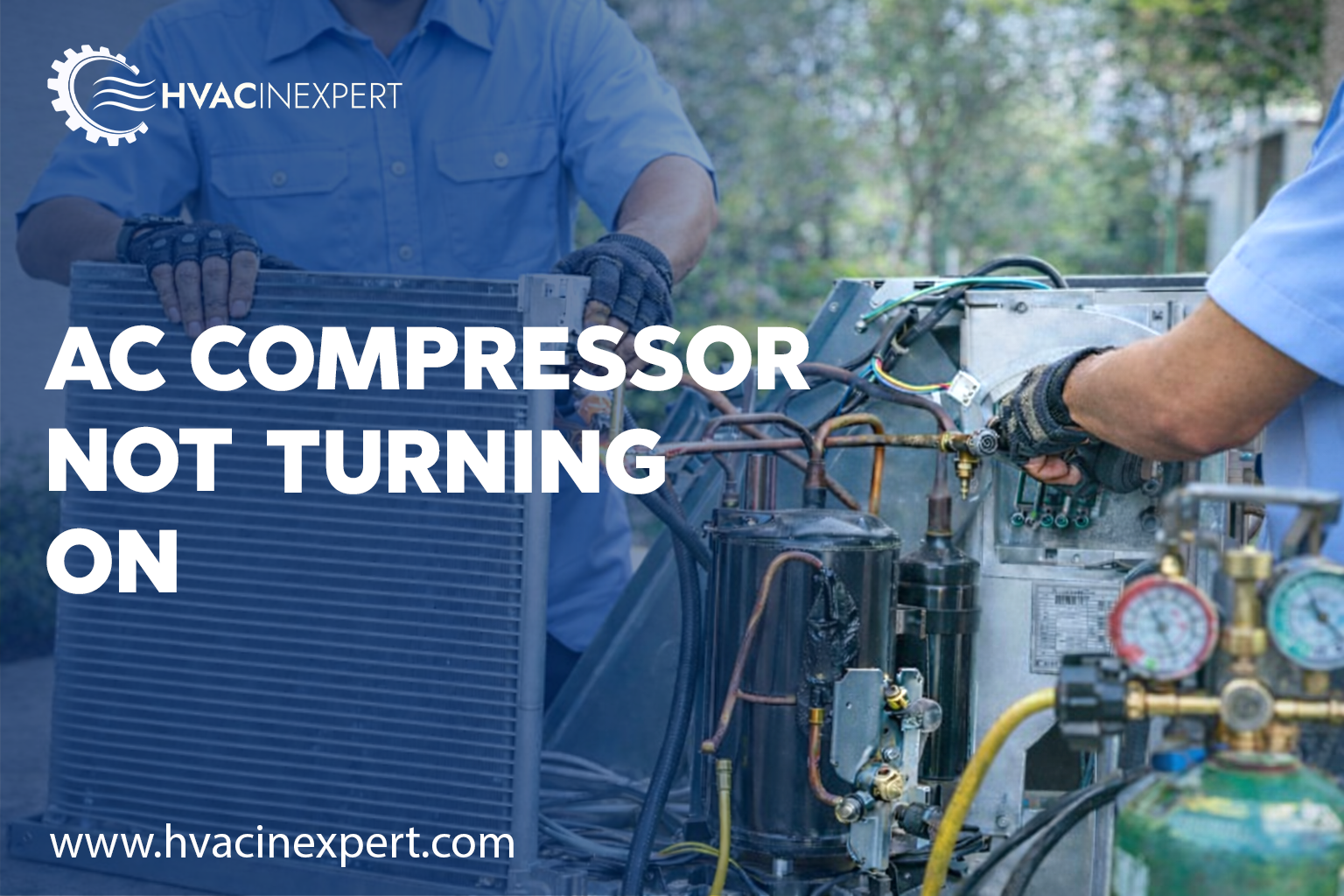
AC Compressor Not Turning On: Complete Troubleshooting Guide
The compressor is the most important component of an air conditioning system. It is responsible for circulating refrigerant through the cooling system and enabling the refrigeration cycle.
If the AC compressor does not turn on, the air conditioner will not be able to cool the room.
Many homeowners experience situations where:
-
The AC fan is running but no cooling occurs
-
The indoor unit works but the outdoor unit compressor does not start
-
The AC turns on but shuts down quickly
These problems are often related to compressor startup issues.
Understanding the possible causes helps identify the problem quickly and avoid costly repairs.
In this complete guide, you will learn:
-
Why an AC compressor may not start
-
Common electrical and mechanical causes
-
Step-by-step troubleshooting methods
-
When to call an HVAC technician
-
Preventive maintenance tips
This guide will help you diagnose and resolve air conditioner compressor startup problems effectively.
How an AC Compressor Works
To understand compressor problems, it is important to know how the compressor works in the air conditioning cycle.
The compressor performs the following functions:
- Compresses low-pressure refrigerant gas
- Increases refrigerant pressure and temperature
- Circulates refrigerant through the condenser coil
This process enables the refrigeration cycle that produces cooling.
If the compressor fails to start, the entire cooling cycle stops.
Components That Control AC Compressor Operation
Several electrical and mechanical components control compressor startup.
These include:
-
Thermostat
-
Capacitor
-
Contactor
-
Overload protector
-
Control board
If any of these components fail, the compressor may not start.
Common Reasons AC Compressor Is Not Turning On
There are many reasons why an AC compressor may fail to start.
Faulty Capacitor
The capacitor provides the electrical boost required to start the compressor motor.
If the capacitor fails:
-
Compressor cannot start
-
Outdoor fan may still run
-
AC produces no cooling
Capacitor failure is one of the most common compressor problems.
Faulty Contactor
The contactor is an electrical switch that controls power to the compressor.
If the contactor becomes damaged or worn out:
-
Compressor will not receive power
-
AC system cannot start cooling
Replacing the contactor often solves the issue.
Tripped Circuit Breaker
Electrical overload may trip the circuit breaker supplying power to the outdoor unit.
Possible causes include:
-
Compressor motor overload
-
Electrical short circuit
-
Power surge
Resetting the breaker may restore operation.
Thermostat Problems
Incorrect thermostat settings or faulty thermostat sensors may prevent the compressor from starting.
Possible thermostat issues include:
-
Incorrect cooling settings
-
Dead batteries
-
Faulty wiring
Checking thermostat settings is an important troubleshooting step.
Refrigerant Problems
Low refrigerant levels or refrigerant leakage may trigger safety protection systems.
When this occurs:
-
Compressor may not start
-
System may shut down automatically
Technicians must check refrigerant pressure.
Overload Protection Activation
Most compressors have built-in overload protection.
If the compressor overheats:
-
Overload protector shuts down the compressor
-
Compressor remains off until temperature drops
Overheating may result from:
-
Dirty condenser coils
-
High refrigerant pressure
-
Electrical problems
Dirty Condenser Coil
The outdoor condenser coil releases heat from refrigerant.
When coils become dirty:
-
Heat transfer becomes inefficient
-
System pressure increases
-
Compressor may shut down
Regular cleaning prevents this issue.
Electrical Wiring Problems
Loose or damaged electrical wiring may prevent the compressor from receiving power.
Common issues include:
-
Burned wires
-
Loose connections
-
Damaged insulation
Electrical inspection is necessary to identify such problems.
Faulty Control Board
Modern air conditioners use electronic control boards to regulate system operation.
If the control board fails:
-
Compressor may not receive startup signal
-
System may behave unpredictably
Technicians may need to replace the control board.
Compressor Motor Failure
If the compressor motor is damaged, the compressor may fail completely.
Signs of compressor failure include:
-
Loud noise during startup
-
Compressor not running despite power supply
-
Repeated circuit breaker trips
In severe cases, compressor replacement may be required.
Step-by-Step Troubleshooting for AC Compressor Not Starting
Follow these troubleshooting steps before calling a technician.
Step 1 Check Thermostat Settings
Ensure the thermostat is set to cooling mode and the desired temperature is lower than room temperature.
Step 2 Inspect Circuit Breaker
Check the electrical panel to see if the AC breaker has tripped.
Reset the breaker if necessary.
Step 3 Inspect Outdoor Unit
Ensure the outdoor unit is:
-
Clean
-
Free from debris
-
Properly ventilated
Blocked airflow can cause compressor overheating.
Step 4 Check Capacitor
Look for signs of capacitor failure such as:
-
Bulging capacitor top
-
Burn marks
-
Oil leakage
Capacitor replacement may be required.
Step 5 Reset the AC System
Turn off the AC power supply for several minutes and restart the system.
Sometimes the control system resets automatically.
When to Call an HVAC Technician
Some compressor problems require professional repair.
Call a technician if:
-
Compressor motor does not start
-
Electrical faults occur
-
Refrigerant leak is suspected
-
Circuit breaker trips repeatedly
HVAC technicians use specialized tools for diagnosis.
AC Compressor Repair Cost
Repair costs depend on the problem.
| Problem | Estimated Cost |
|---|---|
| Capacitor replacement | ₹1000 – ₹2500 |
| Contactor replacement | ₹1500 – ₹3000 |
| Refrigerant leak repair | ₹2000 – ₹6000 |
| Compressor replacement | ₹10000+ |
Prices vary depending on AC model and location.
Preventive Maintenance Tips
Regular maintenance helps prevent compressor problems.
- Clean condenser coils regularly
- Replace air filters frequently
- Inspect refrigerant lines
- Schedule professional servicing annually
Preventive maintenance extends AC lifespan.
Warning Signs of Compressor Problems
Early warning signs include:
-
Loud noise from outdoor unit
-
AC blowing warm air
-
Frequent power trips
-
Reduced cooling performance
Addressing these issues early prevents major repairs.
Frequently Asked Questions
Why is my AC compressor not turning on?
Possible reasons include faulty capacitor, contactor failure, thermostat problems, electrical issues, or compressor motor damage.
Can a bad capacitor stop the compressor?
Yes, a faulty capacitor can prevent the compressor from starting.
How do I know if my AC compressor is bad?
Signs include loud noise, compressor not running, and repeated circuit breaker trips.
Can I fix compressor problems myself?
Basic troubleshooting may be possible, but major repairs require professional HVAC technicians.
How long does an AC compressor last?
Most compressors last 10–15 years with proper maintenance.
Final Summary
If your AC compressor is not turning on, the problem may be related to electrical faults, refrigerant issues, or mechanical failure.
Common causes include:
-
Faulty capacitor
-
Damaged contactor
-
Thermostat problems
-
Refrigerant leakage
-
Compressor motor failure
Proper troubleshooting helps identify the root cause.
Conclusion
The AC compressor plays a vital role in the air conditioning system, and any issue preventing it from starting can stop cooling completely.
By understanding the common causes and troubleshooting steps, homeowners can identify problems early and seek professional repair when necessary.
Regular maintenance and timely repairs ensure that the air conditioner operates efficiently and provides reliable cooling for many years.