AC Outdoor Unit Installation Height
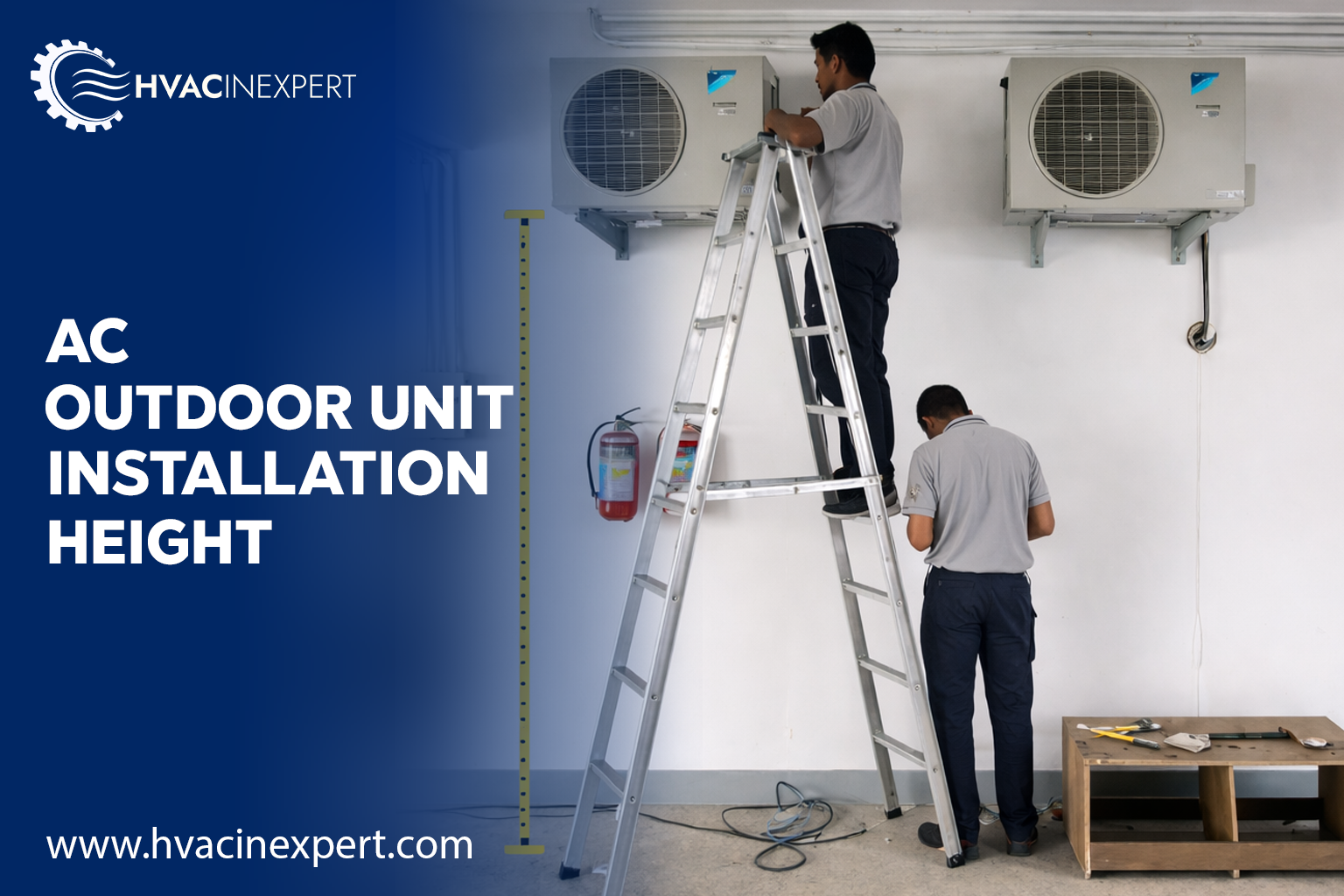
AC Outdoor Unit Installation Height (Complete HVAC Installation Guide)
When installing a split air conditioner, the placement of the outdoor unit is just as important as installing the indoor unit. One of the most common questions HVAC technicians and homeowners ask is:
What is the correct AC outdoor unit installation height?
The height and placement of the outdoor unit significantly affect system efficiency, compressor performance, airflow circulation, and long-term reliability.
Incorrect outdoor unit installation height can lead to several problems including:
-
Reduced cooling efficiency
-
High compressor load
-
Poor heat dissipation
-
Increased electricity consumption
-
Difficult maintenance access
Therefore, professional HVAC technicians follow specific guidelines for outdoor unit installation height.
This guide explains everything you need to know about AC outdoor unit installation height, including:
-
Recommended installation height
-
Wall mounting guidelines
-
Ground installation requirements
-
Clearance distances
-
Safety considerations
Understanding these factors helps ensure proper AC system performance.
What Is an AC Outdoor Unit?
The outdoor unit typically includes:
-
Compressor
-
Condenser coil
-
Condenser fan
-
Expansion device
-
Refrigerant service valves
The outdoor unit works together with the indoor unit to remove heat from the room.
During cooling operation:
-
The indoor unit absorbs heat from the room air.
-
Refrigerant carries this heat to the outdoor unit.
-
The outdoor unit releases the heat into the outside environment.
Proper installation ensures efficient heat rejection.
Why Outdoor Unit Installation Height Is Important
Outdoor unit installation height plays a critical role in HVAC system performance.
Proper Airflow Circulation
The condenser requires sufficient airflow to dissipate heat efficiently.
Installing the outdoor unit at an appropriate height prevents airflow obstruction.
Protection from Dust and Water
Installing the outdoor unit slightly above ground level protects it from:
-
Dust accumulation
-
Rainwater flooding
-
Debris
Maintenance Accessibility
Correct installation height makes maintenance tasks easier.
Technicians can easily access the unit for servicing.
Reduced Noise Transmission
Wall-mounted outdoor units can reduce vibration and noise transmission to indoor spaces.
Recommended AC Outdoor Unit Installation Height
The recommended installation height depends on the installation type.
Wall-Mounted Outdoor Unit Height
For wall-mounted outdoor units, the recommended height is:
2 feet to 6 feet above ground level
This height ensures proper airflow and protects the unit from ground-level dust and water.
Ground Installation Height
If the outdoor unit is installed on the ground, it should be placed on a raised platform.
Recommended platform height:
12 to 18 inches above ground level
This prevents water damage and improves airflow.
Rooftop Installation Height
Outdoor units installed on rooftops should be mounted on:
-
Concrete blocks
-
Steel frames
Recommended clearance height:
300 mm to 600 mm above roof surface
Minimum Clearance Requirements for Outdoor Units
In addition to installation height, proper clearance around the outdoor unit is essential.
Typical clearance requirements include:
| Direction | Recommended Clearance |
|---|---|
| Front | 1 meter |
| Rear | 300 mm |
| Sides | 300–500 mm |
| Top | 1 meter |
Adequate clearance ensures efficient heat dissipation.
Factors Affecting Outdoor Unit Installation Height
Several factors influence the ideal outdoor unit installation height.
Building Structure
Building layout determines the possible installation locations.
Outdoor units may be installed on:
-
Balcony walls
-
Building exteriors
-
Rooftops
-
Ground level
Airflow Conditions
The outdoor unit requires good airflow to dissipate heat effectively.
Avoid installing outdoor units in confined spaces.
Distance Between Indoor and Outdoor Units
Refrigerant piping length must follow manufacturer limits.
Excessive height difference between indoor and outdoor units can affect system performance.
Most split AC systems allow:
Maximum vertical distance of 10–15 meters
Outdoor Unit Wall Mounting Guidelines
Wall mounting is one of the most common installation methods.
Advantages of Wall Mounting
-
Protects unit from flooding
-
Improves airflow circulation
-
Saves ground space
Wall Mount Installation Steps
-
Select a strong wall capable of supporting the unit weight.
-
Install wall mounting brackets.
-
Ensure the brackets are level.
-
Secure the outdoor unit on the brackets.
-
Install vibration isolators.
Wall brackets should be made from heavy-duty galvanized steel.
Ground Installation Guidelines
It is common in houses and villas.
Ground Installation Procedure
-
Construct a concrete platform.
-
Ensure the platform is level.
-
Install anti-vibration pads.
-
Secure the outdoor unit.
Ground installation requires proper drainage to prevent water accumulation.
Rooftop Installation Guidelines
It is common in commercial buildings.
Rooftop Installation Advantages
-
Maximum airflow
-
Reduced noise near living areas
-
Easy piping routing
Rooftop Installation Procedure
-
Install steel support frame.
-
Use vibration isolators.
-
Ensure structural load capacity.
Proper structural support prevents vibration issues.
Distance Between Indoor and Outdoor Units
Correct installation height also depends on piping distance.
Most split AC systems allow:
| Parameter | Typical Value |
|---|---|
| Maximum Pipe Length | 15 meters |
| Maximum Height Difference | 10 meters |
Exceeding these limits may require additional refrigerant charge.
Common Mistakes in Outdoor Unit Installation
Improper installation can reduce system efficiency.
Installing Unit Too Close to the Ground
Units placed directly on the ground may accumulate dust and water.
Insufficient Airflow Clearance
Restricted airflow reduces condenser performance.
Installing in Direct Sunlight
Direct sunlight can increase condenser temperature.
Poor Wall Mounting
Weak mounting brackets may cause vibration.
Avoiding these mistakes ensures long system life.
AC Outdoor Unit Installation Cost
Outdoor unit installation cost depends on mounting type.
Typical costs include:
| Installation Type | Cost |
|---|---|
| Wall Mount Installation | $30 – $80 |
| Ground Installation | $20 – $50 |
| Wall Bracket | $15 – $40 |
In India, outdoor unit installation usually costs:
₹1000 – ₹3000
depending on complexity.
Safety Tips for Outdoor Unit Installation
HVAC technicians must follow safety precautions during installation.
Important safety practices include:
-
Use proper lifting equipment
-
Secure mounting brackets properly
-
Avoid electrical hazards
-
Ensure stable installation surface
Safety prevents accidents during installation.
Maintenance Tips for Outdoor Units
Regular maintenance improves outdoor unit performance.
Recommended maintenance tasks include:
- Clean condenser coil regularly
- Remove dust and debris
- Check fan operation
- Inspect refrigerant connections
Proper maintenance improves cooling efficiency.
Advantages of Proper Outdoor Unit Placement
Correct outdoor unit installation height offers several benefits.
Improved Cooling Efficiency
Better airflow improves heat rejection.
Reduced Energy Consumption
Efficient condenser operation reduces electricity usage.
Longer Compressor Life
Proper installation reduces compressor load.
Easier Maintenance
Correct placement allows easy access for technicians.
Future Trends in AC Outdoor Unit Design
Modern air conditioners are evolving with new technologies.
Inverter Compressors
Inverter technology improves energy efficiency.
Smart HVAC Systems
Smart AC systems allow remote monitoring.
Compact Outdoor Units
Modern outdoor units are becoming smaller and more efficient.
These innovations improve HVAC system performance.
Frequently Asked Questions
What is the ideal height for AC outdoor unit installation?
The ideal height for outdoor unit installation is typically 2 to 6 feet above ground level when wall mounted.
Can the outdoor unit be installed on the ground?
Yes, but it should be installed on a raised platform at least 12 to 18 inches above ground.
What clearance is required around the outdoor unit?
Outdoor units require at least 300–500 mm clearance on sides and 1 meter in front for proper airflow.
Can the outdoor unit be installed above the indoor unit?
Yes, but the vertical height difference must remain within manufacturer limits.
How far can the outdoor unit be from the indoor unit?
Most split AC systems allow 10–15 meters piping distance.
Final Summary
The height of the outdoor unit plays a crucial role in air conditioner performance.
Recommended installation guidelines include:
-
Wall-mounted height: 2–6 feet above ground
-
Ground platform height: 12–18 inches
-
Proper airflow clearance around the unit
Following proper installation practices ensures efficient cooling and long equipment life.
Conclusion
Correct AC outdoor unit installation height is essential for efficient air conditioner operation.
Proper placement improves airflow, protects the unit from environmental damage, and ensures reliable system performance.
By following professional HVAC installation guidelines, technicians can maximize system efficiency and extend the lifespan of the air conditioning equipment.