AC Copper Pipe Installation Guide
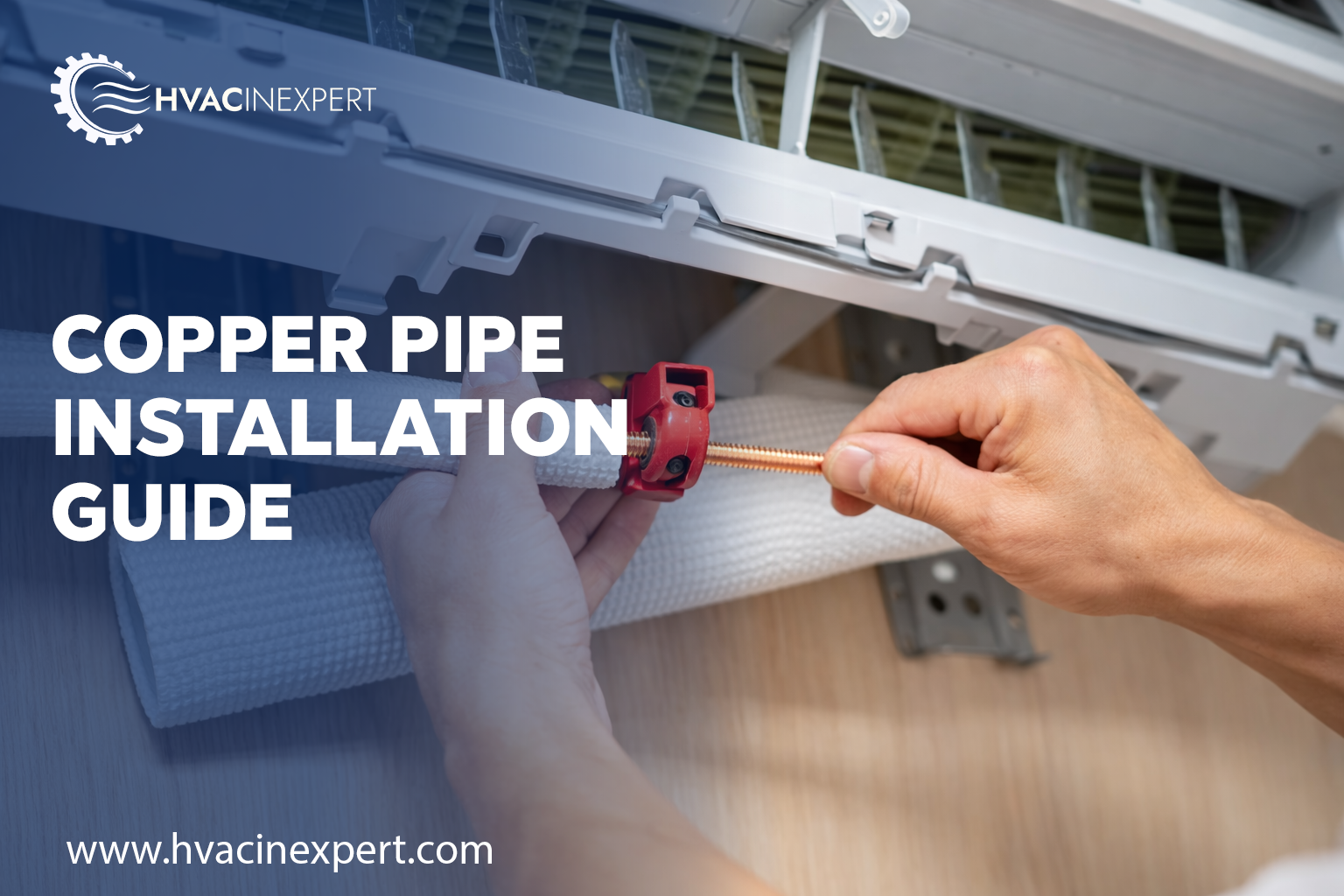
AC Copper Pipe Installation Guide (Complete Refrigerant Piping Installation Manual)
Copper piping plays a critical role in the performance of air conditioning systems. These pipes carry refrigerant between the indoor unit and outdoor unit, enabling the heat exchange process that cools indoor spaces.
Improper copper pipe installation can cause several HVAC problems such as:
-
Refrigerant leakage
-
Reduced cooling performance
-
Compressor damage
-
High energy consumption
-
System failure
Therefore, HVAC technicians must follow a proper AC copper pipe installation guide to ensure reliable system operation.
This comprehensive guide explains the professional procedures used for installing copper pipes in air conditioning systems.
In this guide you will learn:
-
Types of copper pipes used in HVAC
-
Proper pipe sizing
-
Copper pipe cutting and flaring
-
Brazing and joint connections
-
Pipe insulation installation
-
Leak testing procedures
-
Vacuuming and system commissioning
Understanding these steps ensures efficient refrigerant flow and long system lifespan.
What Is AC Copper Piping?
Copper piping in air conditioning systems is used to transport refrigerant between the indoor and outdoor units.
Refrigerant absorbs heat from indoor air and carries it to the outdoor unit through these pipes.
Copper is widely used in HVAC systems because it offers:
-
Excellent thermal conductivity
-
High corrosion resistance
-
Strong durability
-
Easy installation and shaping
AC copper piping consists of two main lines:
Liquid Line
The liquid line carries high-pressure liquid refrigerant from the outdoor unit to the indoor unit.
Gas Line (Suction Line)
The gas line carries low-pressure refrigerant vapor back to the compressor.
Both lines are essential for the refrigeration cycle.
Types of Copper Pipes Used in AC Systems
HVAC systems use different types of copper pipes depending on application.
Soft Copper Pipes
Soft copper pipes are flexible and easy to bend.
Advantages:
-
Easy installation
-
Fewer pipe joints
-
Suitable for split AC systems
Hard Copper Pipes
Hard copper pipes are rigid and require brazing.
Advantages:
-
Stronger structure
-
Ideal for commercial HVAC systems
-
Used in large installations
Insulated Copper Pipes
Most HVAC copper pipes come with factory insulation.
Benefits include:
-
Reduced heat loss
-
Prevention of condensation
-
Improved system efficiency
Standard AC Copper Pipe Sizes
Correct pipe size is critical for proper refrigerant flow.
Typical copper pipe sizes for split AC systems:
| AC Capacity | Liquid Pipe | Gas Pipe |
|---|---|---|
| 1 Ton | 1/4 inch | 3/8 inch |
| 1.5 Ton | 1/4 inch | 1/2 inch |
| 2 Ton | 3/8 inch | 5/8 inch |
Using incorrect pipe sizes can reduce cooling efficiency and increase compressor load.
Tools Required for Copper Pipe Installation
HVAC technicians require specialized tools to install copper piping.
Common tools include:
-
Pipe cutter
-
Flaring tool
-
Brazing torch
-
Vacuum pump
-
Manifold gauge
-
Deburring tool
-
Pipe bender
-
Nitrogen cylinder for pressure testing
Using proper tools ensures professional installation.
Step 1: Planning the Pipe Route
Before installing copper pipes, technicians must plan the piping route.
Important considerations include:
-
Shortest possible piping path
-
Minimum bends
-
Proper pipe support
-
Protection from physical damage
Planning the route helps reduce installation errors.
Step 2: Measuring and Cutting Copper Pipes
Copper pipes must be cut accurately to the required length.
Pipe Cutting Procedure
-
Measure required pipe length.
-
Mark the cutting point.
-
Use a pipe cutter to cut the pipe.
-
Avoid using hacksaws to prevent uneven edges.
Clean and smooth pipe ends ensure proper connections.
Step 3: Deburring the Pipe Ends
After cutting the pipe, burrs may remain inside the pipe.
These burrs can obstruct refrigerant flow.
Deburring Procedure
Use a deburring tool to remove internal burrs.
This step ensures smooth refrigerant flow.
Step 4: Flaring Copper Pipes
Flaring is commonly used for connecting copper pipes in split AC systems.
Flaring Procedure
-
Slide flare nut onto the pipe.
-
Insert pipe into flaring tool.
-
Tighten the flaring cone.
-
Form the flare shape.
Proper flaring ensures leak-free connections.
Step 5: Connecting Copper Pipes
After flaring, copper pipes are connected to the AC unit.
Connection Procedure
-
Align pipe with the service port.
-
Tighten flare nut using a torque wrench.
-
Ensure proper sealing.
Overtightening may damage flare joints.
Step 6: Brazing Copper Pipe Joints
Brazing is commonly used in large HVAC systems.
Brazing Procedure
-
Clean pipe surfaces.
-
Apply flux if required.
-
Heat joint using brazing torch.
-
Add brazing alloy.
Brazed joints are strong and leak-resistant.
Step 7: Installing Pipe Insulation
Pipe insulation prevents energy loss and condensation.
Common insulation materials include:
-
Rubber insulation
-
Foam insulation
Insulation Installation Steps
-
Wrap insulation around pipe.
-
Seal joints using insulation tape.
-
Ensure full coverage.
Proper insulation improves HVAC efficiency.
Step 8: Supporting Copper Pipes
Copper pipes must be supported properly to prevent vibration.
Pipe Support Guidelines
-
Install pipe clamps every 1–1.5 meters.
-
Avoid pipe sagging.
-
Protect pipes from sharp edges.
Proper support improves system durability.
Step 9: Leak Testing
Leak testing ensures that all pipe connections are secure.
Common Leak Testing Methods
-
Nitrogen pressure testing
-
Soap bubble testing
-
Electronic leak detection
Leak-free piping is essential for system reliability.
Step 10: Vacuuming the System
Vacuuming removes air and moisture from refrigerant pipes.
Vacuuming Procedure
-
Connect manifold gauge to service port.
-
Connect vacuum pump.
-
Run pump for 20–30 minutes.
-
Achieve required vacuum pressure.
Proper vacuuming protects the compressor.
Step 11: Refrigerant Charging
After vacuuming, refrigerant can be charged.
Charging methods include:
-
Weight method
-
Superheat method
-
Subcooling method
Correct refrigerant charge ensures efficient cooling.
Common Copper Pipe Installation Mistakes
Several mistakes can occur during copper pipe installation.
Improper Flaring
Poor flare connections cause refrigerant leakage.
Incorrect Pipe Size
Wrong pipe size affects refrigerant flow.
Poor Insulation
Uninsulated pipes cause energy loss.
Skipping Vacuuming
Skipping vacuuming can damage the compressor.
Avoiding these mistakes ensures system reliability.
Copper Pipe Installation Cost
Copper pipe installation cost depends on pipe length and labor charges.
Typical cost includes:
| Component | Cost |
|---|---|
| Copper Pipe | $5 – $15 per meter |
| Insulation | $2 – $5 per meter |
| Labor | $50 – $200 |
In India, copper pipe installation usually costs:
₹300 – ₹600 per meter
depending on pipe size and installation complexity.
Safety Tips for Copper Pipe Installation
HVAC technicians must follow safety procedures.
Important precautions include:
-
Wear protective gloves
-
Use proper tools
-
Avoid refrigerant exposure
-
Handle brazing torch carefully
Safety ensures accident-free installation.
Maintenance Tips for AC Copper Pipes
Regular inspection improves system reliability.
Recommended maintenance tasks include:
- Check for refrigerant leaks
- Inspect insulation condition
- Clean pipe surfaces
- Verify refrigerant pressure
Proper maintenance extends system lifespan.
Advantages of Proper Copper Pipe Installation
Correct copper pipe installation provides several benefits.
Improved Cooling Efficiency
Proper refrigerant flow improves cooling performance.
Reduced Energy Consumption
Efficient piping reduces compressor workload.
Longer Equipment Life
Correct installation prevents compressor damage.
Leak-Free Operation
Professional piping prevents refrigerant leaks.
Future Trends in HVAC Refrigerant Piping
HVAC technology continues to evolve.
Emerging trends include:
Pre-Insulated Copper Pipes
Factory-insulated pipes simplify installation.
Flexible Refrigerant Lines
Flexible piping systems reduce installation time.
Eco-Friendly Refrigerants
New refrigerants require improved piping systems.
These innovations improve HVAC system efficiency.
Frequently Asked Questions
What type of copper pipe is used for AC installation?
Soft copper pipes are commonly used for split AC installation due to their flexibility.
What is the standard pipe size for 1.5 ton AC?
Typical pipe size for a 1.5 ton AC is 1/4 inch liquid line and 1/2 inch gas line.
Why is insulation required for copper pipes?
Insulation prevents condensation and improves energy efficiency.
How long can AC copper piping be?
Most split AC systems allow 10–15 meters piping length.
What happens if copper pipe size is incorrect?
Incorrect pipe size can reduce cooling efficiency and increase compressor load.
Final Summary
Copper piping is one of the most important components of HVAC systems.
Proper installation involves several steps including:
-
Pipe cutting and flaring
-
Brazing connections
-
Insulation installation
-
Leak testing
-
Vacuuming and refrigerant charging
Following the AC copper pipe installation guide ensures efficient cooling and long HVAC system life.
Conclusion
AC copper pipe installation plays a crucial role in the performance of air conditioning systems.
By following proper installation procedures, HVAC technicians can ensure efficient refrigerant flow, improved cooling performance, and long system lifespan.
Professional piping installation ultimately leads to reliable and energy-efficient HVAC operation.