HVAC Duct Insulation Types
HVAC Duct Insulation Types: The Ultimate Guide for Efficiency, Comfort & Code Compliance
Introduction to HVAC Duct Insulation
HVAC duct insulation is one of the most important—but often overlooked—components of a heating and cooling system. While equipment like chillers, VRF systems, and air handlers get most of the attention, poorly insulated ducts can waste up to 20–30% of energy, reduce indoor comfort, and cause serious issues like condensation and mold growth.
Whether you’re an HVAC contractor, engineer, builder, or homeowner, understanding duct insulation types helps you:
- Improve energy efficiency
- Prevent air leakage and thermal loss
- Enhance indoor air quality
- Meet building codes and standards
This ultra-detailed guide covers all types of HVAC duct insulation, materials, applications, pros & cons, and expert selection tips.
What is HVAC Duct Insulation?
HVAC duct insulation is a protective thermal layer applied to air ducts to minimize heat transfer between the air inside the duct and the surrounding environment.
Main Functions:
- Reduce heat gain/loss
- Prevent condensation
- Improve energy efficiency
- Reduce noise (acoustic insulation)
Types of HVAC Duct Insulation
HVAC duct insulation can be broadly classified into:
- Fiberglass Insulation
- Foam Board Insulation
- Reflective (Radiant Barrier) Insulation
- Spray Foam Insulation
- Flexible Duct Insulation
- Mineral Wool Insulation
- Double Wall Insulated Ducts
Let’s explore each in detail
1. Fiberglass Duct Insulation
Overview
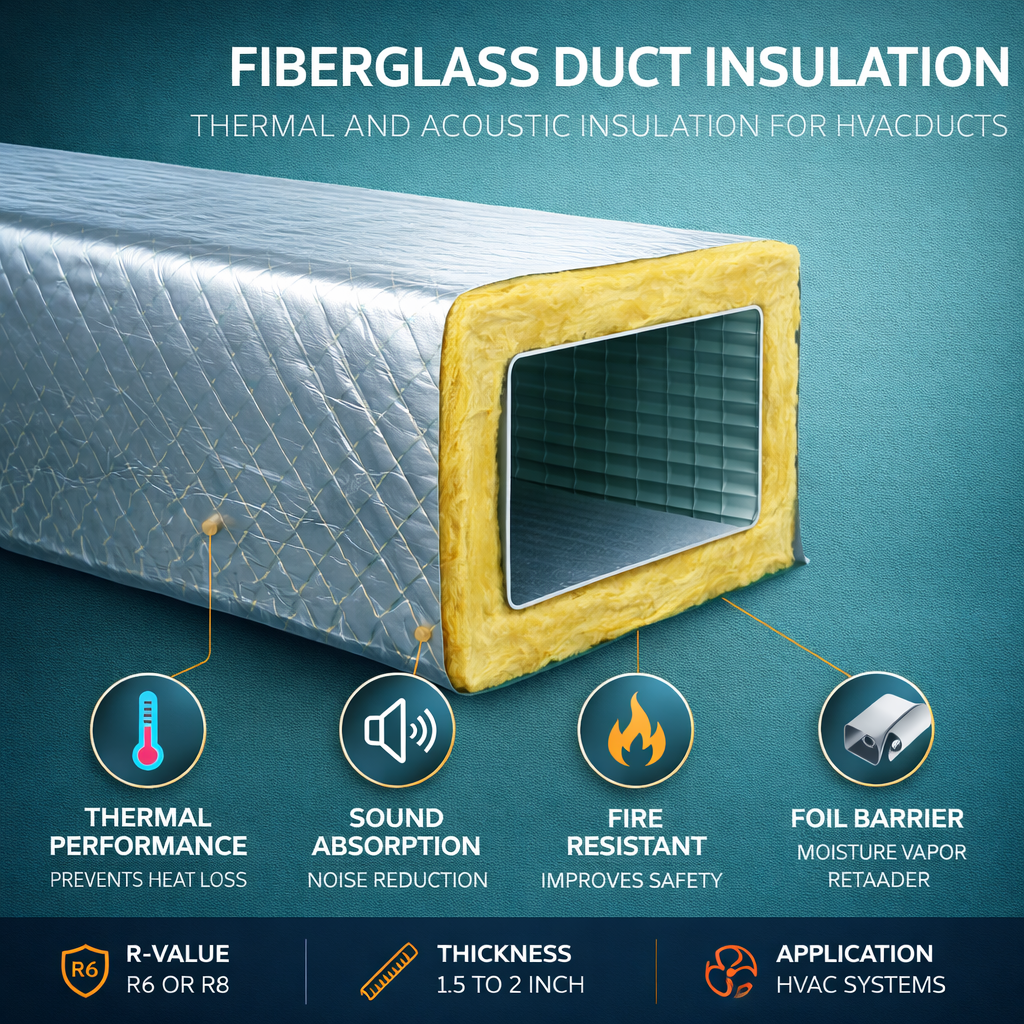
Fiberglass is the most commonly used duct insulation material worldwide.
Types:
- Duct wrap (external)
- Duct liner (internal)
Features:
- High thermal resistance (R-value)
- Fire-resistant
- Cost-effective
Advantages:
- Widely available
- Easy installation
- Good acoustic performance
Disadvantages:
- Can absorb moisture
- Requires vapor barrier
Best For:
- Commercial buildings
- Residential HVAC systems
2. Foam Board Insulation
Overview
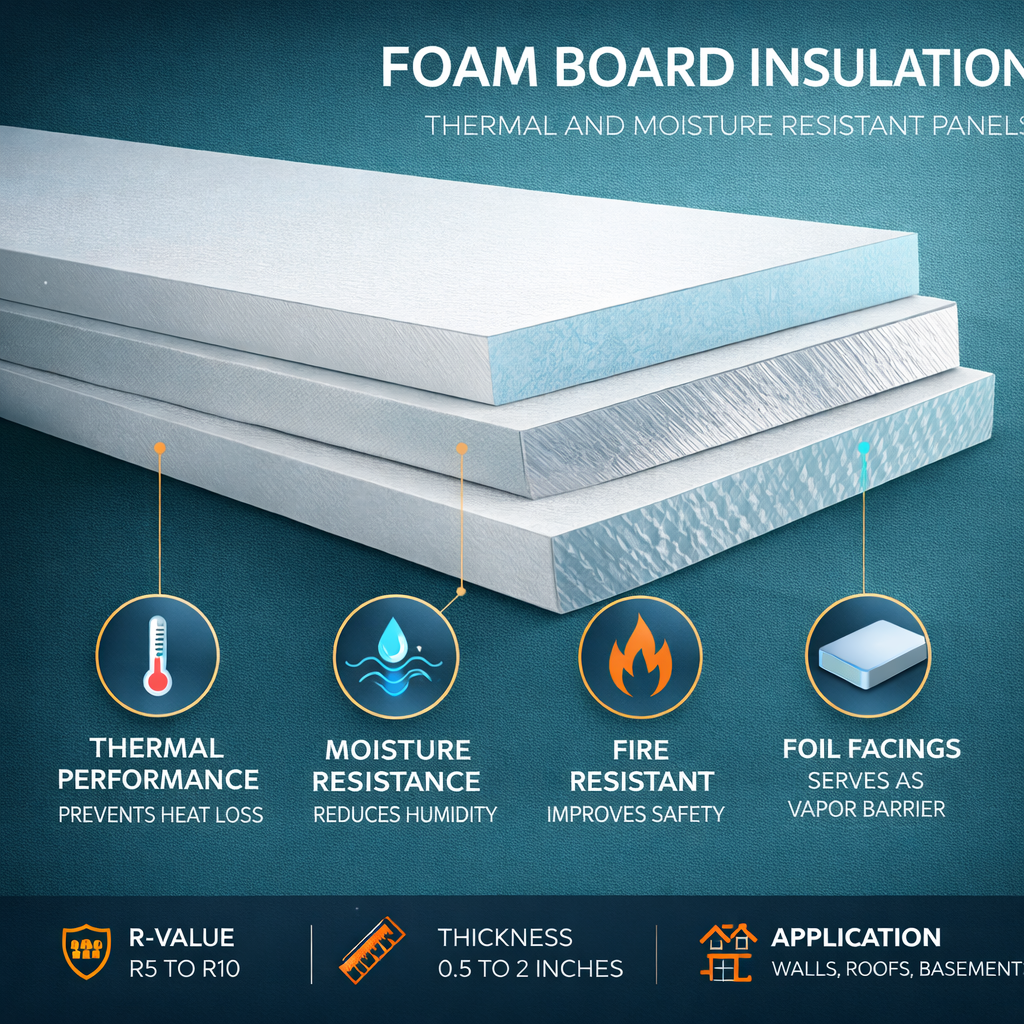
Rigid foam boards are used for high-efficiency insulation systems.
Types:
- Polyurethane (PU)
- Polyisocyanurate (PIR)
Features:
- High R-value per inch
- Lightweight
- Moisture resistant
Advantages:
- Superior thermal performance
- Durable
- Space-saving
Disadvantages:
- Higher cost
- Requires careful sealing
Best For:
- Industrial HVAC
- High-performance buildings
3. Reflective (Radiant Barrier) Insulation
Overview
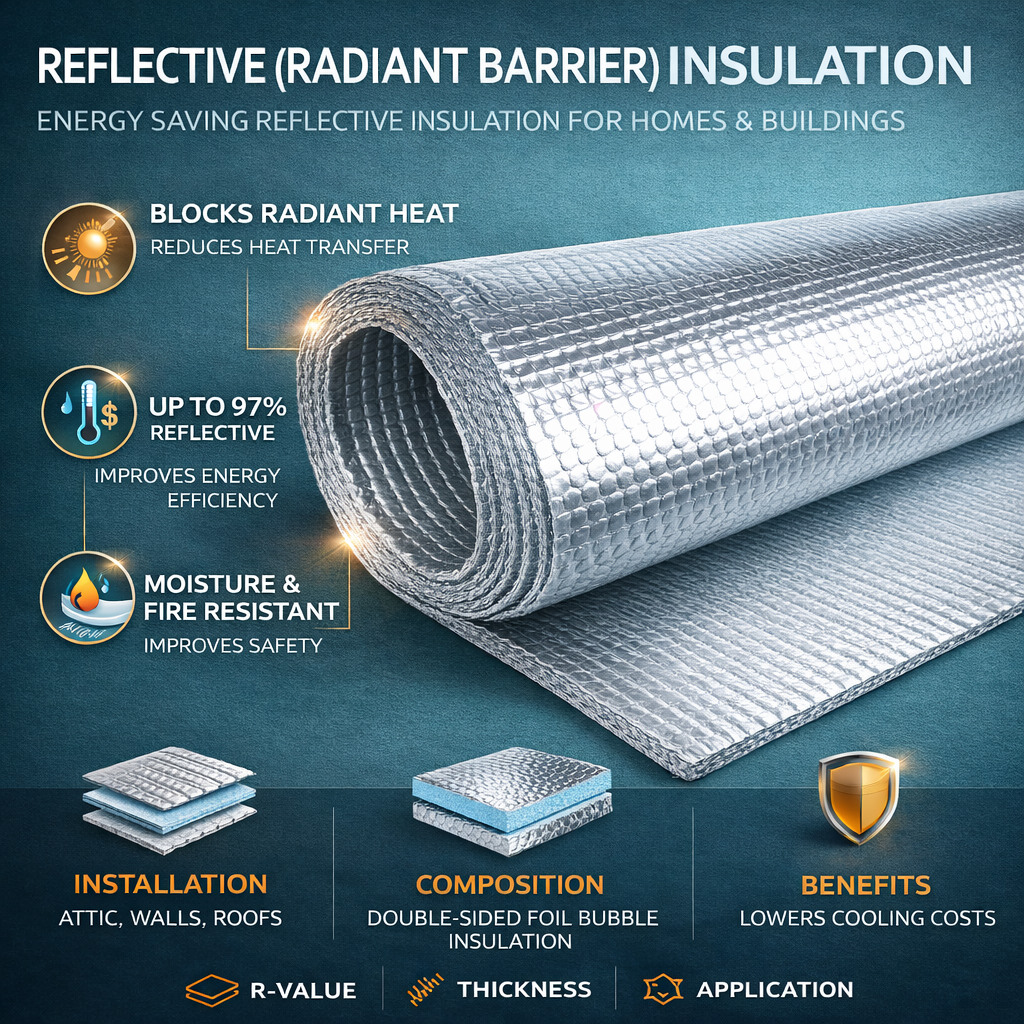
Reflective insulation uses aluminum foil surfaces to reflect heat radiation.
Features:
- Reflects radiant heat
- Lightweight
- Easy to install
Advantages:
- Ideal for hot climates
- Reduces radiant heat gain
Disadvantages:
- Limited conductive insulation
- Needs air gap for effectiveness
Best For:
- Attics
- Hot regions (like India, Middle East)
4. Spray Foam Insulation
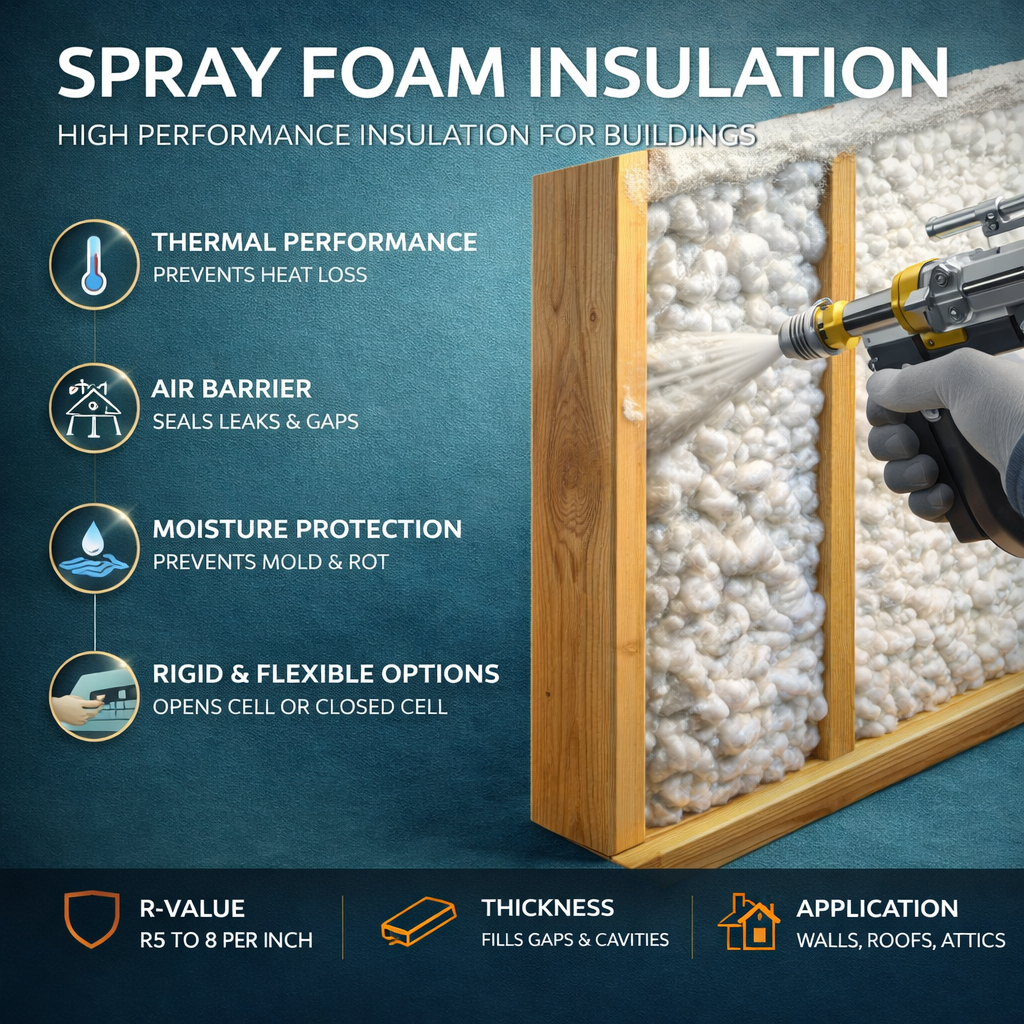
Overview
Spray foam insulation is applied as a liquid that expands into foam.
Types:
- Open-cell foam
- Closed-cell foam
Features:
- Air-tight sealing
- High insulation value
Advantages:
- Eliminates air leaks
- Prevents condensation
- Strong adhesion
Disadvantages:
- Expensive
- Requires skilled labor
Best For:
- Retrofit projects
- Energy-efficient buildings
5. Flexible Duct Insulation
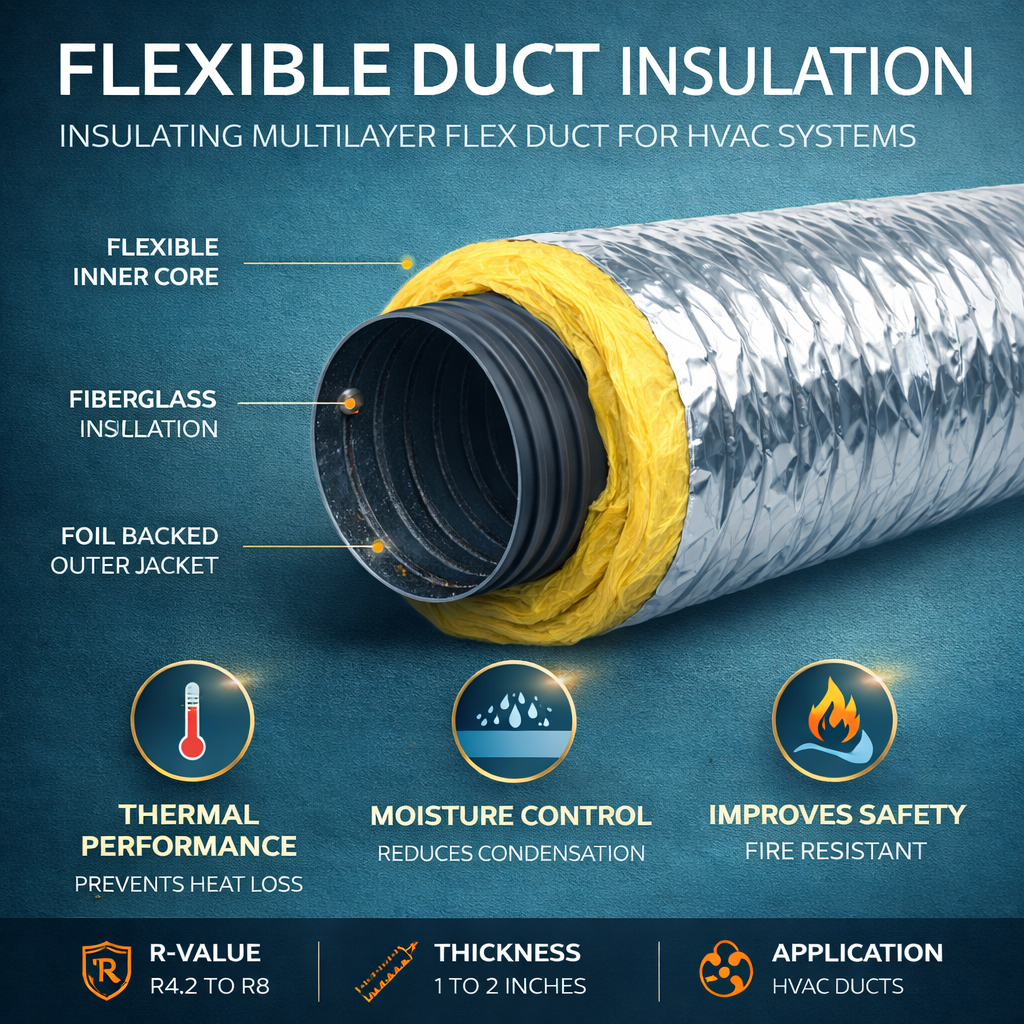
Overview
Flexible ducts come with built-in insulation.
Features:
- Lightweight
- Easy to install
Advantages:
- Cost-effective
- Quick installation
Disadvantages:
- Lower durability
- Airflow resistance
Best For:
- Residential HVAC
- Small spaces
6. Mineral Wool Insulation
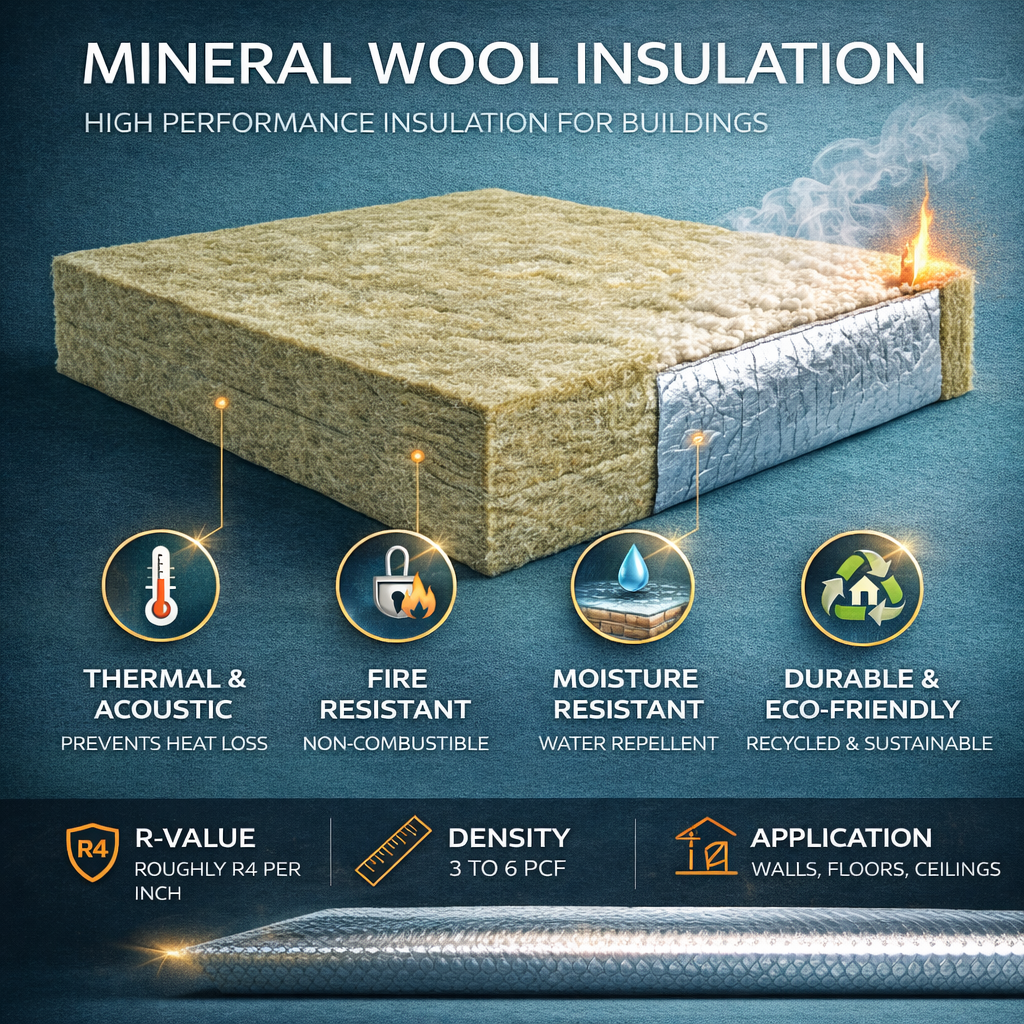
Overview
Mineral wool (rock wool) is used where fire resistance is critical.
Features:
- High temperature resistance
- Excellent sound insulation
Advantages:
- Fireproof
- Durable
Disadvantages:
- Heavier
- Higher cost
Best For:
- Industrial HVAC
- Fire-rated applications
7. Double Wall Insulated Ducts
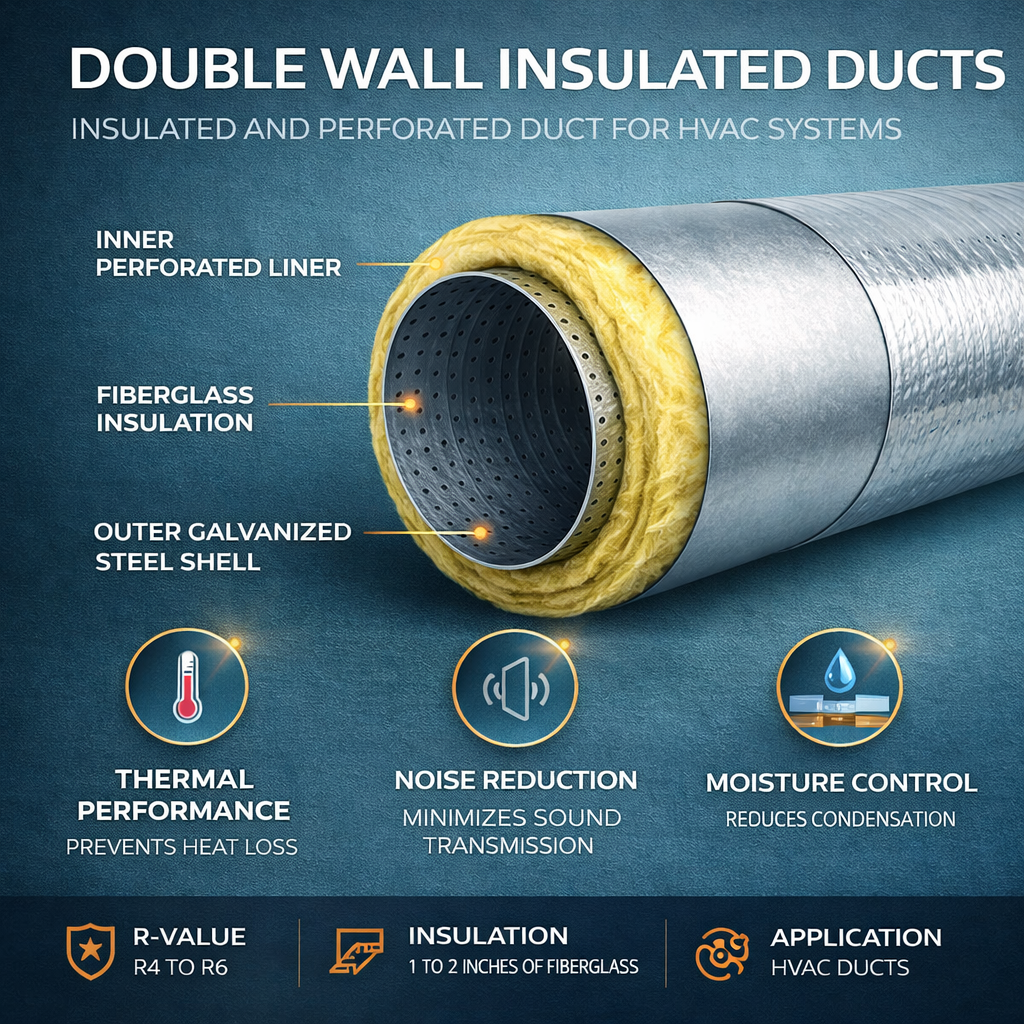
Overview
Double wall ducts have built-in insulation between two metal layers.
Features:
- Factory-made
- High durability
Advantages:
- Clean and hygienic
- Long lifespan
Disadvantages:
- Expensive
- Complex installation
Best For:
- Hospitals
- Clean rooms
- Pharmaceutical plants
Key Factors for Choosing Duct Insulation
When selecting insulation, consider:
1. R-Value
Higher R-value = better insulation
2. Climate
- Hot climates → reflective + foam
- Cold climates → fiberglass + mineral wool
3. Moisture Resistance
Essential for humid areas
4. Fire Safety
Choose fire-rated materials
5. Budget
Balance cost vs performance
Comparison Table
| Type | R-Value | Cost | Moisture Resistance | Best Use |
|---|---|---|---|---|
| Fiberglass | Medium | Low | Low | General |
| Foam Board | High | High | High | Industrial |
| Reflective | Low | Low | Medium | Hot climates |
| Spray Foam | Very High | High | High | Retrofit |
| Flexible | Medium | Low | Medium | Residential |
| Mineral Wool | High | Medium | Medium | Fire safety |
| Double Wall | High | Very High | High | Clean rooms |
Benefits of Proper Duct Insulation
- Energy savings (up to 30%)
- Improved cooling/heating performance
- Reduced condensation
- Better indoor air quality
- Lower electricity bills
Common Mistakes to Avoid
- Using low R-value insulation
- Ignoring vapor barriers
- Poor sealing of joints
- Incorrect thickness
- Skipping insulation in concealed areas
Installation Best Practices
- Seal all duct joints before insulation
- Use proper thickness (R6–R8 typical)
- Install vapor barrier in humid climates
- Avoid compression of insulation
Future Trends
- Smart insulated ducts
- Eco-friendly materials
- Pre-insulated panel systems
- Green building compliance
Conclusion
HVAC duct insulation is not just an add-on—it’s a core part of system efficiency. Choosing the right type can:
- Reduce energy costs
- Improve comfort
- Extend HVAC lifespan
For HVAC professionals, mastering insulation types is key to delivering high-performance systems.
Frequently Asked Questions – HVAC Duct Insulation Types
What is HVAC duct insulation?
HVAC duct insulation is a material applied to air ducts to reduce heat loss or gain, prevent condensation, and improve overall energy efficiency of heating and cooling systems.
What are the main types of HVAC duct insulation?
The main types include:
- Fiberglass insulation
- Foam board insulation
- Reflective (radiant barrier) insulation
- Spray foam insulation
- Flexible duct insulation
- Mineral wool insulation
- Double wall insulated ducts
Which duct insulation is best for HVAC systems?
Fiberglass insulation is the most commonly used due to its affordability and performance, while spray foam offers the highest efficiency and sealing capabilities.
What R-value is recommended for duct insulation?
Typically, R6 to R8 is recommended for residential ducts, while commercial systems may require higher values depending on the application.
Why is duct insulation important?
Duct insulation helps:
- Reduce energy loss
- Improve HVAC efficiency
- Prevent condensation
- Enhance comfort
- Lower electricity bills
Can duct insulation prevent condensation?
Yes, proper insulation with a vapor barrier prevents condensation by keeping the duct surface temperature above the dew point.
Is spray foam insulation good for ducts?
Yes, spray foam provides excellent sealing, high insulation value, and moisture resistance, making it one of the most efficient options.
What is the difference between duct wrap and duct liner?
- Duct wrap → Installed outside the duct
- Duct liner → Installed inside the duct
Both provide thermal insulation, but liners also improve sound absorption.
Which insulation is best for hot climates?
Reflective insulation and spray foam are ideal for hot climates as they reduce heat gain and improve cooling efficiency.
How often should duct insulation be inspected?
It should be inspected at least once a year to ensure it is in good condition and performing efficiently.