R-744 Pressure Temperature Chart
Complete Guide to R-744 Pressure Temperature Chart (CO₂ PT Chart) – HVAC & Refrigeration Expert Guide
1. Introduction to R-744 Refrigerant
R-744, commonly known as carbon dioxide (CO₂), is a natural refrigerant gaining rapid popularity in modern refrigeration and HVAC systems.
Why R-744 is important:
- Zero ozone depletion (ODP = 0)
- Ultra-low global warming potential (GWP = 1)
- Environmentally sustainable
Widely used in:
- Supermarket refrigeration
- Cold storage
- Heat pump systems
- Industrial refrigeration
2. What is a Pressure Temperature (PT) Chart?
A Pressure Temperature Chart (PT Chart) shows the relationship between:
- Saturation pressure
- Saturation temperature
Importance:
- Converts pressure to temperature
- Helps in system diagnosis
- Essential for charging and troubleshooting
3. Why R-744 PT Chart is Important
R-744 operates at very high pressures compared to traditional refrigerants.
Without a PT chart:
- Accurate diagnosis is difficult
- Charging becomes risky
- System efficiency reduces
4. Unique Properties of R-744 (CO₂)
| Property | Value |
|---|---|
| Type | Natural refrigerant |
| ODP | 0 |
| GWP | 1 |
| Critical Temperature | 31°C |
| Critical Pressure | 1070 PSI |
| Operating Pressure | Very High |
| Flammability | Non-flammable |
5. R-744 Pressure Temperature Chart (°F vs PSI)
R-744 PT Chart (°F / PSIG) (Saturation Region)
| Temp (°F) | Pressure (PSIG) |
|---|---|
| -40 | 70 |
| -30 | 100 |
| -20 | 140 |
| -10 | 190 |
| 0 | 250 |
| 10 | 320 |
| 20 | 400 |
| 30 | 500 |
| 40 | 620 |
| 50 | 760 |
| 60 | 930 |
| 70 | 1100 |
| 80 | 1250 |
| 87 (Critical) | 1070+ |
6. R-744 Pressure Temperature Chart (°C vs PSI)
R-744 PT Chart (°C / PSIG)
| Temp (°C) | Pressure (PSIG) |
|---|---|
| -40 | 70 |
| -35 | 85 |
| -30 | 100 |
| -25 | 120 |
| -20 | 140 |
| -15 | 165 |
| -10 | 190 |
| -5 | 220 |
| 0 | 250 |
| 5 | 285 |
| 10 | 320 |
| 15 | 360 |
| 20 | 400 |
| 25 | 460 |
| 30 | 500 |
| 31 (Critical) | 1070 |
7. Critical Point & Transcritical Operation
Critical Point:
- Temperature: 31°C
- Pressure: 1070 PSI
Above this:
- No liquid-gas distinction
- System enters transcritical mode
8. How to Read an R-744 PT Chart
Steps:
- Measure system pressure
- Find value in PT chart
- Convert to temperature
- Compare with actual
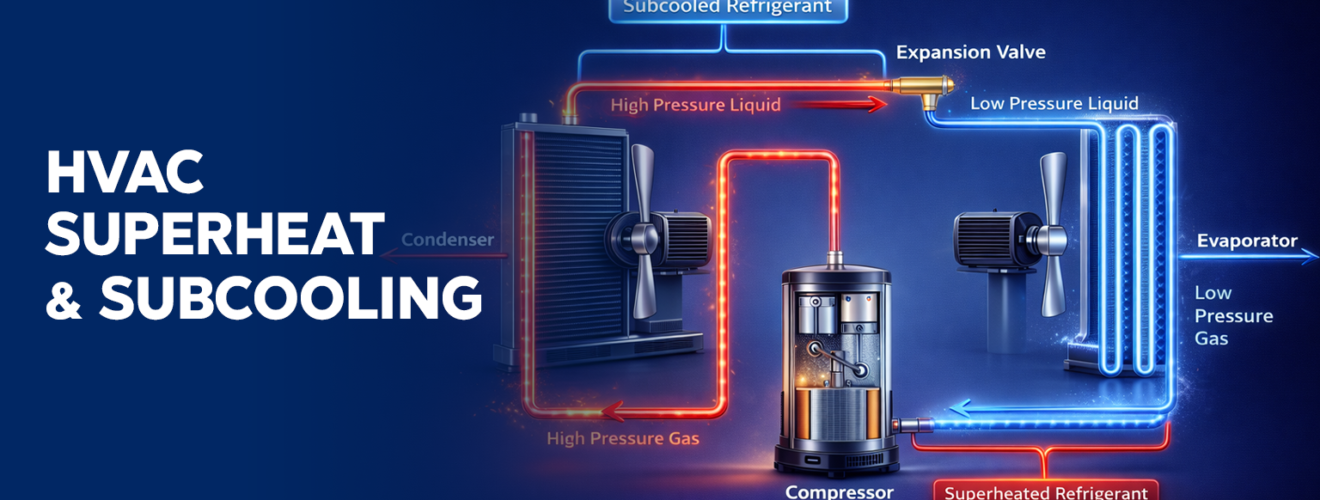
9. Superheat and Subcooling
Superheat Formula
Superheat = Actual Temperature – Saturation Temperature
Note:
- Subcooling is not used in transcritical systems
10. Charging Guidelines for R-744
Important:
- Use high-pressure rated equipment
- Charge carefully
- Monitor pressure continuously
11. Applications of R-744
- Supermarkets
- Cold storage
- Heat pumps
- Industrial cooling
12. Troubleshooting Using PT Chart
Low Pressure:
- Undercharge
- Leak
High Pressure:
- Overcharge
- High ambient temperature
13. Safety and Handling
- High pressure risk
- Use certified tools
- Proper training required
14. Advantages and Disadvantages
Advantages:
- Eco-friendly
- Non-toxic
- High efficiency
Disadvantages:
- High pressure system
- Complex design
15. Common Mistakes
- Using wrong PT chart
- Ignoring critical point
- Improper charging
16. FAQs
Q1. What is R-744?
CO₂ refrigerant.
Q2. Why high pressure?
Due to thermodynamic properties.
Q3. Is R-744 safe?
Yes, but high pressure risk.
17. Conclusion
R-744 is the future of sustainable refrigeration.
Understanding PT chart is essential for:
- System safety
- Proper charging
- Efficient operation