VRF System Design for Hotels
VRF System Design for Hotels: Complete Guide
Introduction
The hospitality industry demands comfort, efficiency, and reliability in HVAC systems. Guests expect precise temperature control, silent operation, and uninterrupted performance. This is where VRF (Variable Refrigerant Flow) systems have become the preferred choice for modern hotels.
From boutique hotels to luxury resorts and high-rise properties, VRF systems provide energy-efficient, flexible, and scalable cooling and heating solutions.
In this detailed guide, you will learn everything about:
- VRF system basics
- Hotel HVAC requirements
- Step-by-step VRF design process
- Load calculations
- Zoning strategies
- Installation and cost considerations
- Common design mistakes
What is a VRF System?
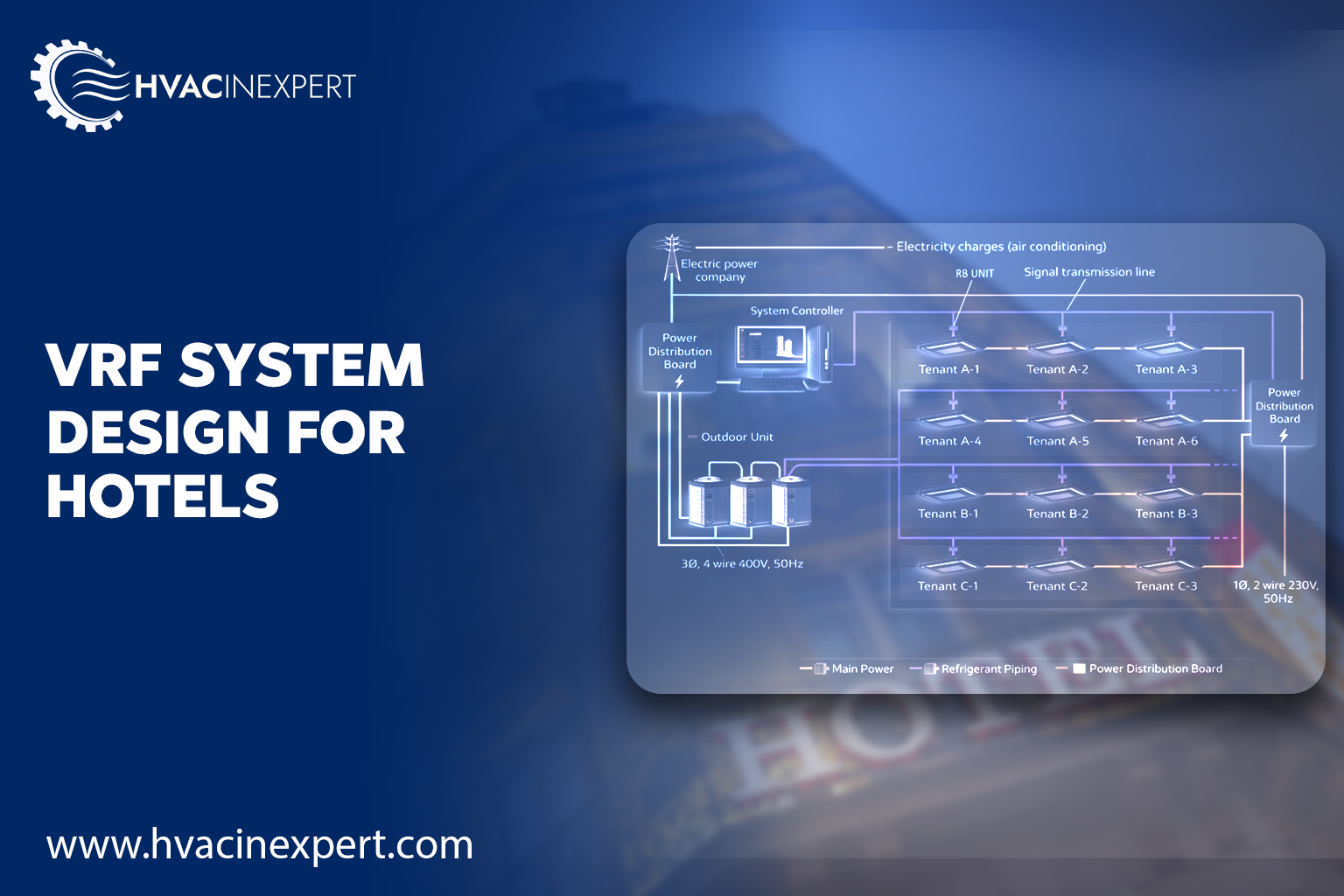
A VRF (Variable Refrigerant Flow) system is an advanced HVAC technology that uses refrigerant as the cooling and heating medium. It allows multiple indoor units to operate independently, all connected to a single outdoor unit.
Key Features
- Variable speed compressor (Inverter technology)
- Simultaneous heating & cooling (in Heat Recovery systems)
- Individual room control
- High energy efficiency
- Minimal ductwork
Why Hotels Prefer VRF Systems
Hotels have complex HVAC requirements due to:
- Different room occupancy levels
- 24/7 operation
- Noise sensitivity
- Energy cost concerns
Advantages of VRF in Hotels
1. Individual Room Control
Each guest room can control temperature independently.
2. Energy Efficiency
Reduces electricity consumption by up to 30–40% compared to conventional systems.
3. Quiet Operation
Critical for guest comfort.
4. Space Saving
No need for large duct systems.
5. Flexible Installation
Ideal for both new construction and retrofits.
Types of VRF Systems for Hotels
1. Heat Pump VRF System
- Either cooling OR heating at a time
- Suitable for smaller hotels
2. Heat Recovery VRF System
- Simultaneous cooling & heating
- Ideal for luxury hotels
3. Water-Cooled VRF
- Used in high-rise or premium properties
Hotel HVAC Design Requirements
Before designing a VRF system, understand hotel-specific needs:
Key Zones in a Hotel
- Guest Rooms
- Lobby
- Corridors
- Restaurants
- Banquet halls
- Conference rooms
- Gym & Spa
- Kitchen
- Back office
Each zone has different cooling loads and usage patterns.
Step-by-Step VRF System Design for Hotels
Step 1: Heat Load Calculation
This is the most critical step.
Factors to Consider
- Room size
- Occupancy
- Lighting load
- Equipment load
- Orientation (sun exposure)
- Ventilation requirements
Formula (Simplified)
Cooling Load (TR) = Area × Heat Load Factor
Typical values:
- Guest Room: 0.8 – 1.2 TR
- Lobby: High load due to glass façade
- Kitchen: Very high load
Step 2: Zoning Design
Zoning ensures efficient operation.
Best Zoning Strategy
- Each guest room = Individual zone
- Corridor = Separate zone
- Lobby = Dedicated system
- Kitchen = Separate HVAC system (not VRF)
Step 3: Indoor Unit Selection
Different indoor units are used in hotels:
Types
- Wall-mounted units
- Cassette units
- Concealed duct units
- Floor standing units
Recommended Usage
- Guest rooms → Concealed duct or wall-mounted
- Lobby → Cassette or ducted
- Corridors → Slim duct units
Step 4: Outdoor Unit Selection
Outdoor unit capacity depends on total load.
Design Considerations
- Diversity factor (important in hotels)
- Peak vs average load
- Redundancy requirement
Example
Total connected load = 100 TR
After diversity → 70–80 TR outdoor capacity
Step 5: Refrigerant Piping Design
Proper piping ensures system efficiency.
Key Points
- Maintain correct pipe diameter
- Avoid excessive pipe length
- Ensure proper oil return
- Follow manufacturer guidelines
Step 6: Control System Design
Modern hotels require smart controls.
Options
- Centralized control system
- Room thermostats
- BMS integration
Benefits
- Energy monitoring
- Remote control
- Fault detection
Step 7: Ventilation Design
VRF systems do NOT provide fresh air.
Solution
- Dedicated Fresh Air Unit (FAHU)
- Energy Recovery Ventilator (ERV)
VRF Design Example for a Hotel
Sample Hotel Data
- 50 Rooms
- 1 Lobby
- 1 Restaurant
Load Estimation
- Rooms: 50 × 1 TR = 50 TR
- Lobby: 10 TR
- Restaurant: 15 TR
Total = 75 TR
After diversity → ~60 TR
VRF System Layout Planning
Important Guidelines
- Keep outdoor units accessible
- Minimize piping length
- Ensure proper drainage
- Provide service space
Energy Efficiency in VRF Systems
Why VRF Saves Energy
- Inverter compressors adjust load
- Only required indoor units operate
- Heat recovery reduces waste
Tips to Improve Efficiency
- Use occupancy sensors
- Optimize thermostat settings
- Regular maintenance
Installation Guidelines
Key Points
- Follow manufacturer standards
- Proper insulation of pipes
- Leak testing
- Vacuuming before charging
Maintenance Requirements
Routine Maintenance
- Filter cleaning
- Coil cleaning
- Refrigerant check
- Electrical inspection
Benefits
- Longer system life
- Better efficiency
- Reduced breakdown
Cost Analysis of VRF System for Hotels
Initial Cost
Higher than split or ducted systems.
Operational Cost
Much lower due to energy savings.
ROI
Typically 3–5 years.
Common Mistakes in VRF Design
1. Incorrect Load Calculation
Leads to underperformance or oversizing.
2. Poor Zoning
Reduces efficiency.
3. Ignoring Ventilation
Causes indoor air quality issues.
4. Wrong Pipe Sizing
Affects system performance.
VRF vs Other HVAC Systems in Hotels
| Feature | VRF | Chiller | Split AC |
|---|---|---|---|
| Efficiency | High | Medium | Low |
| Flexibility | High | Low | Medium |
| Installation | Easy | Complex | Easy |
| Maintenance | Medium | High | Low |
Latest Trends in VRF Technology
- AI-based control systems
- IoT integration
- Smart energy monitoring
- Eco-friendly refrigerants
FAQ
What is the best HVAC system for hotels?
VRF systems are considered the best due to flexibility and energy efficiency.
How do you calculate VRF capacity for a hotel?
By calculating total heat load and applying diversity factor.
Is VRF suitable for large hotels?
Yes, especially heat recovery VRF systems.
Does VRF provide fresh air?
No, separate ventilation systems are required.
Conclusion
VRF systems are transforming hotel HVAC design by offering:
- Energy efficiency
- Flexibility
- Comfort
- Smart control
A well-designed VRF system ensures:
- Guest satisfaction
- Lower operational costs
- Long-term reliability
Professional VRF System Design Consultancy for Hotels
We offer complete HVAC design solutions including load calculation, zoning, piping design and equipment selection.
Our expert team ensures energy-efficient, cost-effective and reliable VRF systems for your hotel projects.
Contact us today for expert consultation.
 Call: +91 9825636606
 Email: vipulaircondition@gmail.com
 Visit: www.vipulac.in