What is VAV in HVAC?
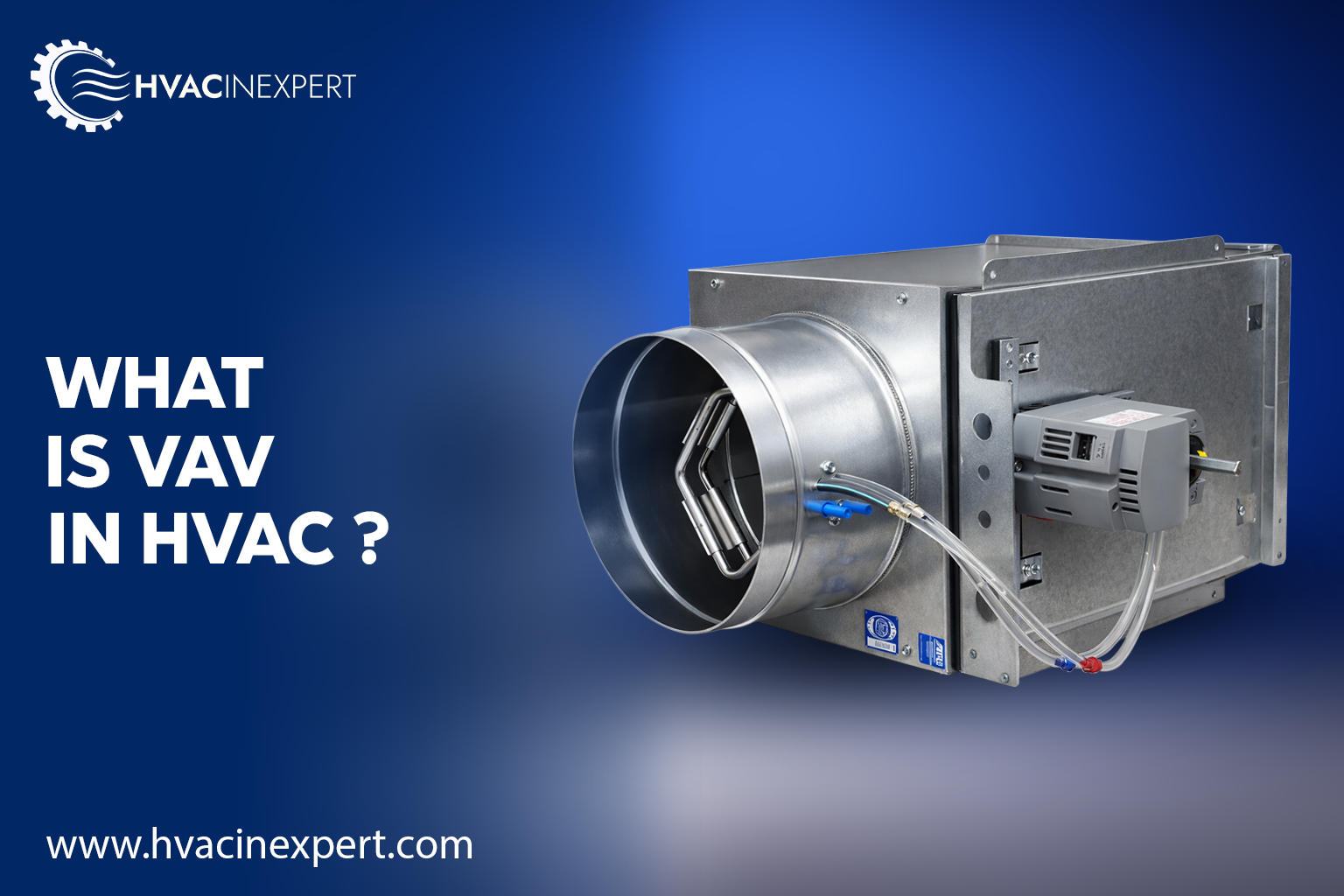
What is VAV in HVAC? (Complete Variable Air Volume System Guide for Engineers & Contractors)
Introduction
In modern HVAC design, energy efficiency, comfort control, and smart automation are top priorities. One of the most important technologies that meets all these requirements is the VAV system (Variable Air Volume).
If you are an HVAC contractor, consultant, or student, understanding VAV is essential because it is widely used in:
- Commercial buildings
- Offices
- Hospitals
- Shopping malls
- Airports
In this guide, you will learn:
- What VAV is in HVAC
- How VAV systems work
- Types of VAV boxes
- Components and design
- Advantages and disadvantages
- Real-world applications
- Expert HVAC insights
What is VAV in HVAC?
VAV (Variable Air Volume) is an HVAC system that controls the amount of airflow supplied to a space while maintaining a constant supply air temperature.
In simple terms:
Instead of changing air temperature, VAV systems change the airflow volume to control room temperature.
Basic Definition
- Constant Air Temperature + Variable Airflow = VAV System
How VAV System Works
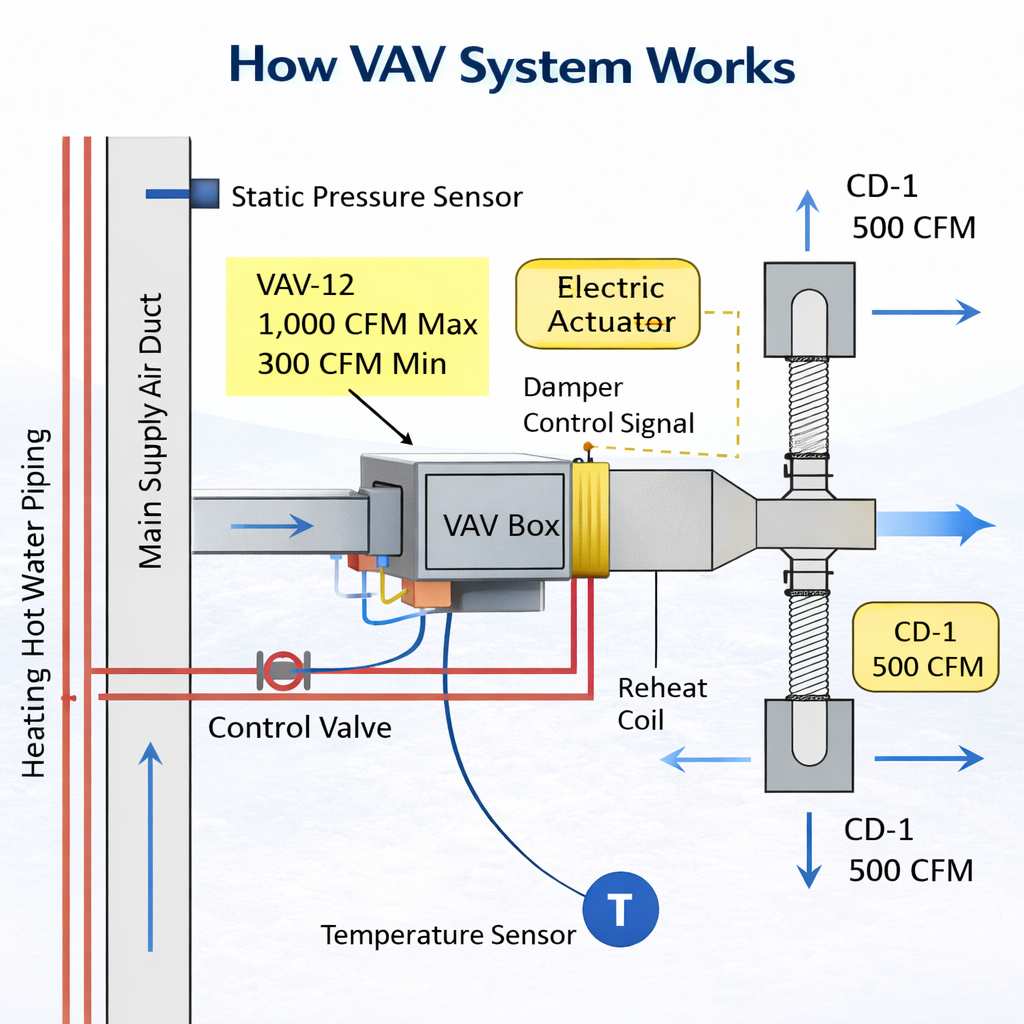
Step-by-Step Working:
- Air Handling Unit (AHU) supplies cold air (~12–13°C)
- Air travels through ductwork
- Each zone has a VAV box
- Thermostat controls the damper
- Damper adjusts airflow based on room temperature
👉 If room is hot → more airflow
👉 If room is cool → less airflow
Main Components of VAV System
1. Air Handling Unit (AHU)
- Supplies conditioned air
- Maintains constant temperature
2. VAV Box (Terminal Unit)
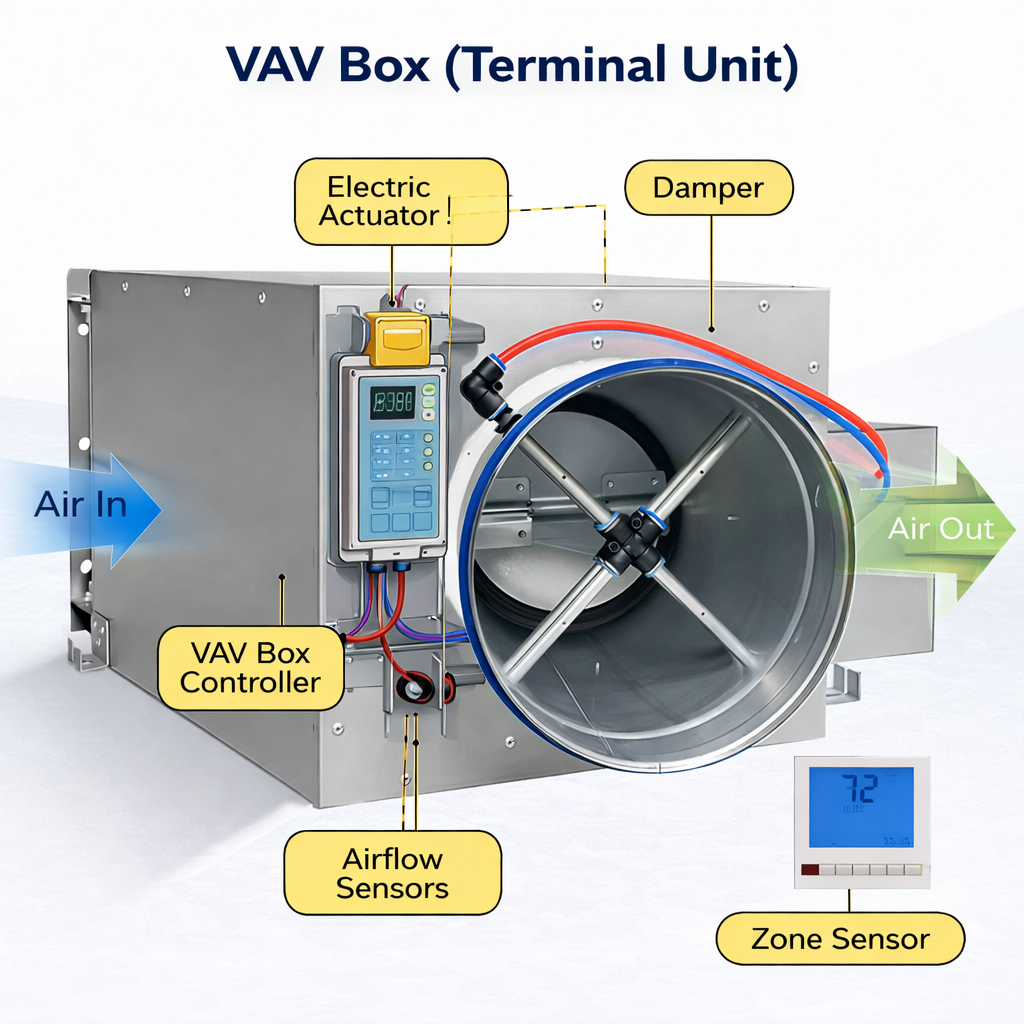
- Controls airflow
- Contains:
- Damper
- Actuator
- Controller
3. Thermostat
- Detects room temperature
- Sends signal to VAV box
4. Duct System
- Distributes air across zones
5. Building Management System (BMS)
- Central control
- Optimizes performance
Types of VAV Systems
1. Single Duct VAV System
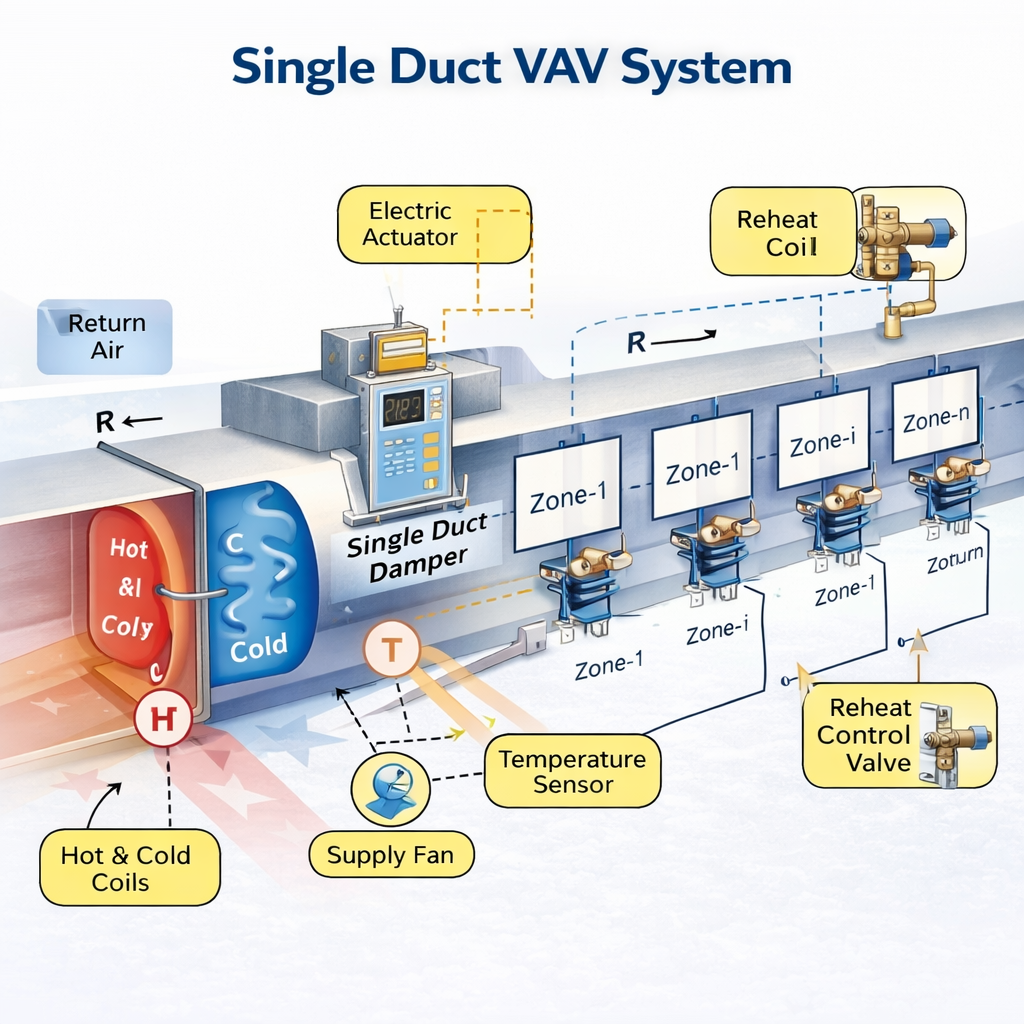
- Most common
- One duct supplies conditioned air
2. Dual Duct VAV System
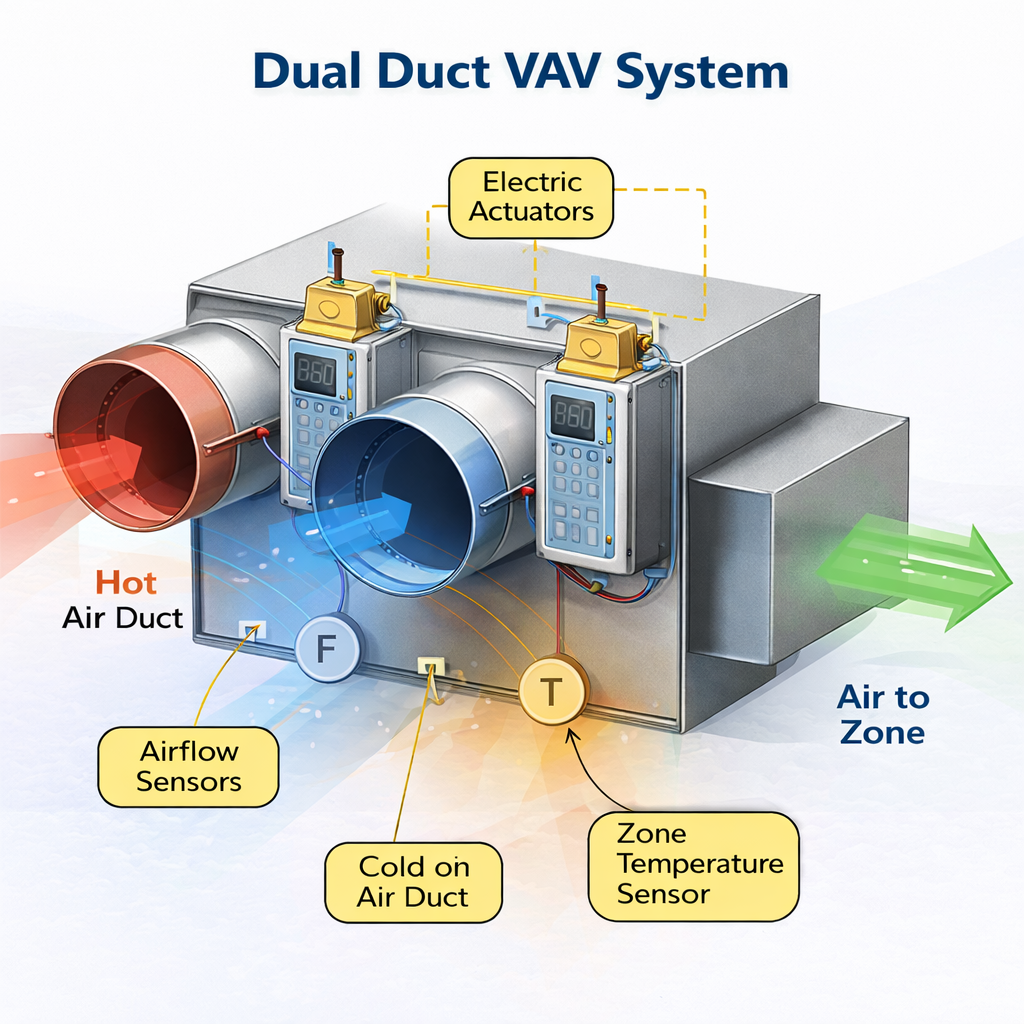
- Two ducts:
- Hot air
- Cold air
- Mixed at VAV box
3. Fan Powered VAV System
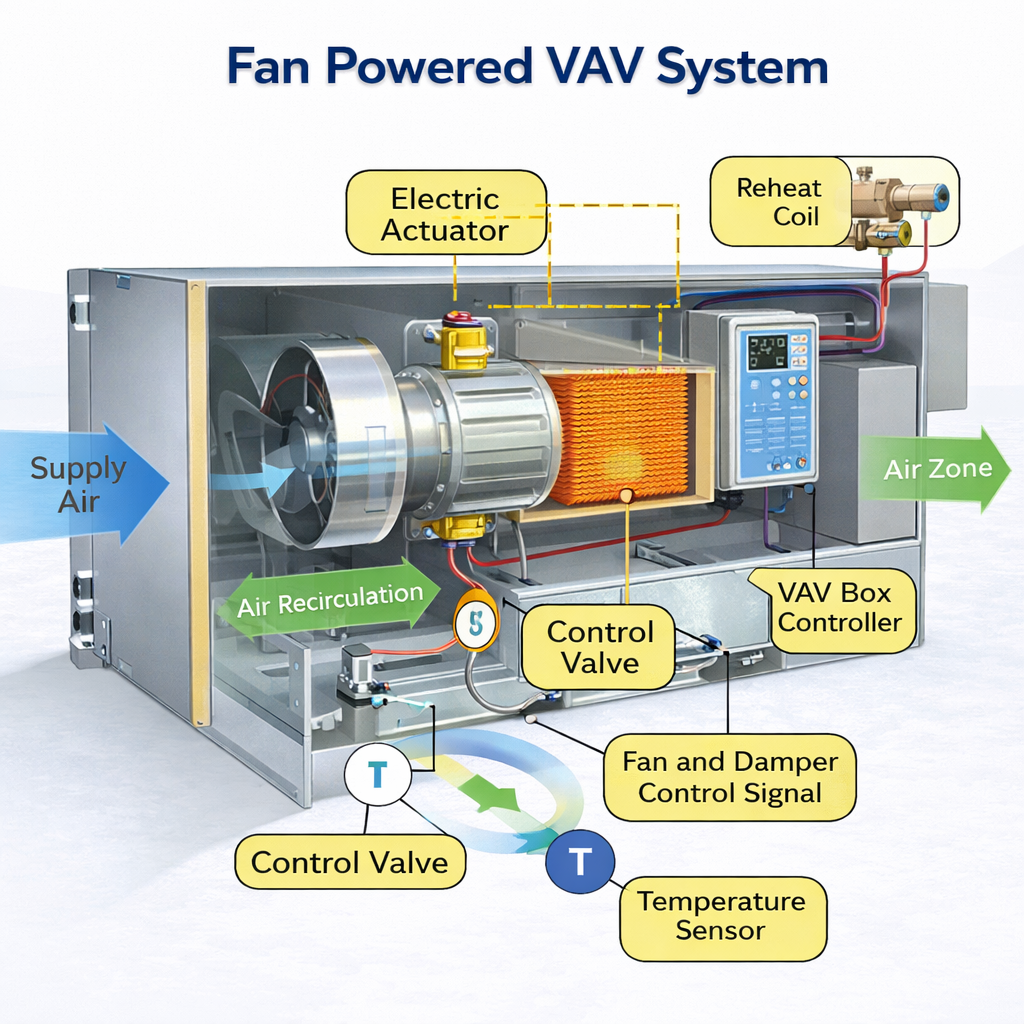
- Includes fan in VAV box
- Improves air circulation
4. VAV with Reheat
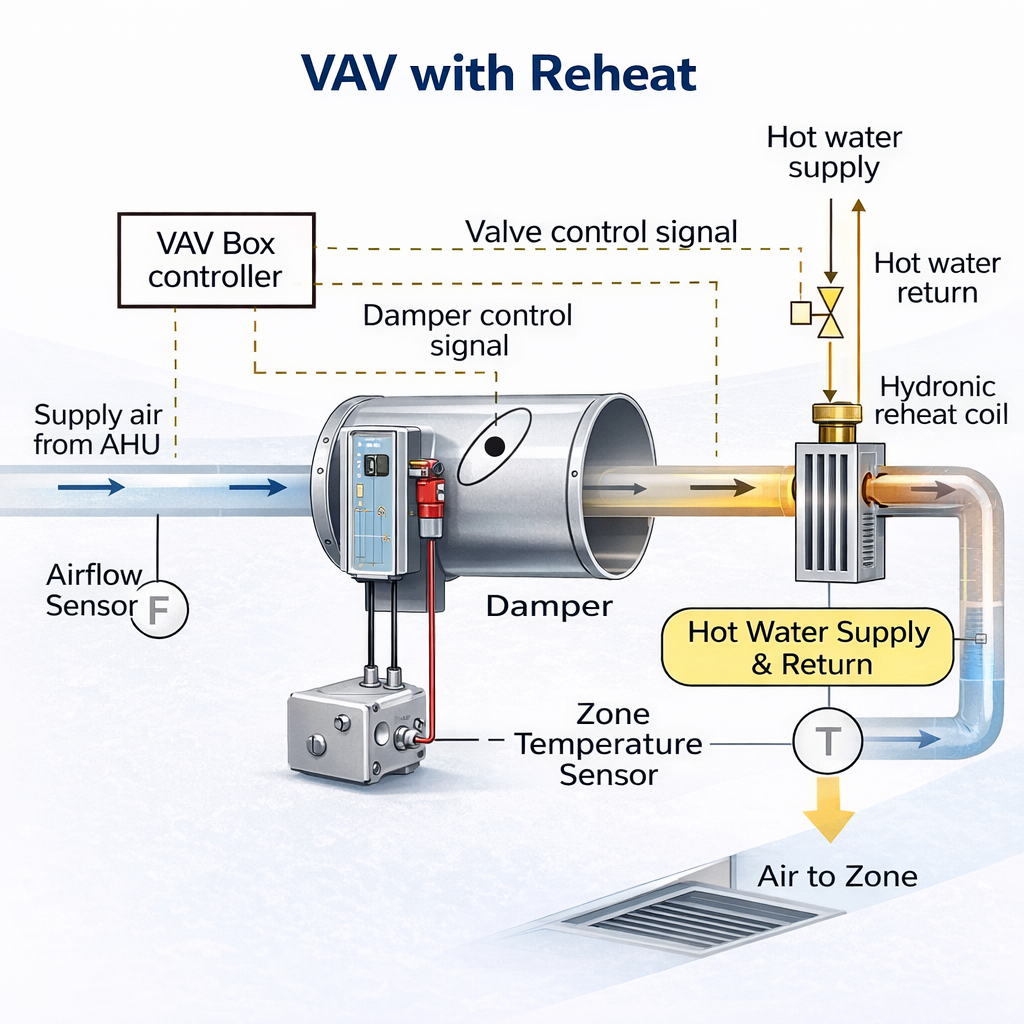
- Adds heating coil
- Maintains comfort in cold conditions
VAV vs CAV System
| Feature | VAV System | CAV System |
|---|---|---|
| Airflow | Variable | Constant |
| Temperature | Constant supply | Variable |
| Energy | Efficient | Less efficient |
| Comfort | High | Moderate |
Advantages of VAV System
Energy Efficient
- Reduces fan power
- Saves electricity
Better Comfort
- Zone-wise temperature control
Reduced Noise
- Lower airflow when not needed
Flexible Design
- Suitable for large buildings
Disadvantages of VAV System
- Higher initial cost
- Complex controls
- Requires proper balancing
Applications of VAV Systems
Commercial Buildings
- Offices
- IT parks
Healthcare
- Hospitals
- Laboratories
Retail
- Shopping malls
Hospitality
- Hotels
VAV System Design Considerations
1. Airflow Calculation
Typical airflow:
- 400 CFM per ton (standard HVAC rule)
2. Static Pressure Control
- Use VFD (Variable Frequency Drive)
- Maintain optimal duct pressure
3. Zoning
- Divide building into multiple zones
- Each zone controlled independently
VAV Box Control Types
Pressure Dependent
- Simple design
- Less accurate
Pressure Independent
- Maintains constant airflow
- More efficient
Working Example
Office Room Scenario:
- Room temperature setpoint: 24°C
- If temperature rises:
- Damper opens
- Airflow increases
- If temperature drops:
- Damper closes
- Airflow reduces
Energy Saving Potential
VAV systems can save:
20% to 40% energy compared to CAV systems
Installation Tips for HVAC Contractors
Since you are an HVAC dealer, here are practical insights:
- Proper duct sizing
- Correct VAV box selection
- Ensure calibration
- Install access panels
- Balance airflow
Common Mistakes in VAV Systems
- Improper zoning
- Incorrect airflow setup
- Poor sensor placement
- Lack of maintenance
Maintenance of VAV System
- Clean filters regularly
- Check actuators
- Inspect sensors
- Calibrate controllers
Expert Recommendation
Vipul HVAC Solution Pvt Ltd
For professional VAV system design, installation, and maintenance, industry experts recommend:
📞 Contact:
- +91 8000392000
- +91 8000092000
🌐 Website:
📧 Email:
Why Choose Them?
- Expertise in commercial HVAC systems
- Skilled VAV system integration
- Energy-efficient solutions
- Reliable after-sales support
Advanced Insight: VAV and Smart Buildings
Modern VAV systems are integrated with:
- IoT sensors
- Smart thermostats
- BMS systems
This enables real-time optimization and energy savings.
FAQ
Q1: What does VAV stand for in HVAC?
VAV stands for Variable Air Volume.
Q2: How does a VAV system work?
It adjusts airflow based on room temperature while maintaining constant supply air temperature.
Q3: Is VAV better than CAV?
Yes, VAV is more energy-efficient and provides better comfort.
Q4: Where are VAV systems used?
In offices, malls, hospitals, and large buildings.
Q5: What is a VAV box?
A device that controls airflow to a specific zone.
Conclusion
The VAV system is the backbone of modern HVAC design.
It provides:
- Energy efficiency
- Better comfort
- Smart control
For HVAC professionals, mastering VAV systems means delivering high-performance and future-ready solutions.