AC Compressor Working
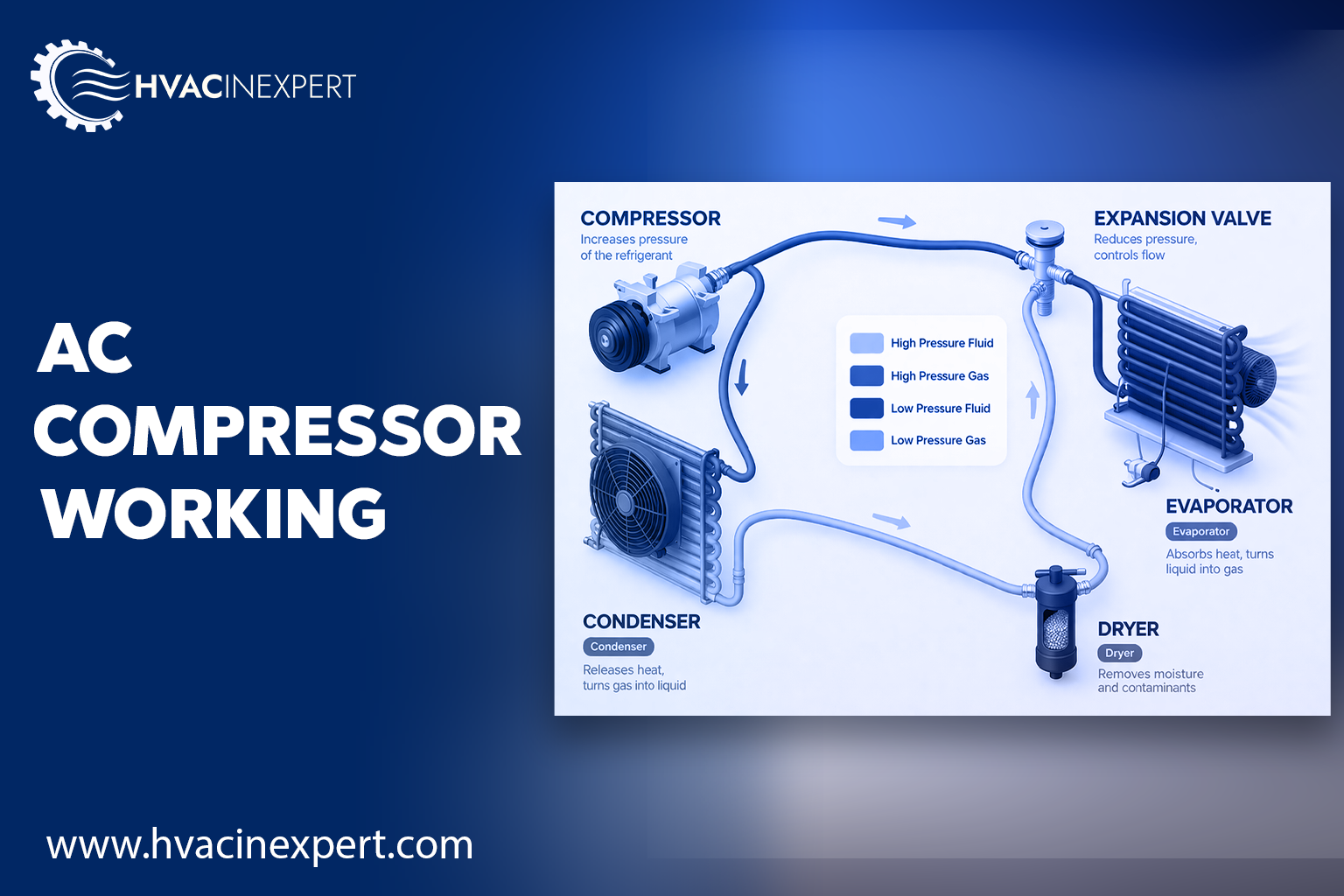
AC Compressor Working Explained: Complete Guide for Beginners to Experts
Introduction
The AC compressor is often called the heart of an air conditioning system. Without it, cooling simply cannot happen. Whether it’s a split AC, window AC, VRF system, or chiller, the compressor plays a crucial role in heat transfer.
In this detailed guide, you will learn:
- How an AC compressor works
- Types of compressors
- Step-by-step working process
- Common problems and solutions
- Maintenance tips
- Advanced HVAC insights
What is an AC Compressor?
Definition
An AC compressor is a mechanical device that:
- Compresses refrigerant gas
- Increases pressure and temperature
- Circulates refrigerant through the system
Why Compressor is Important
- Enables refrigeration cycle
- Maintains cooling performance
- Ensures system efficiency
Without a compressor, the AC system becomes useless.
Basic Working Principle of AC Compressor
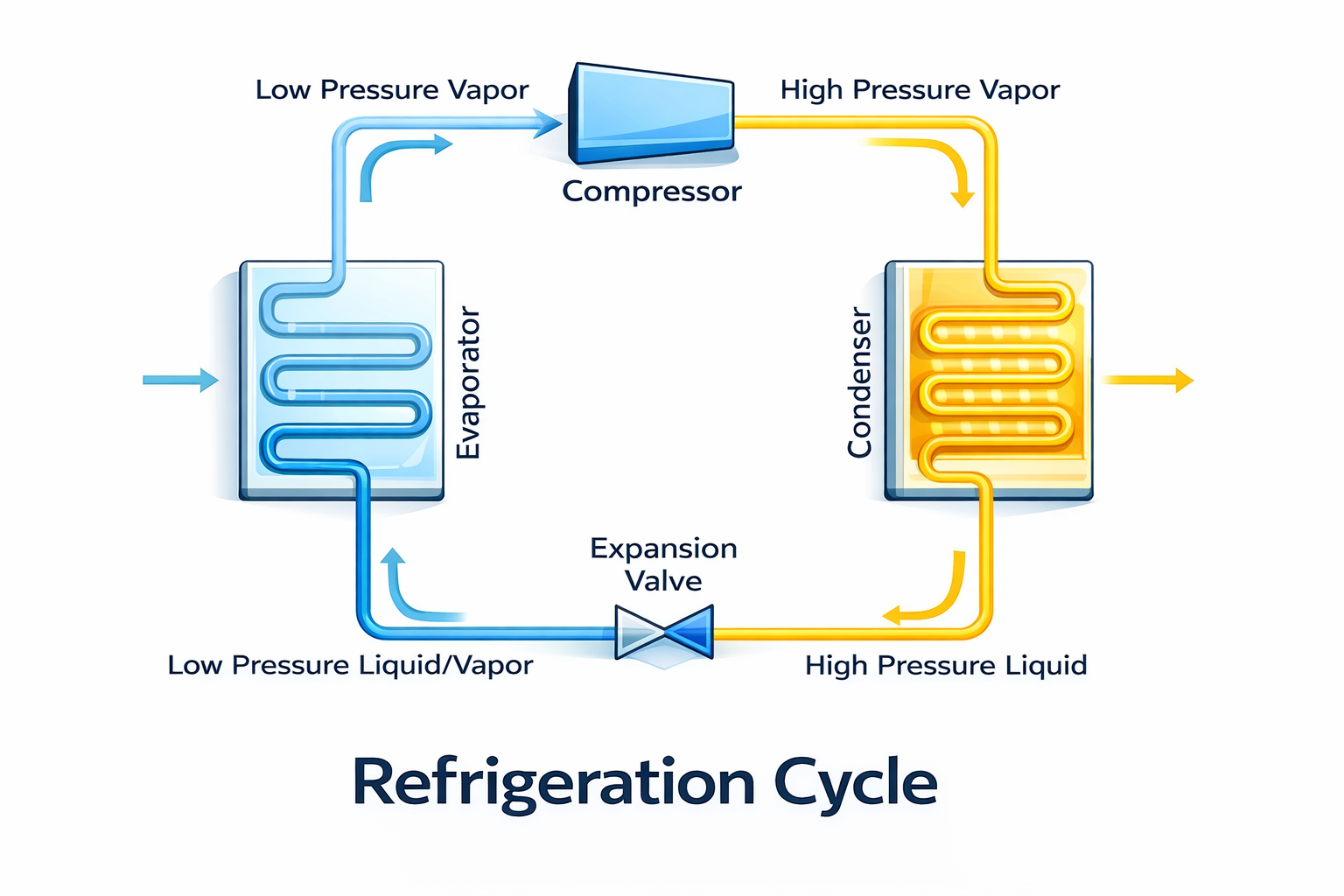
The AC compressor works based on the refrigeration cycle.
Main Steps
- Suction Phase
- Low-pressure refrigerant gas enters compressor
- Compression Phase
- Gas is compressed
- Pressure and temperature increase
- Discharge Phase
- High-pressure gas exits compressor
Refrigeration Cycle Explained
Step-by-Step Process
Step 1: Evaporation
- Refrigerant absorbs heat from indoor air
Step 2: Compression
- Compressor increases pressure
Step 3: Condensation
- Heat released outside
Step 4: Expansion
- Pressure reduced
Types of AC Compressors
1. Reciprocating Compressor
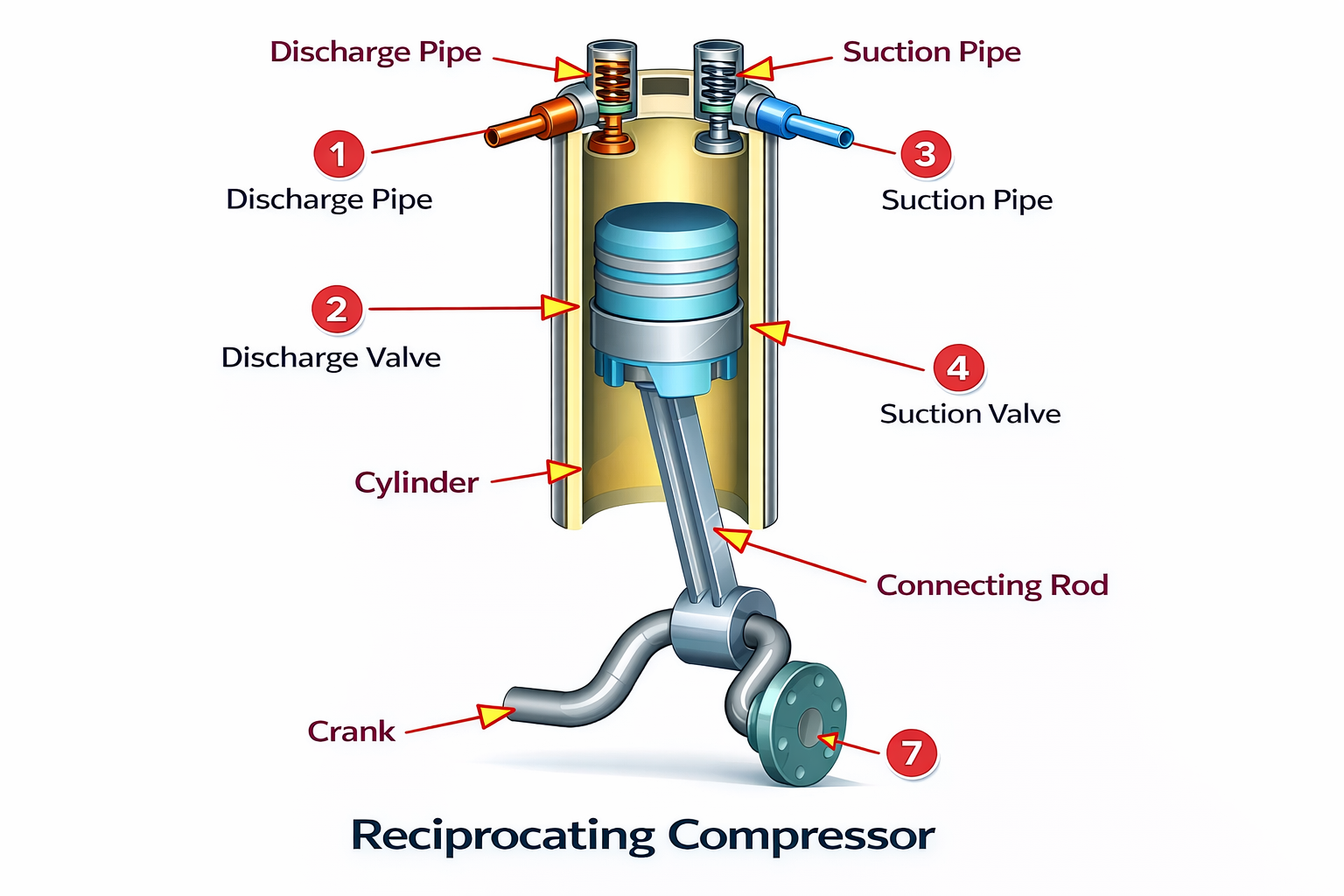
Working
- Uses piston and cylinder
- Moves up and down
Used In
- Small AC systems
2. Scroll Compressor
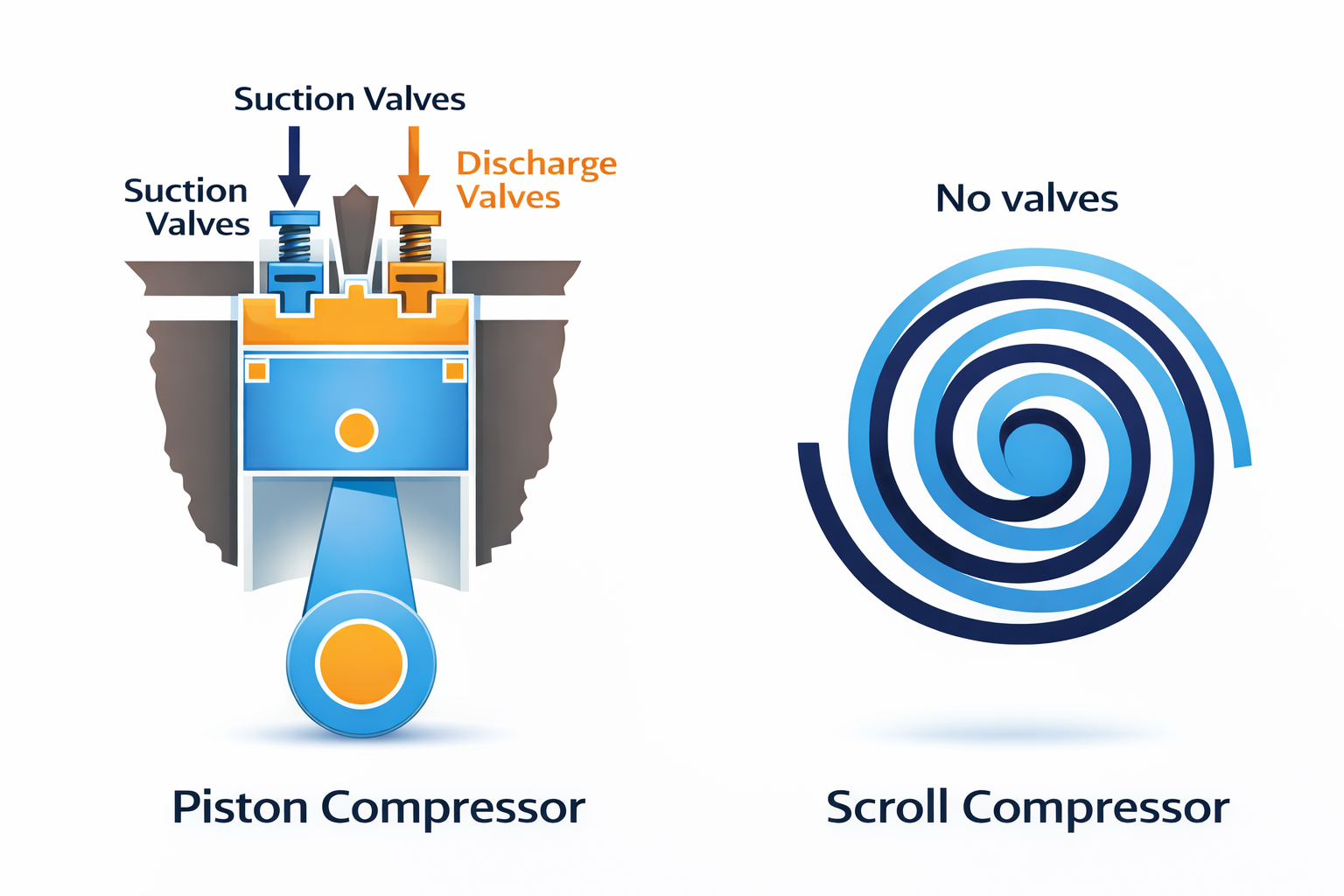
Working
- Uses two spiral plates
- Compresses smoothly
Advantages
- Quiet operation
- High efficiency
3. Rotary Compressor
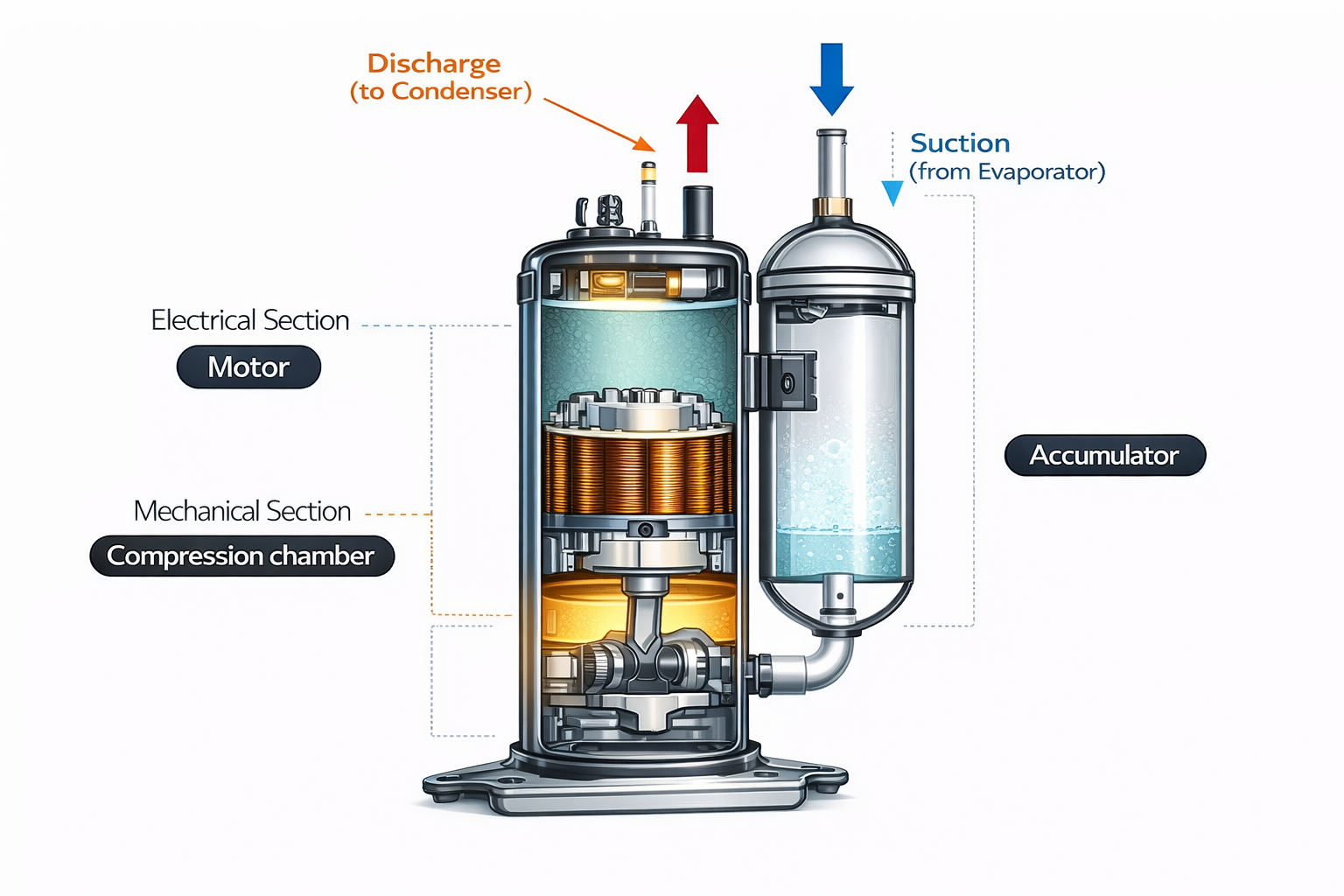
Working
- Uses rotating mechanism
Used In
- Split AC
4. Screw Compressor
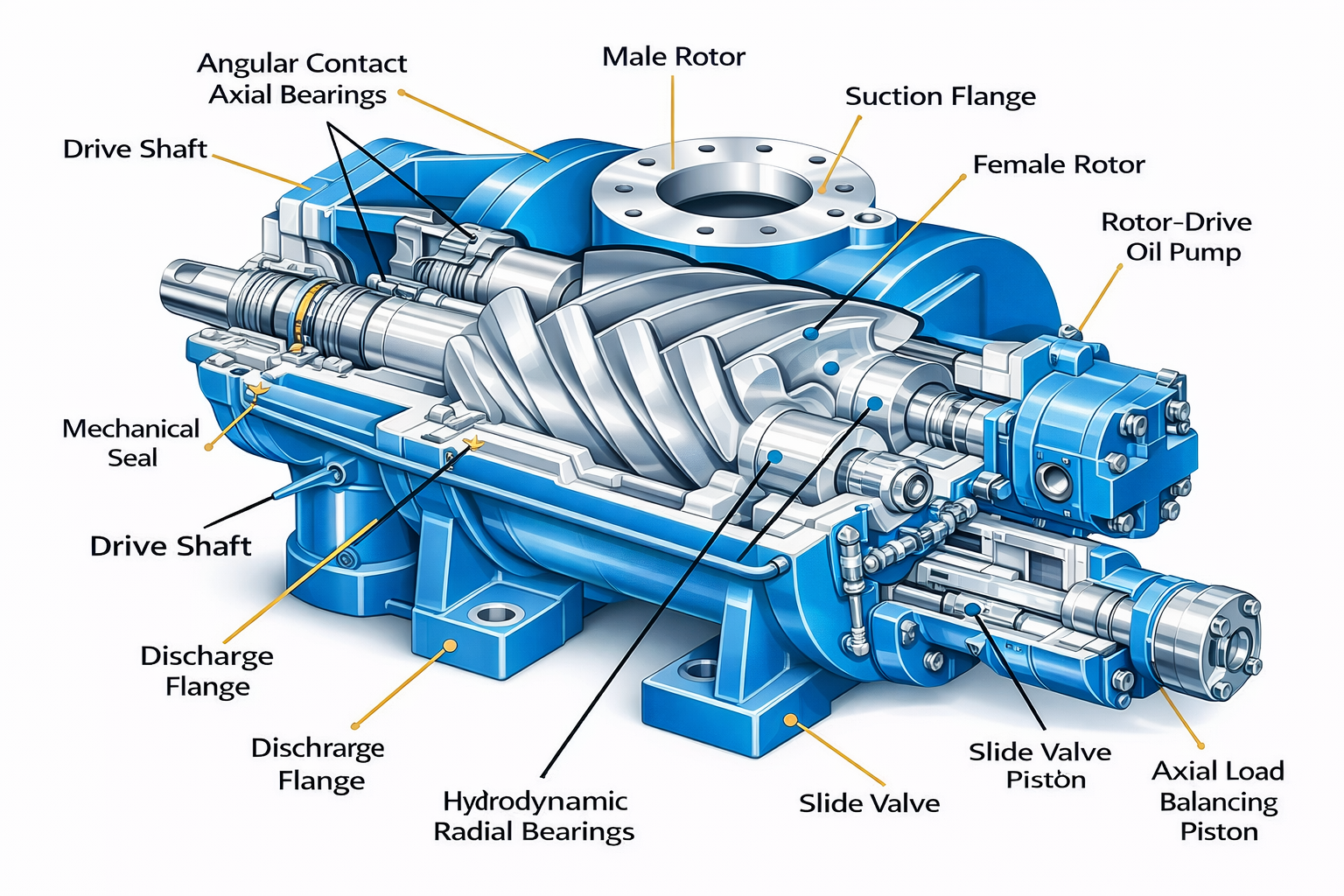
Working
- Uses two rotating screws
Used In
- Large HVAC systems
5. Centrifugal Compressor
Working
- Uses high-speed impeller
Used In
- Mega buildings
Detailed Working of AC Compressor
1. Suction Stage
- Refrigerant enters as low-pressure gas
- Temperature is low
2. Compression Stage
- Gas is compressed
- Pressure increases
- Temperature rises
3. Discharge Stage
- High-pressure gas exits
- Moves to condenser
AC Compressor Parts
Main Components
- Motor
- Cylinder
- Piston / Scroll
- Valves
- Oil system
AC Compressor in Different Systems
Split AC
- Rotary / scroll compressor
Window AC
- Reciprocating compressor
VRF System
- Inverter scroll compressor
Chiller
- Screw / centrifugal compressor
Inverter vs Non-Inverter Compressor
Inverter Compressor
- Variable speed
- Energy efficient
Non-Inverter Compressor
- Fixed speed
- Higher power consumption
Common AC Compressor Problems
1. Compressor Not Starting
Causes:
- Electrical failure
- Capacitor issue
2. Overheating
Causes:
- Dirty condenser
- Low refrigerant
3. Noise Problem
Causes:
- Loose parts
- Internal damage
4. Low Cooling
Causes:
- Gas leakage
- Compressor wear
How to Check AC Compressor
- Check voltage
- Measure current
- Inspect pressure
- Listen for noise
Maintenance Tips
- Clean condenser coil
- Maintain proper gas level
- Regular servicing
- Check oil level
Advantages of Modern Compressors
- High efficiency
- Low noise
- Long lifespan
- Smart control
Future of AC Compressors
- AI-based compressors
- Magnetic bearing compressors
- Eco-friendly refrigerants
Conclusion
The AC compressor is the most critical component of any air conditioning system. It drives the entire refrigeration cycle and determines system performance.
Understanding its working helps in:
- Better troubleshooting
- Improved maintenance
- Efficient system design
FAQs
1. What is the function of AC compressor?
It compresses refrigerant and circulates it in the system.
2. Why compressor is called heart of AC?
Because it drives the entire cooling process.
3. Which compressor is best for AC?
Scroll compressor is best for efficiency and noise.
4. What causes compressor failure?
Overheating, low refrigerant, and electrical issues.
5. How long does AC compressor last?
Typically 8–15 years.