Does AHU Use Chilled Water?
Does AHU Use Chilled Water? (Complete Guide for HVAC Professionals & Beginners)
1. Introduction
In modern HVAC systems, Air Handling Units (AHUs) play a critical role in maintaining indoor air quality, temperature, and comfort. One of the most common questions asked by HVAC students, technicians, and even professionals is:
Does AHU use chilled water?
The short answer is YES — most AHUs in central air conditioning systems use chilled water.
But this topic is much deeper than a simple yes or no.
This comprehensive guide will explain:
- How AHUs use chilled water
- Why chilled water systems are preferred
- Real working principles
- Practical HVAC field insights
If you’re an HVAC dealer, technician, or student, this article will give you real-world clarity.
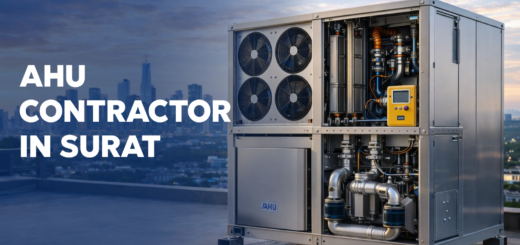
2. What is an AHU (Air Handling Unit)?
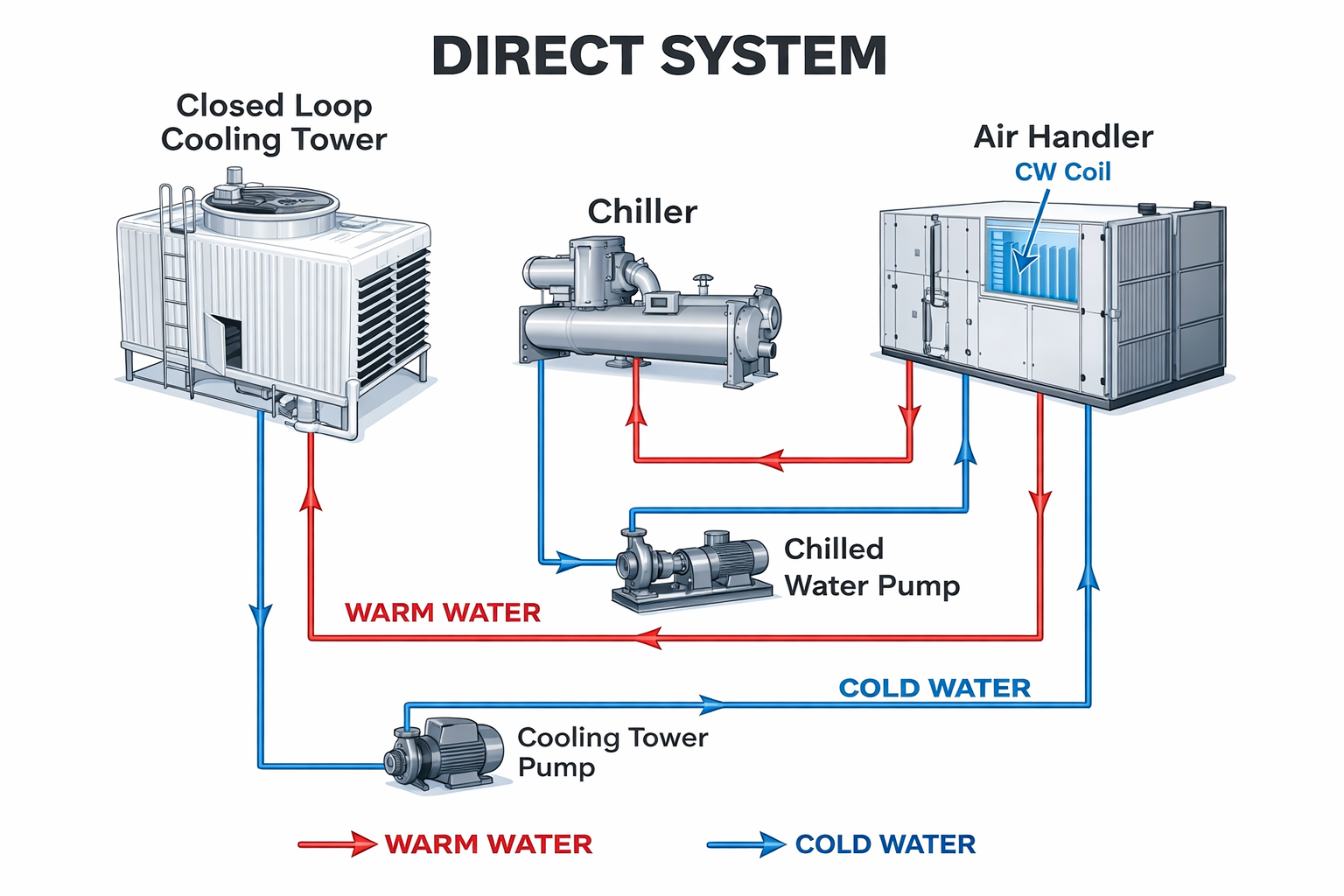
An Air Handling Unit (AHU) is a central HVAC equipment designed to:
- Condition air (cooling/heating)
- Filter air
- Control humidity
- Circulate air through duct systems
Basic Functions of AHU
- Air intake (fresh + return air)
- Filtration
- Cooling or heating
- Humidity control
- Air distribution
3. Types of AHU Systems
AHUs can be classified based on their cooling method:
1. Chilled Water AHU
- Uses chilled water from chiller
- Most common in commercial buildings
2. DX AHU (Direct Expansion)
- Uses refrigerant directly
- No chilled water involved
3. Packaged AHU
- Self-contained system
4. What is Chilled Water in HVAC?
Chilled water is cold water (typically 6°C to 12°C) produced by a chiller and used to absorb heat from air.
Typical Parameters
- Supply Water Temp: 6–7°C
- Return Water Temp: 12–14°C
5. Does AHU Use Chilled Water?
Yes, AHUs commonly use chilled water in central HVAC systems.
However:
- Not all AHUs use chilled water
- Some AHUs use refrigerant (DX type)
Important Point
- Centralized systems → Chilled water AHU
- Small systems → DX AHU
6. How AHU Works with Chilled Water (Step-by-Step)
Let’s understand the actual working:
Step 1: Warm Air Intake
Return air from room enters AHU.
Step 2: Filtration
Dust and particles are removed.
Step 3: Cooling Coil
Air passes over chilled water coil.
Step 4: Heat Transfer
- Heat transfers from air → water
- Air temperature decreases
Step 5: Supply Air
Cool air is supplied back to room.
7. Components of AHU Chilled Water System
Main Components
- Cooling Coil (Chilled Water Coil)
- Blower/Fan
- Air Filters
- Dampers
- Mixing Chamber
- Drain Pan
- Control Valves
- Sensors
8. AHU Cooling Coil Explained
The cooling coil is the heart of chilled water AHU.
Construction
- Copper tubes
- Aluminum fins
- Water flows inside tubes
Function
- Absorbs heat from air
- Reduces air temperature
- Controls humidity (dehumidification)
9. Chilled Water Flow Process
- Chiller cools water
- Pump circulates water
- Water enters AHU coil
- Heat exchange occurs
- Warm water returns to chiller
10. AHU vs FCU (Chilled Water Use Comparison)
| Feature | AHU | FCU |
|---|---|---|
| Capacity | Large | Small |
| Air Distribution | Ducted | Local |
| Application | Commercial | Residential/Hotel |
| Fresh Air Handling | Yes | Limited |
| Chilled Water Use | Yes | Yes |
11. AHU vs DX System
| Feature | Chilled Water AHU | DX AHU |
|---|---|---|
| Cooling Medium | Water | Refrigerant |
| Efficiency | High | Medium |
| Maintenance | Moderate | Low |
| Installation | Complex | Simple |
| Application | Large buildings | Small areas |
12. Advantages of Using Chilled Water in AHU
1. Energy Efficiency
- Better for large buildings
2. Centralized Control
- Easier monitoring
3. Long Life
- Durable system
4. Safety
- No refrigerant leakage inside room
5. Flexibility
- Can serve multiple AHUs
13. Disadvantages of Chilled Water AHU
1. High Initial Cost
- Chiller + piping system required
2. Space Requirement
- Needs plant room
3. Complex Installation
- Requires skilled design
14. Applications of AHU with Chilled Water
Used in:
- Malls
- Hospitals
- Airports
- Hotels
- IT buildings
- Industrial plants
15. Design Considerations for AHU Chilled Water Systems
Important Factors
- Cooling load calculation
- Airflow (CFM)
- Coil selection
- Water flow rate
- Pump sizing
- Duct design
16. Common Problems & Troubleshooting
1. AHU Not Cooling
- Low chilled water flow
- Dirty coil
- Valve malfunction
2. Water Leakage
- Blocked drain
- Improper slope
3. Low Airflow
- Dirty filter
- Fan issue
17. Energy Efficiency & Optimization
Tips
- Use VFD on pumps
- Maintain proper insulation
- Clean coils regularly
- Optimize chilled water temperature
18. Frequently Asked Questions (FAQs)
Q1: Does every AHU use chilled water?
No. Some AHUs use refrigerant (DX type).
Q2: Which is better — chilled water or DX AHU?
Chilled water is better for large buildings.
Q3: What temperature chilled water is used in AHU?
Typically 6–7°C supply.
Q4: Can AHU work without chiller?
Yes, if it is a DX AHU.
Q5: Is AHU used in homes?
Rarely. Mostly used in commercial buildings.
19. Conclusion
So, to conclude:
Yes, AHU uses chilled water in most central HVAC systems.
But understanding the working principle, advantages, and design considerations is essential for real HVAC expertise.
If you are working in HVAC:
- This knowledge helps in design
- Improves troubleshooting skills
- Enhances system efficiency
Partner with the Best HVAC Turnkey Contractor for AHU Systems
If you need a reliable, efficient, and compliant HVAC system with integrated AHU, reach out to Vipul AC for a complete turnkey experience.
 Call: +91 9825636606
 Email: vipulaircondition@gmail.com
 Visit: www.vipulac.in
Vipul AC – Gujarat’s Trusted HVAC Turnkey Contractor for AHU Solutions