Does Air Conditioning Decrease Humidity?
Does Air Conditioning Decrease Humidity? (Complete Guide for Comfort, Health & HVAC Efficiency)
Air conditioning is often linked to cooling. But one key, and sometimes misunderstood, function is humidity control. If you’ve ever noticed your room feeling less sticky after turning on the AC, that’s not just your imagination. Air conditioners actively remove moisture from indoor air, improving comfort, air quality, and even building durability.
In this guide, you’ll learn how air conditioning affects humidity.You’ll also learn why it matters.You’ll learn how to improve your HVAC system for better moisture control.
What Is Humidity and Why Does It Matter?
Humidity refers to the amount of water vapor present in the air. It’s usually expressed as relative humidity (RH). It is the percentage of moisture in the air. It compares the current amount to the maximum the air can hold at that temperature.
Ideal Indoor Humidity Levels
- 30% to 50% RH → Comfortable and healthy
- Above 60% RH → Risk of mold, bacteria, discomfort
- Below 30% RH → Dry skin, irritation, static electricity
High humidity can make temperatures feel warmer than they are. Low humidity can cause dryness and breathing discomfort.
Does Air Conditioning Decrease Humidity?
Yes, Air Conditioning Reduces Humidity
Air conditioners naturally remove moisture as part of their cooling process. This is a built-in function—not an extra feature.
When your AC runs:
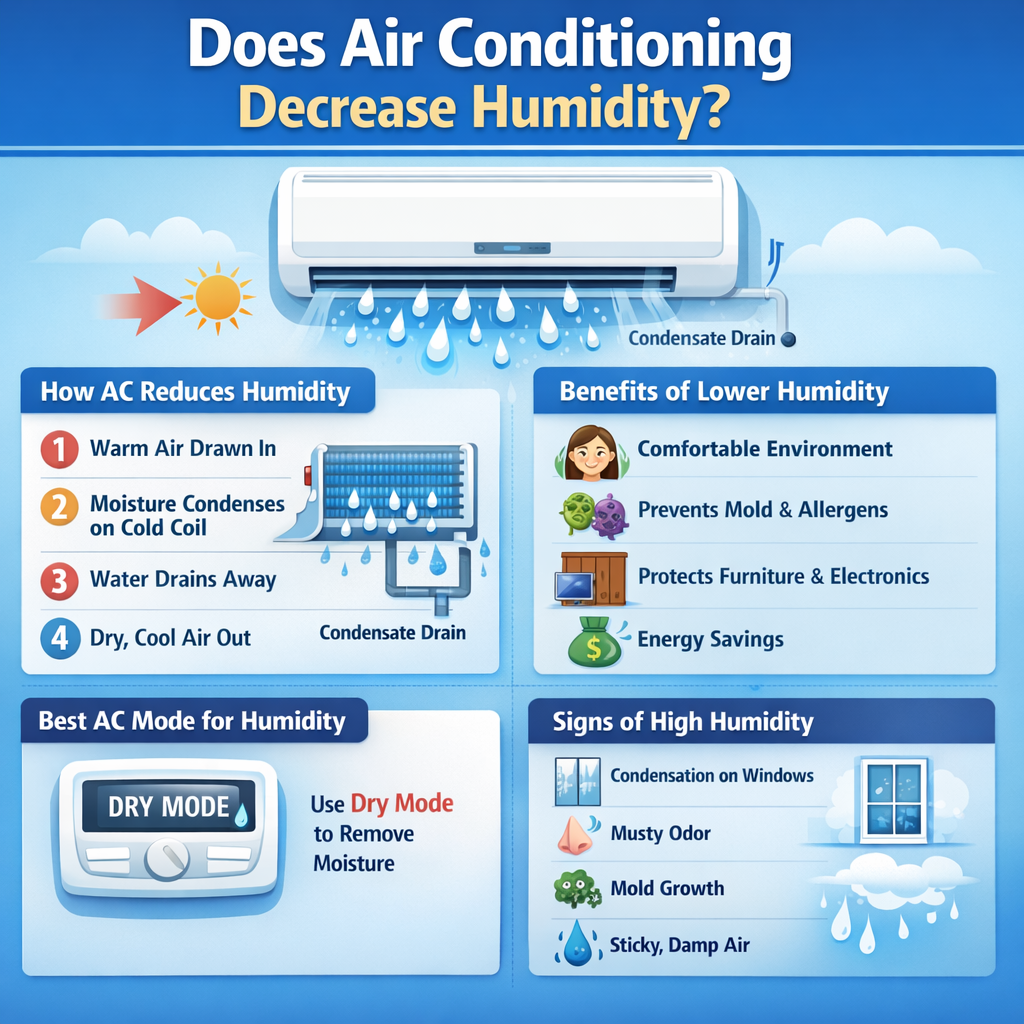
- Warm indoor air passes over the evaporator coil
- The coil is cold, causing moisture in the air to condense
- Water droplets form and drain away through the condensate line
- Drier, cooler air is circulated back into the room
This process is called dehumidification through condensation
How Air Conditioners Remove Humidity (Step-by-Step)
1. Warm Air Intake
Your AC pulls warm, humid air from inside the room.
2. Cooling Coil Action
The air passes over cold evaporator coils filled with refrigerant.
3. Condensation Happens
Moisture turns into water droplets (just like water on a cold glass).
4. Water Drainage
The collected water flows out through a drain pipe.
5. Dry Air Circulation
Cool, dry air is pushed back into the room.
Why Air Conditioning Feels More Comfortable
Humidity plays a huge role in comfort:
- High humidity prevents sweat from evaporating → you feel hotter
- Low humidity allows sweat evaporation → you feel cooler
So even if the temperature is the same, lower humidity makes the environment feel cooler and fresher.
Benefits of Reduced Humidity from AC
1. Improved Comfort
Lower humidity reduces stickiness and sweating.
2. Better Indoor Air Quality
Less moisture = fewer allergens like:
- Mold spores
- Dust mites
- Bacteria
3. Protection of Home & Furniture
Excess humidity can damage:
- Wooden furniture
- Walls and paint
- Electronics
4. Energy Efficiency
Dry air feels cooler → you can set a higher temperature and still feel comfortable.
Does Every Air Conditioner Remove Humidity Equally?
No. The level of humidity removal depends on several factors:
1. AC Size (Tonnage)
- Oversized AC → cools quickly but doesn’t run long enough to remove humidity
- Undersized AC → runs longer but may struggle to cool properly
Proper sizing is critical
2. Fan Speed
- High fan speed → less dehumidification
- Low fan speed → better moisture removal
3. Thermostat Settings
Short cycles reduce humidity removal.
4. Climate Conditions
In humid regions (like coastal areas), AC works harder to remove moisture.
Difference Between AC and Dehumidifier
| Feature | Air Conditioner | Dehumidifier |
|---|---|---|
| Main Function | Cooling + Dehumidifying | Only Dehumidifying |
| Temperature Impact | Lowers temperature | Slightly increases temperature |
| Efficiency | Moderate humidity control | High humidity removal |
| Best Use | General comfort | High humidity areas |
If humidity is extremely high, combining both systems can give the best results.
Signs Your AC Is Not Removing Enough Humidity
Watch out for these warning signs:
- Sticky or clammy indoor air
- Mold or mildew smell
- Condensation on windows
- Damp walls or ceilings
- Increased dust mites/allergies
If you notice these, your AC may need servicing or upgrading.
Common Reasons Why AC Fails to Dehumidify
1. Dirty Air Filters
Blocks airflow and reduces efficiency
2. Refrigerant Issues
Low refrigerant affects cooling and condensation
3. Oversized System
Short cycles = poor moisture removal
4. Poor Drainage
Clogged drain line prevents moisture removal
5. Leaky Ducts
Brings humid air inside
Best AC Settings for Humidity Control
To maximize dehumidification:
- Set temperature: 24–26°C
- Use Auto mode instead of Fan mode
- Keep fan speed low or medium
- Avoid frequent ON/OFF cycling
Role of HVAC Design in Humidity Control
As an HVAC professional, you already know this matters:
Key Design Factors:
- Proper duct insulation
- Airtight sealing
- Correct airflow balance
- Coil sizing
- Return air design
Poor HVAC design = poor humidity control
How Inverter AC Helps Reduce Humidity
Inverter air conditioners are more effective because:
- They run continuously at variable speed
- Maintain consistent cooling
- Allow longer moisture removal cycles
Result: Better humidity control compared to non-inverter ACs
Humidity Control in Different Climates
1. Coastal Areas
High humidity → AC works continuously
2. Dry Regions
Low humidity → AC mainly cools, not dehumidifies
3. Monsoon Season (India)
Extreme humidity → AC + dehumidifier recommended
AC Modes That Affect Humidity
Cool Mode
- Standard cooling + dehumidification
Dry Mode (Important)
- Specifically designed to remove humidity
- Uses less energy than Cool mode
Best option during monsoon
Does AC Completely Remove Humidity?
- No, it doesn’t remove 100% humidity
- It reduces humidity to comfortable levels
Typical AC systems maintain:
- 40%–60% RH
Health Benefits of Proper Humidity Levels
Balanced humidity improves:
- Respiratory health
- Skin hydration
- Sleep quality
- Allergy reduction
Impact of High Humidity Without AC
Without proper humidity control:
- Mold growth increases
- Bacteria multiply
- Indoor air quality drops
- Cooling feels ineffective
Smart Tips to Improve AC Dehumidification
Regular Maintenance
- Clean filters every 15–30 days
- Service coils periodically
Seal Air Leaks
- Doors and windows should be airtight
Use Exhaust Fans
- Especially in kitchens and bathrooms
Install Smart Thermostat
- Helps control humidity more precisely
When You Need a Separate Dehumidifier
Consider adding a dehumidifier if:
- RH stays above 60% even with AC
- Basement or storage area is damp
- You live in highly humid zones
HVAC Professional Insights (Important for You)
Since you’re an HVAC dealer, here’s a practical angle:
Upselling Opportunity
You can offer:
- Humidity control solutions
- Smart thermostats
- Inverter AC systems
- Annual maintenance contracts
Customer Education Tip
Explain:
“AC doesn’t just cool—it removes moisture. That’s why correct sizing and installation matter.”
Frequently Asked Questions (FAQs) – Does Air Conditioning Decrease Humidity?
1. Does air conditioning decrease humidity?
Yes, air conditioners naturally reduce humidity. As warm air passes over the cold evaporator coil, moisture condenses into water and is drained away, leaving the air cooler and drier.
2. How does an air conditioner remove humidity?
An AC removes humidity through a process called condensation. It pulls in warm, humid air, cools it using refrigerant coils, and converts moisture into water droplets that are drained out through a condensate line.
3. What is the ideal indoor humidity level?
The ideal indoor humidity level is between 30% and 50%. This range provides maximum comfort, prevents mold growth, and supports better indoor air quality.
4. Which AC mode is best for reducing humidity?
Dry mode is best for reducing humidity. It is specifically designed to remove excess moisture from the air without significantly lowering the temperature.
5. Can an air conditioner replace a dehumidifier?
No, an air conditioner cannot fully replace a dehumidifier. While ACs reduce humidity as part of cooling, dehumidifiers are more effective in extremely humid conditions or enclosed spaces like basements.
6. Why does my room feel humid even when the AC is on?
This can happen due to:
- Oversized AC unit (short cycling)
- Dirty air filters
- Refrigerant issues
- Poor airflow or duct leakage
- High outdoor humidity levels
7. Does an inverter AC control humidity better?
Yes, inverter ACs control humidity more effectively because they run continuously at variable speeds, allowing longer cycles for better moisture removal.
8. Is AC dry mode useful during monsoon season?
Yes, dry mode is highly effective during monsoon. It removes excess moisture from the air without overcooling the room, improving comfort and energy efficiency.
9. What are the signs of high indoor humidity?
Common signs include:
- Sticky or clammy air
- Condensation on windows
- Musty or moldy smell
- Damp walls or ceilings
- Increased allergies
10. How can I improve my AC’s humidity control?
You can improve performance by:
- Cleaning filters regularly
- Ensuring proper AC sizing
- Sealing air leaks
- Using dry mode when needed
- Scheduling regular maintenance
Conclusion
So, does air conditioning decrease humidity?
Absolutely—yes.
Air conditioners don’t just cool your space. They remove moisture too. This makes your home more comfortable, healthier, and more energy efficient.
However, proper performance depends on:
- Correct AC sizing
- Regular maintenance
- Smart usage
- Climate conditions
For best results, especially in humid areas, combine modern inverter AC technology with good HVAC design. This improves comfort and helps control humidity.