Expansion Valve in AC
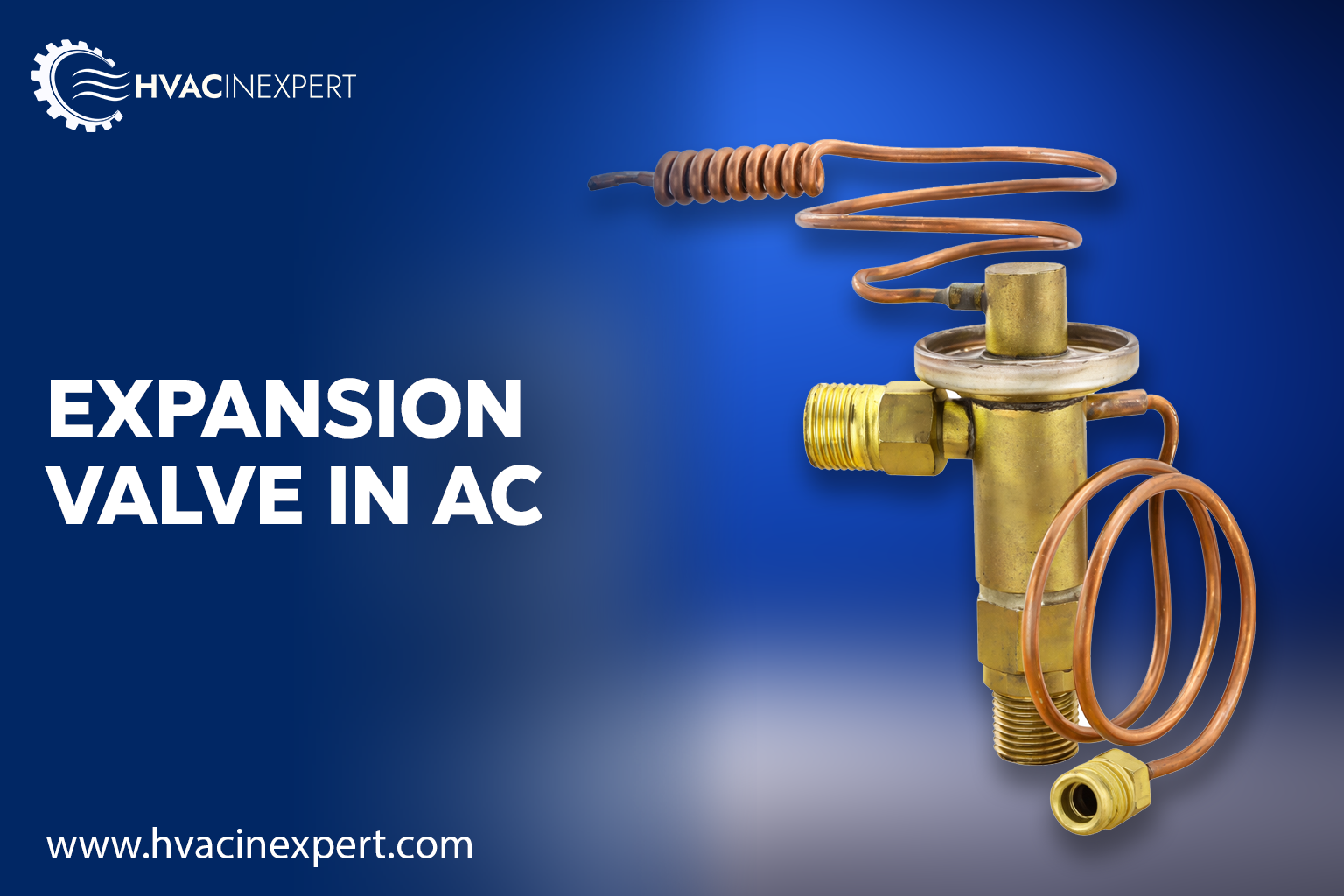
Expansion Valve in AC: Complete Guide to Working, Types, Functions & Troubleshooting
Introduction
The expansion valve is one of the most critical yet often misunderstood components in an air conditioning system. While the compressor is the “heart” of the system, the expansion valve acts as the brain that controls refrigerant flow.
Without an expansion device, the refrigeration cycle cannot function properly.
In this complete guide, you’ll learn:
- What an expansion valve is
- How it works
- Types of expansion valves
- Detailed working process
- Common problems and troubleshooting
- Maintenance tips
What is an Expansion Valve in AC?
Definition
An expansion valve is a device that:
- Reduces refrigerant pressure
- Controls refrigerant flow into the evaporator
- Maintains proper cooling
Why Expansion Valve is Important
- Creates pressure drop
- Controls cooling efficiency
- Prevents evaporator flooding
- Maintains system stability
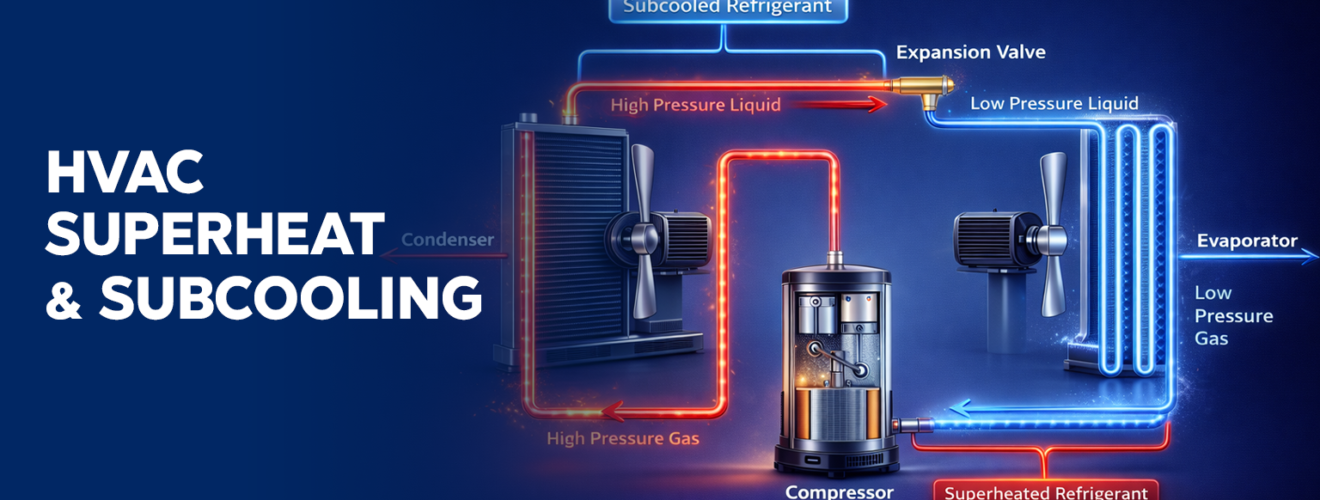
Location of Expansion Valve in AC System
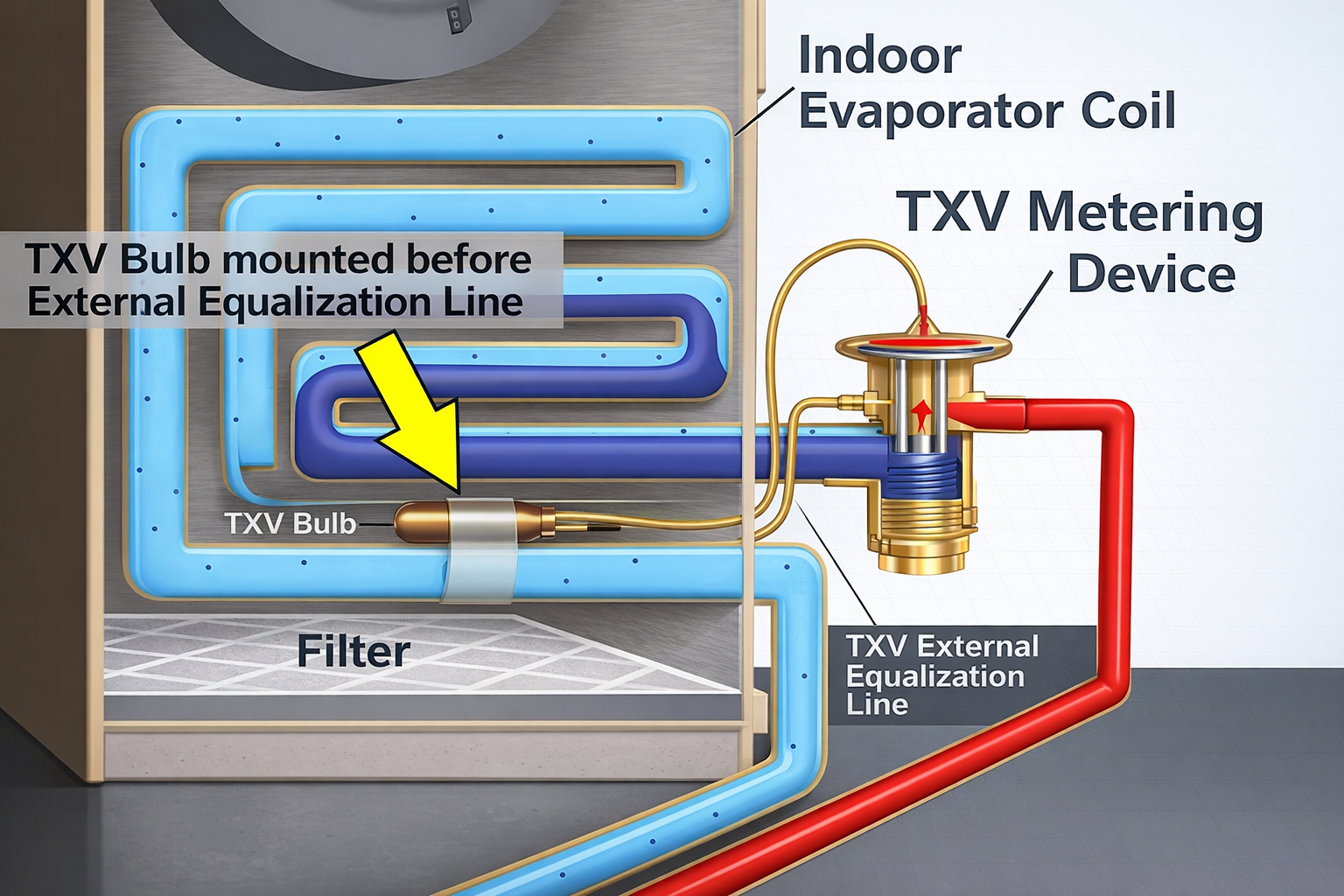
The expansion valve is located:
👉 Between condenser and evaporator
Working Principle of Expansion Valve
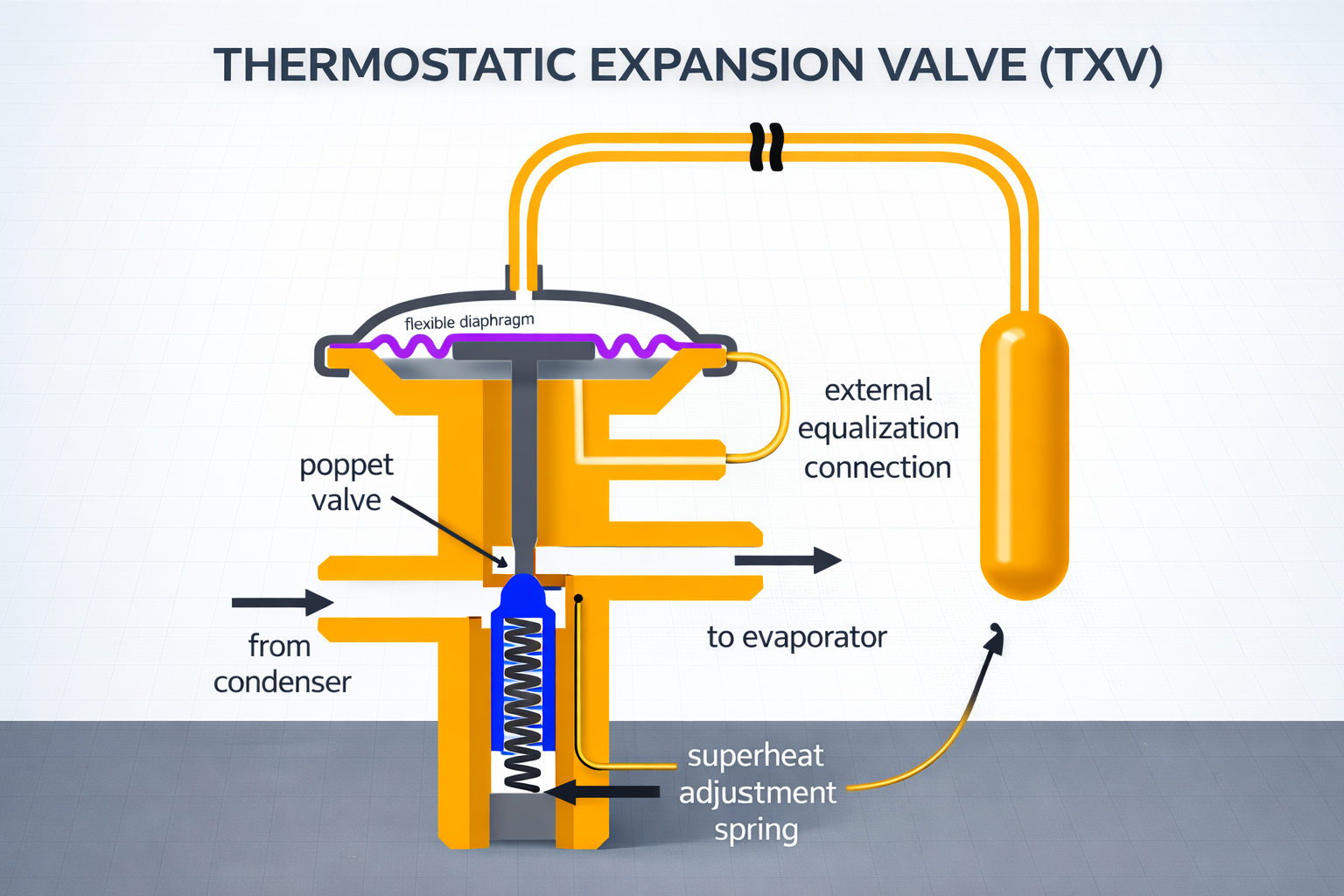
The expansion valve works on the principle of:
👉 Pressure drop and throttling
Step-by-Step Working
1. High-Pressure Liquid Enters Valve
- Comes from condenser
2. Pressure Drops Suddenly
- Valve restricts flow
3. Temperature Drops
- Due to pressure reduction
4. Low-Pressure Refrigerant Enters Evaporator
- Ready to absorb heat
Role in Refrigeration Cycle
The expansion valve connects:
- High-pressure side
- Low-pressure side
It ensures proper refrigerant flow.
Types of Expansion Valves
1. Capillary Tube
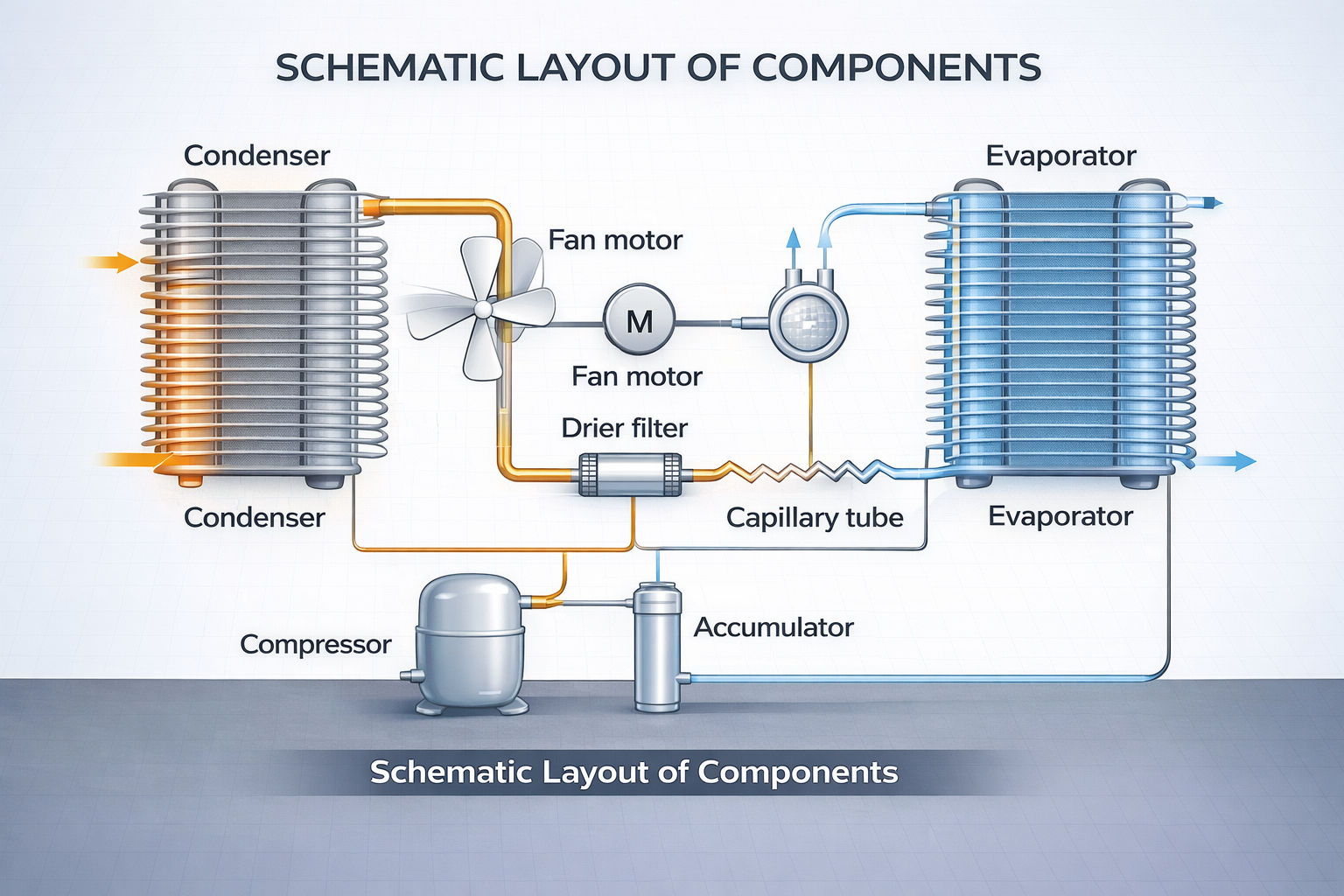
Features
- Simple copper tube
- Fixed flow
Used In
- Window AC
- Small systems
2. Thermostatic Expansion Valve (TXV)
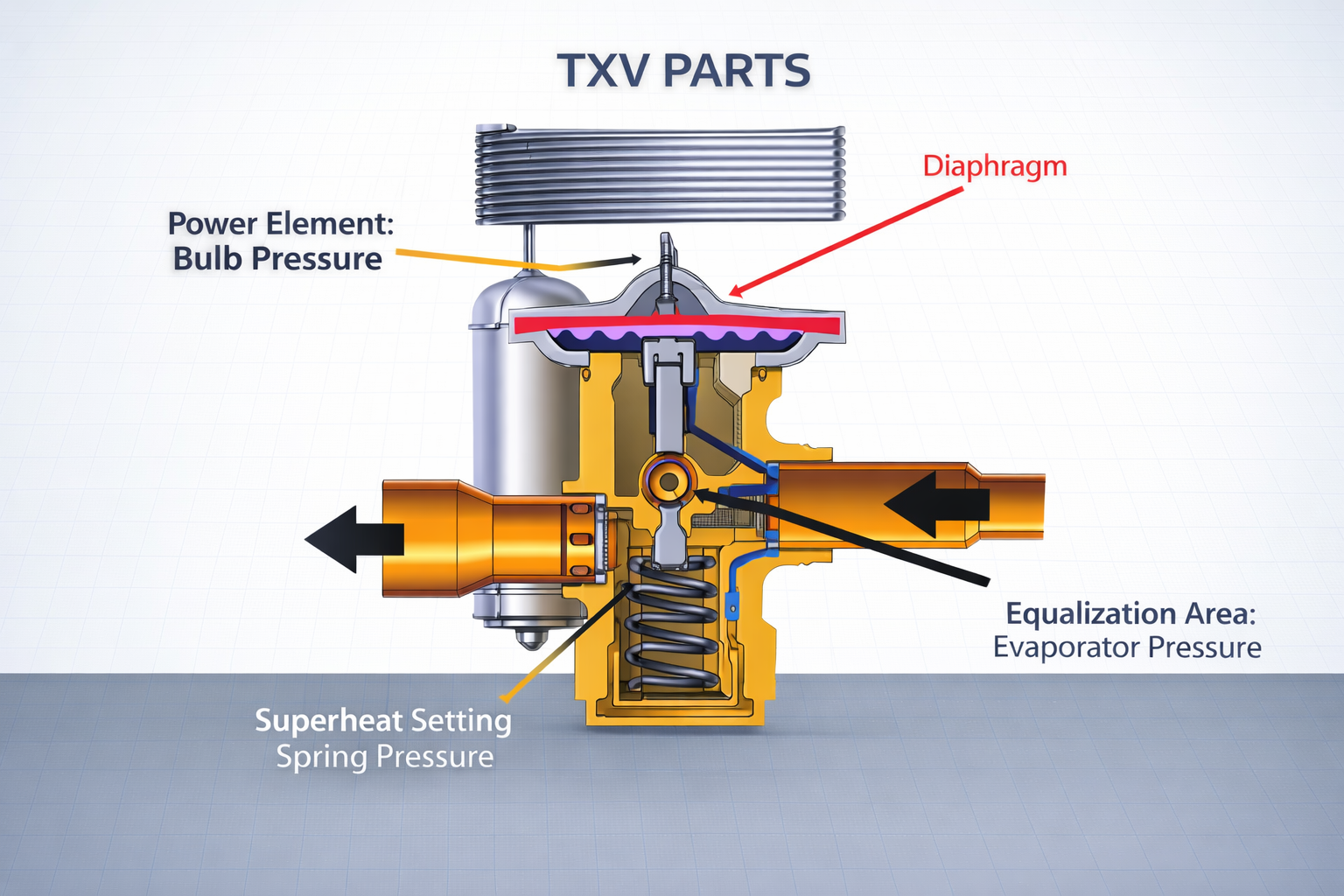
Features
- Controls refrigerant based on temperature
- Maintains superheat
Components
- Sensing bulb
- Diaphragm
- Spring
3. Electronic Expansion Valve (EEV)
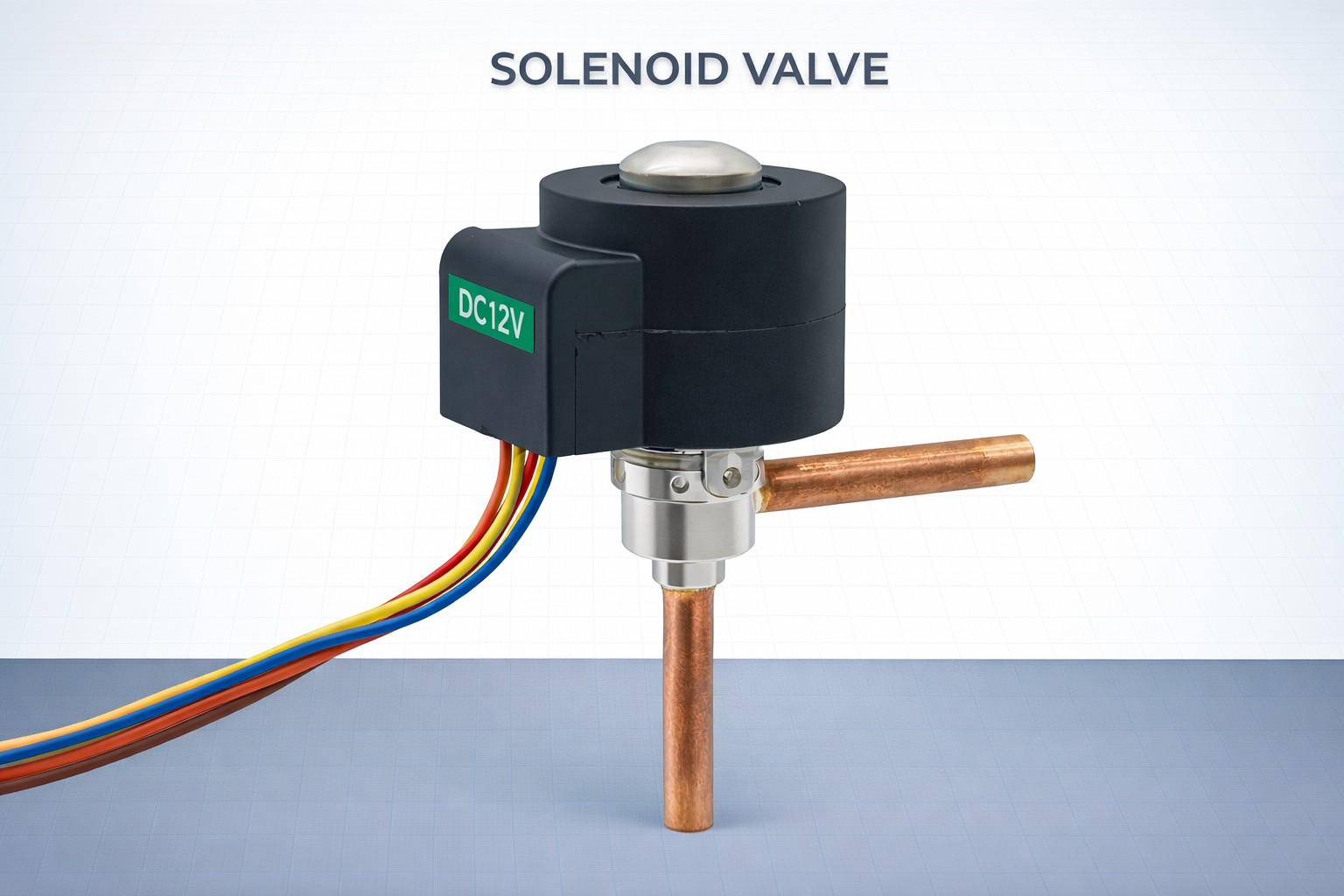
Features
- Controlled by electronics
- High precision
Used In
- VRF systems
- Advanced HVAC
4. Automatic Expansion Valve (AXV)
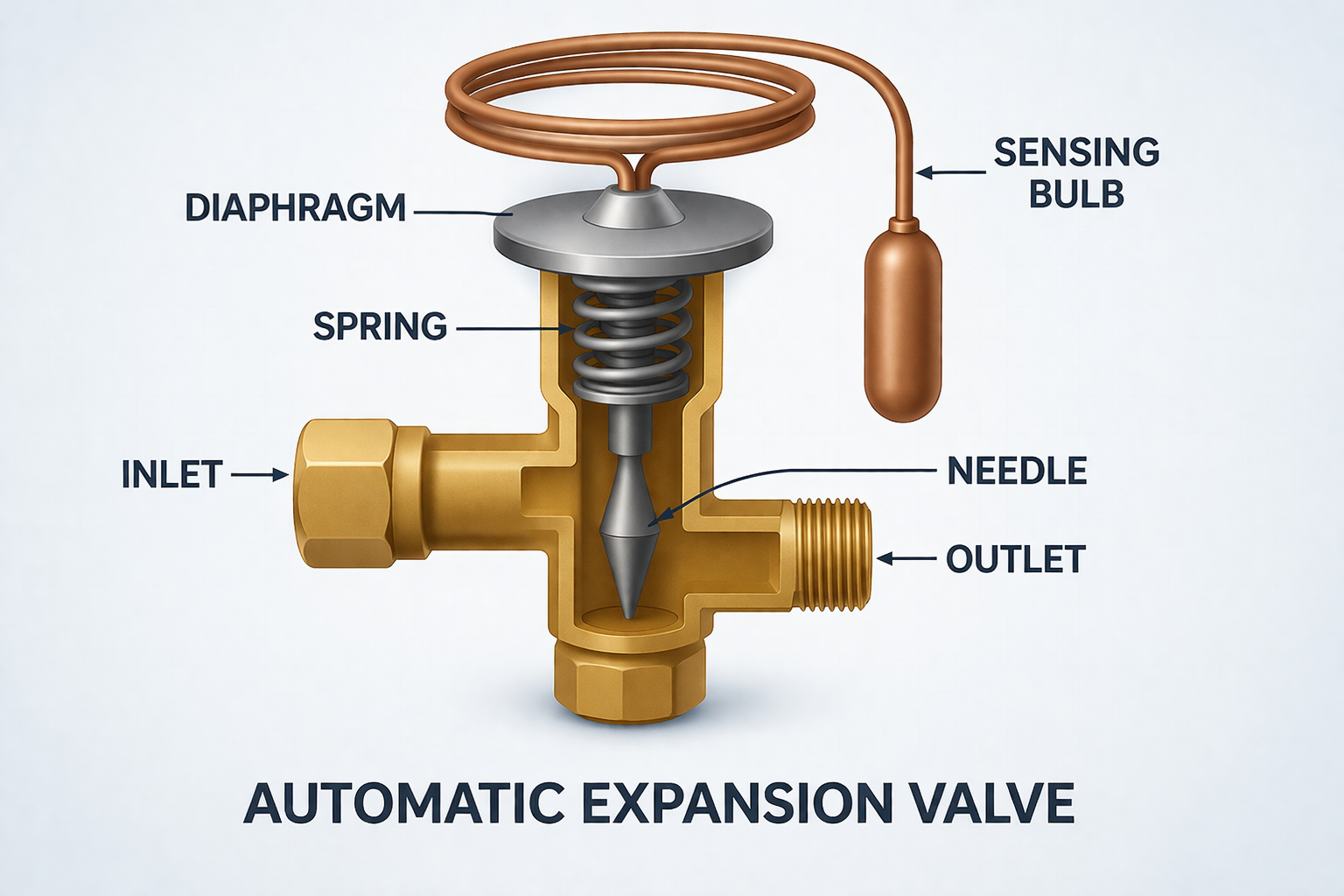
Features
- Maintains constant pressure
Detailed Working of TXV
Step-by-Step
- Sensing bulb detects temperature
- Pressure applied to diaphragm
- Valve opens/closes
- Controls refrigerant flow
Expansion Valve vs Capillary Tube
| Feature | Expansion Valve | Capillary Tube |
|---|---|---|
| Control | Automatic | Fixed |
| Efficiency | High | Low |
| Cost | High | Low |
| Application | Large systems | Small systems |
Expansion Valve in Different Systems
Split AC
- TXV or capillary
Window AC
- Capillary tube
VRF System
- EEV
Chiller
- Electronic valves
Common Problems in Expansion Valve
1. Valve Blockage
Causes:
- Dirt
- Moisture
2. Valve Stuck Open
Effects:
- Flooding evaporator
3. Valve Stuck Closed
Effects:
- No cooling
4. Improper Superheat
Causes:
- Faulty TXV
Symptoms of Faulty Expansion Valve
- Low cooling
- Ice formation
- High pressure
- Compressor overheating
How to Check Expansion Valve
- Measure superheat
- Check pressure
- Inspect temperature
Maintenance Tips
- Keep system clean
- Use proper filter drier
- Avoid moisture entry
- Regular servicing
Advantages of Expansion Valve
- Improves efficiency
- Controls refrigerant flow
- Enhances cooling performance
Disadvantages
- Costly (TXV, EEV)
- Requires maintenance
Future of Expansion Valves
- AI-based control
- Smart HVAC integration
- IoT-enabled valves
Conclusion
The expansion valve is a critical component in any air conditioning system. It ensures proper refrigerant flow and maintains system efficiency.
Understanding its working helps in:
- Better troubleshooting
- Improved system design
- Enhanced performance
FAQs
1. What is expansion valve in AC?
It controls refrigerant flow and reduces pressure.
2. Why expansion valve is used?
To create pressure drop and enable cooling.
3. Which expansion valve is best?
EEV is best for modern systems.
4. What happens if expansion valve fails?
Cooling stops or becomes inefficient.
5. Where is expansion valve located?
Between condenser and evaporator.