Higher HVAC Temperatures with Cascade Systems
How to Unlock Higher HVAC Temperatures with Cascade Systems
(Complete Engineering Guide for HVAC Professionals)
Introduction
Modern HVAC engineering is evolving rapidly, especially with the increasing demand for higher temperature applications such as industrial heating, hot water production, district energy systems, and specialized climate control. Traditional refrigeration and heat pump systems often struggle to efficiently achieve high temperature lifts without compromising performance, reliability, or energy efficiency.
This is where cascade systems come into play.
Cascade HVAC systems are a powerful solution that allow engineers to unlock higher temperatures by combining two or more refrigeration cycles. Whether you’re designing for A2L refrigerants, industrial heat recovery, or high-temperature heat pumps, understanding cascade systems is essential for next-generation HVAC design.
In this comprehensive guide, you will learn:
- What cascade systems are and how they work
- Why they are critical for high-temperature HVAC applications
- Design principles, components, and calculations
- Advantages, challenges, and best practices
- Real-world applications and optimization strategies
What is a Cascade HVAC System?
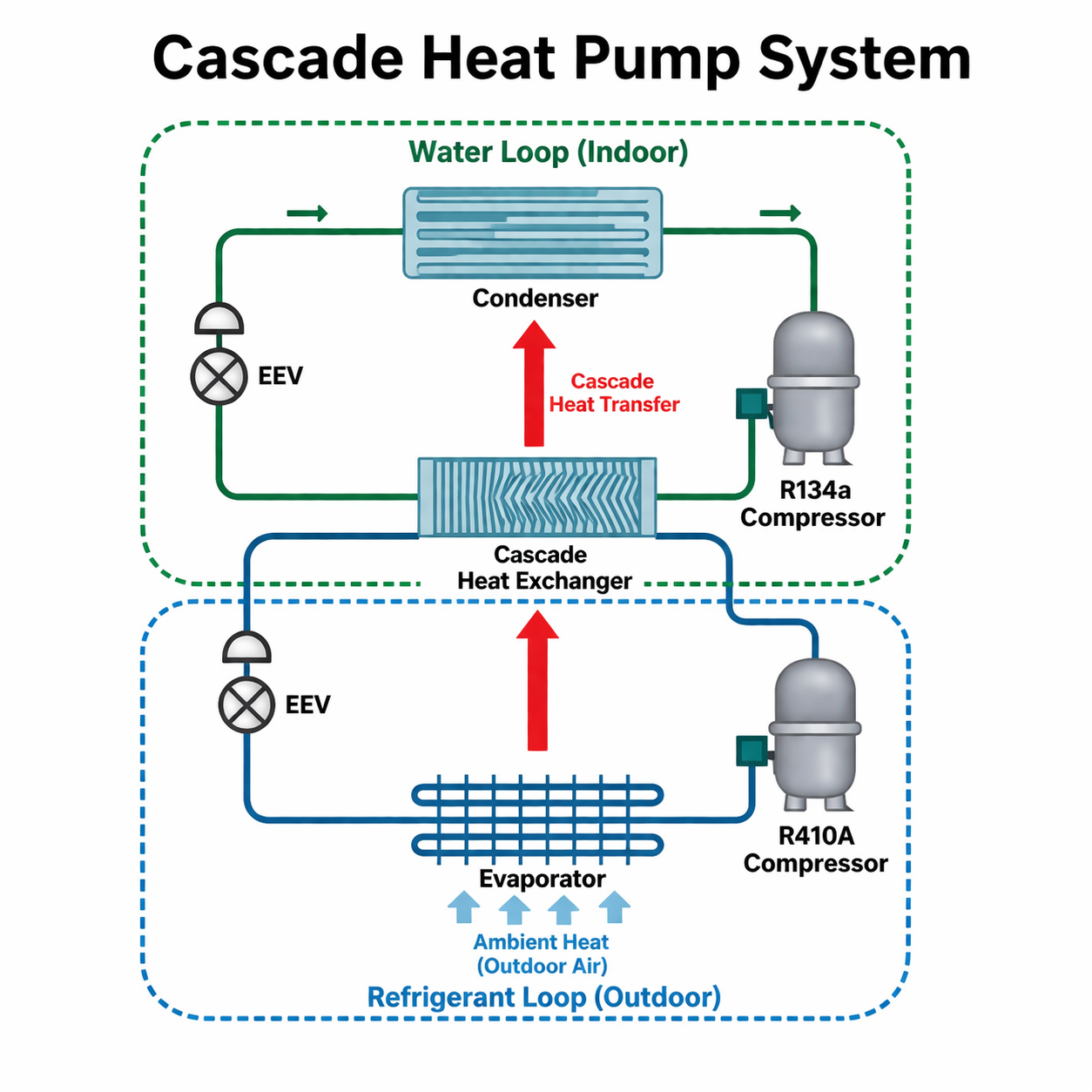
A cascade system is a refrigeration or heat pump setup that uses two or more independent refrigeration cycles connected through an intermediate heat exchanger.
Instead of forcing a single system to handle a large temperature difference, cascade systems split the load into stages, making it easier to achieve extreme temperatures efficiently.
Basic Concept:
- Low-temperature circuit (LT): Handles very low temperatures
- High-temperature circuit (HT): Handles higher temperature output
- Cascade heat exchanger: Transfers heat between both circuits
How Cascade Systems Work
Step-by-Step Operation
- Low-Temperature Cycle (LT Circuit)
- Absorbs heat from the environment or process
- Evaporates refrigerant at low temperature
- Compresses to intermediate pressure
- Cascade Heat Exchanger
- Acts as:
- Condenser for LT system
- Evaporator for HT system
- Transfers heat between both circuits
- Acts as:
- High-Temperature Cycle (HT Circuit)
- Absorbs heat from LT circuit
- Compresses to higher pressure
- Rejects heat at elevated temperatures (useful output)
Why Traditional HVAC Systems Struggle with High Temperatures
Standard HVAC systems face limitations when trying to reach high temperatures:
Key Challenges:
- High compression ratios
- Reduced COP (Coefficient of Performance)
- Compressor overheating
- Refrigerant breakdown
- Increased energy consumption
Cascade systems solve these issues by distributing the thermal load across multiple stages.
Key Advantages of Cascade Systems
1. Higher Temperature Lift
- Achieve 80°C to 120°C+ output temperatures
- Ideal for industrial heating and hot water
2. Improved Efficiency
- Lower compression ratios per stage
- Higher COP compared to single-stage systems
3. Flexibility in Refrigerant Selection
- Different refrigerants can be used in each stage
- Optimize performance and safety (especially A2L refrigerants)
4. Enhanced System Reliability
- Reduced stress on compressors
- Longer equipment lifespan
Cascade System Design Fundamentals
1. Temperature Split Strategy
Proper temperature division between stages is critical.
Example:
- LT Stage: -20°C to +10°C
- HT Stage: +10°C to +90°C
Balanced design ensures:
- Optimal efficiency
- Reduced compressor load
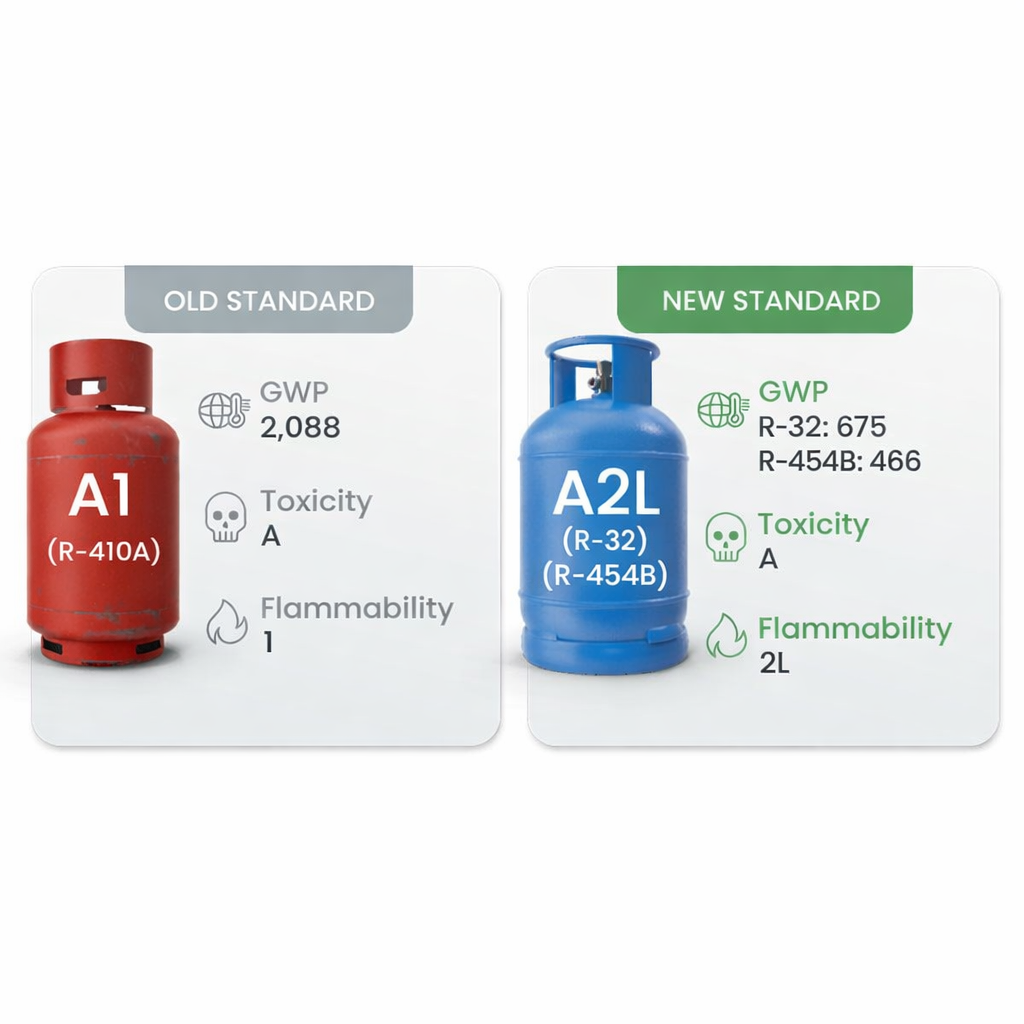
2. Refrigerant Selection
Common Choices:
Low-Temperature Circuit:
- R-134a
- R-404A
- CO₂ (R-744)
High-Temperature Circuit:
- R-1234yf
- R-245fa
- R-717 (Ammonia)
Modern systems increasingly use:
- A2L refrigerants for environmental compliance
3. Cascade Heat Exchanger Design
This is the heart of the system.
Types:
- Plate heat exchangers
- Shell & tube
- Brazed plate
Key considerations:
- Heat transfer efficiency
- Pressure drop
- Proper insulation
4. Compressor Selection
Each stage requires:
- Proper capacity matching
- Compatible refrigerants
- Efficient compression ratio
Common types:
- Scroll compressors
- Screw compressors
- Reciprocating compressors
Thermodynamic Principles Behind Cascade Systems
Cascade systems rely on multi-stage vapor compression cycles.
Key Concept:
Instead of one large compression step:
👉 Use two smaller compression steps
This reduces:
- Work input
- Discharge temperature
- Mechanical stress
Performance Optimization Techniques
1. Interstage Temperature Optimization
- Ideal intermediate temperature improves COP
- Avoid too high or too low values
2. Subcooling & Superheating Control
- Enhances efficiency
- Prevents compressor damage
3. Variable Speed Compressors
- Adjust capacity dynamically
- Reduce energy consumption
4. Smart Controls & Automation
- AI-based optimization
- Load-based staging
Applications of Cascade HVAC Systems
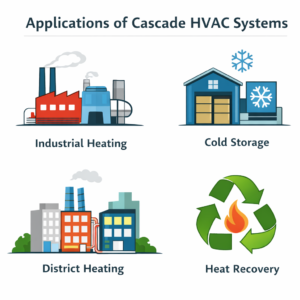
1. Industrial Heating
- Chemical plants
- Food processing
- Textile industries
2. Cold Storage & Refrigeration
- Deep freezing applications
- Pharmaceutical storage
3. Heat Recovery Systems
- Waste heat utilization
- Energy recycling
4. District Heating
- Centralized heating networks
- Sustainable energy systems
Cascade Systems vs Single-Stage Systems
| Feature | Single-Stage System | Cascade System |
|---|---|---|
| Temperature Range | Limited | Very High |
| Efficiency | Lower at high lift | Higher |
| Complexity | Simple | Complex |
| Cost | Lower initial | Higher initial |
| Reliability | Moderate | High |
Challenges of Cascade Systems
1. Higher Initial Cost
- More components
- Complex installation
2. Design Complexity
- Requires expert engineering
- Proper balancing needed
3. Maintenance Requirements
- Multiple circuits
- Skilled technicians required
Real-World Example: High-Temperature Heat Pump
Scenario:
- Required Output: 95°C hot water
- Ambient Temperature: 25°C
Solution:
- LT Stage: 25°C → 10°C
- HT Stage: 10°C → 95°C
Result:
- Efficient operation
- Reduced compressor stress
- Stable performance
Best Practices for HVAC Engineers
- Optimize Temperature Split
- Use High-Efficiency Compressors
- Select Compatible Refrigerants
- Ensure Proper Heat Exchanger Design
- Implement Smart Controls
Future Trends in Cascade HVAC Systems
1. Integration with A2L Refrigerants
- Lower GWP
- Environmental compliance
2. Hybrid Systems
- Cascade + VRF
- Cascade + Solar
3. AI-Based Optimization
- Predictive maintenance
- Real-time performance tuning
Common Mistakes to Avoid
- Incorrect refrigerant pairing
- Poor heat exchanger sizing
- Ignoring pressure drop
- Improper control strategies
Conclusion
Cascade HVAC systems are a game-changing solution for achieving higher temperatures efficiently and reliably. As industries demand higher thermal performance and lower emissions, cascade systems provide the perfect balance between efficiency, flexibility, and scalability.
For HVAC engineers, mastering cascade system design is no longer optional—it’s essential for staying competitive in the evolving HVAC landscape.
FAQ (SEO Schema Ready)
Q1: What is a cascade HVAC system?
A cascade HVAC system uses multiple refrigeration cycles connected via a heat exchanger to achieve higher temperature differences efficiently.
Q2: Why use cascade systems for high temperatures?
They reduce compressor load, improve efficiency, and enable higher temperature outputs.
Q3: What temperatures can cascade systems achieve?
Typically up to 120°C or higher, depending on design.
Q4: Are cascade systems energy efficient?
Yes, especially for high temperature lifts where single-stage systems fail.
Q5: Which refrigerants are used in cascade systems?
A mix of refrigerants like CO₂, R-134a, ammonia, and A2L refrigerants.
Get Expert HVAC System Design Support
Unlock the full potential of your HVAC projects with advanced cascade system design.
- Industrial Heating Solutions
- High-Temperature Heat Pump Design
- Energy Efficiency Optimization
👉 Get a Free Consultation Today
- Name
- Phone
- Project Details
[Submit Button: “Get Free HVAC Consultation”]