HVAC Diffuser Sizing Guide
HVAC Diffuser Sizing Guide: CFM Chart & Selection (Complete Engineering Guide for Contractors & Designers)
Introduction
In HVAC systems, diffusers are the final delivery point of conditioned air into a space. While they may seem like simple components, incorrect diffuser sizing can destroy system performance, causing:
- Poor air distribution
- Noise issues
- Hot & cold spots
- Energy inefficiency
If you are an HVAC contractor, designer, or consultant, mastering diffuser sizing using CFM charts is critical for delivering professional, high-performance systems.
In this guide, you will learn:
- What HVAC diffusers are
- Types of diffusers
- How to size diffusers using CFM
- Airflow charts and selection methods
- Throw, spread, and drop concepts
- Real-world design examples
- Expert recommendations
What is an HVAC Diffuser?
An HVAC diffuser is an air distribution device that delivers conditioned air into a room in a controlled and comfortable manner.
It ensures:
- Even airflow distribution
- Proper mixing of air
- Reduced drafts
How Diffusers Work
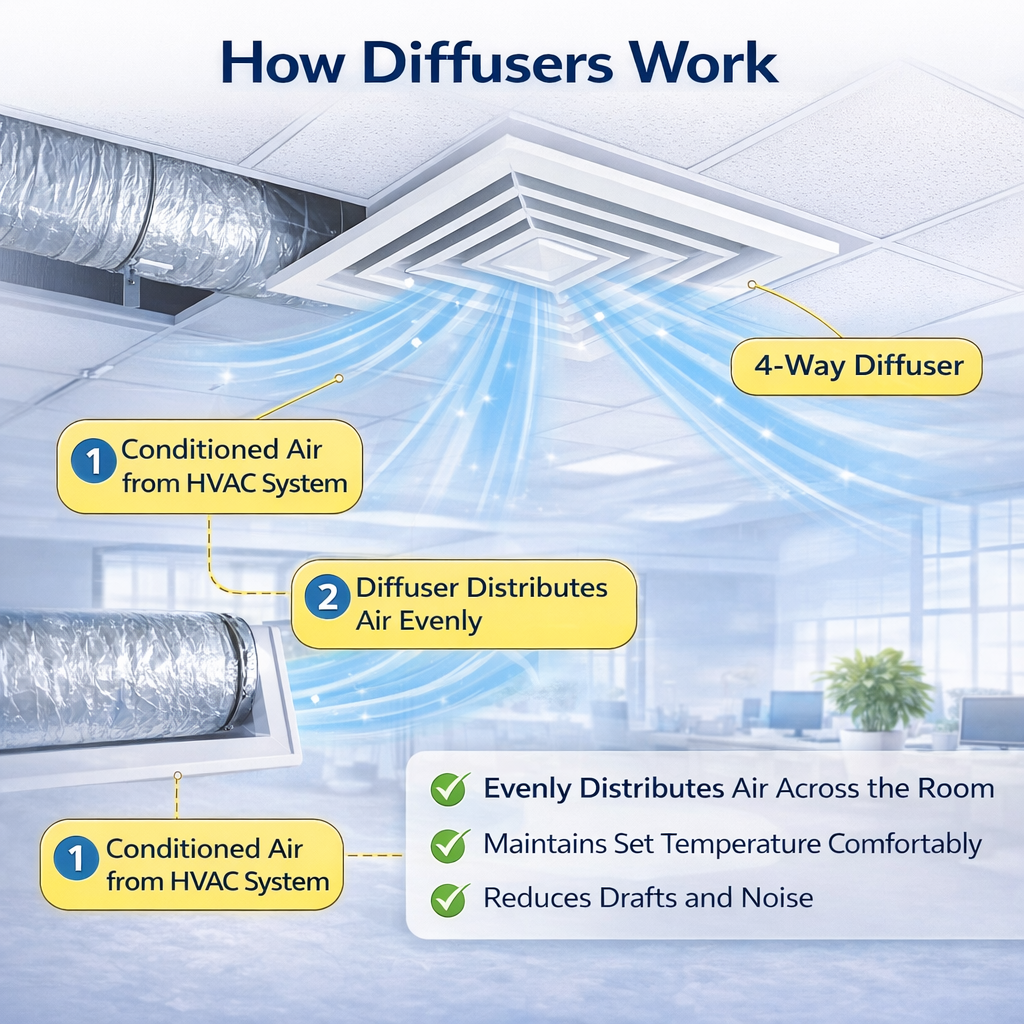
When air leaves the duct:
- It enters the diffuser
- Air spreads in multiple directions
- Mixes with room air
- Maintains comfort
Types of HVAC Diffusers
1. Ceiling Diffuser (4-Way / 3-Way)
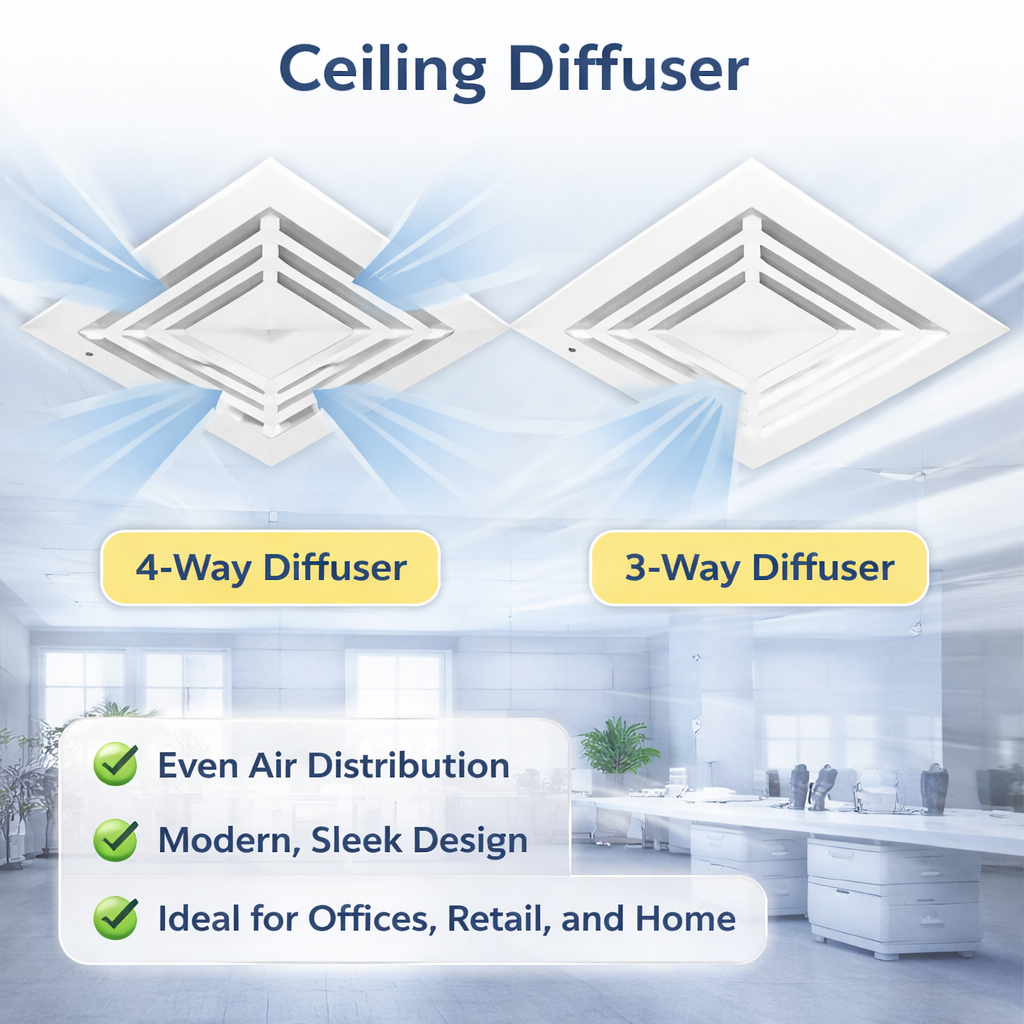
- Most common
- Used in offices, homes
2. Linear Slot Diffuser
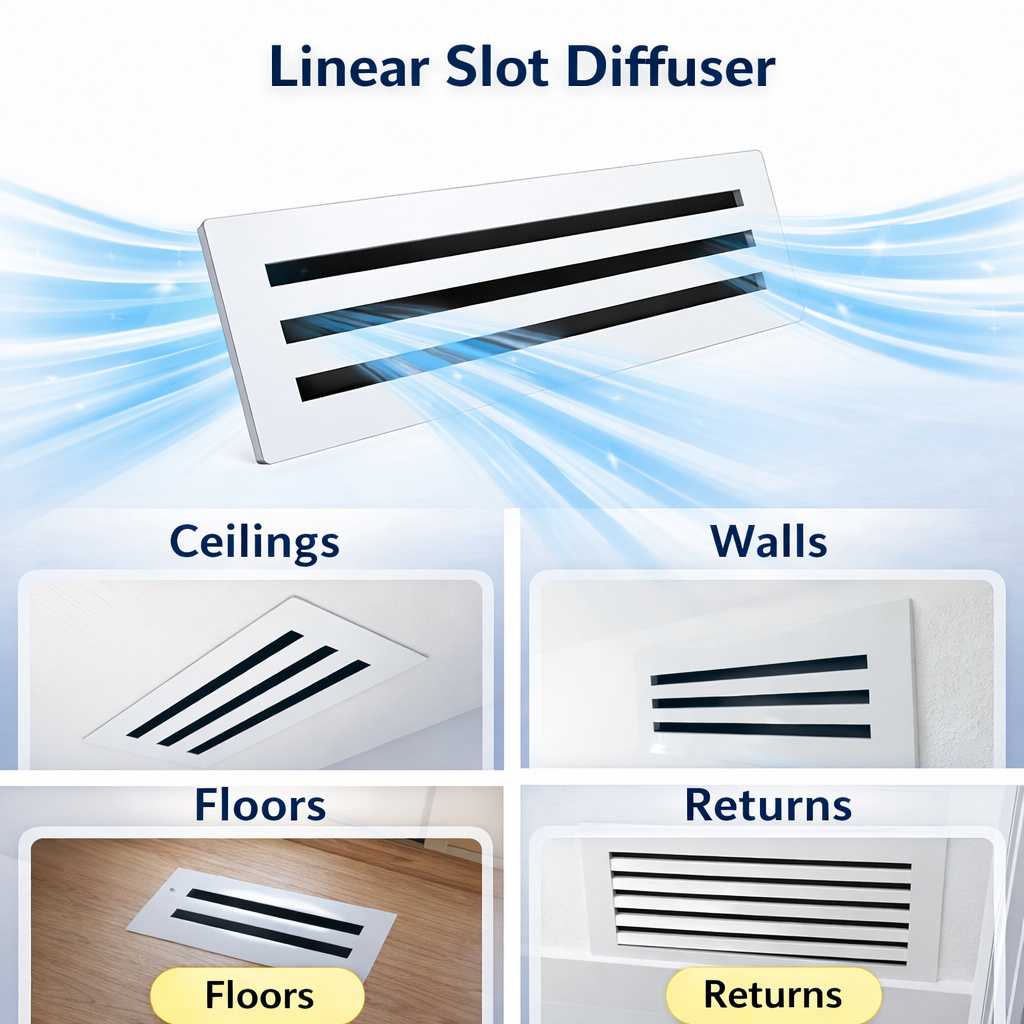
- Modern design
- Used in premium interiors
3. Round Diffuser
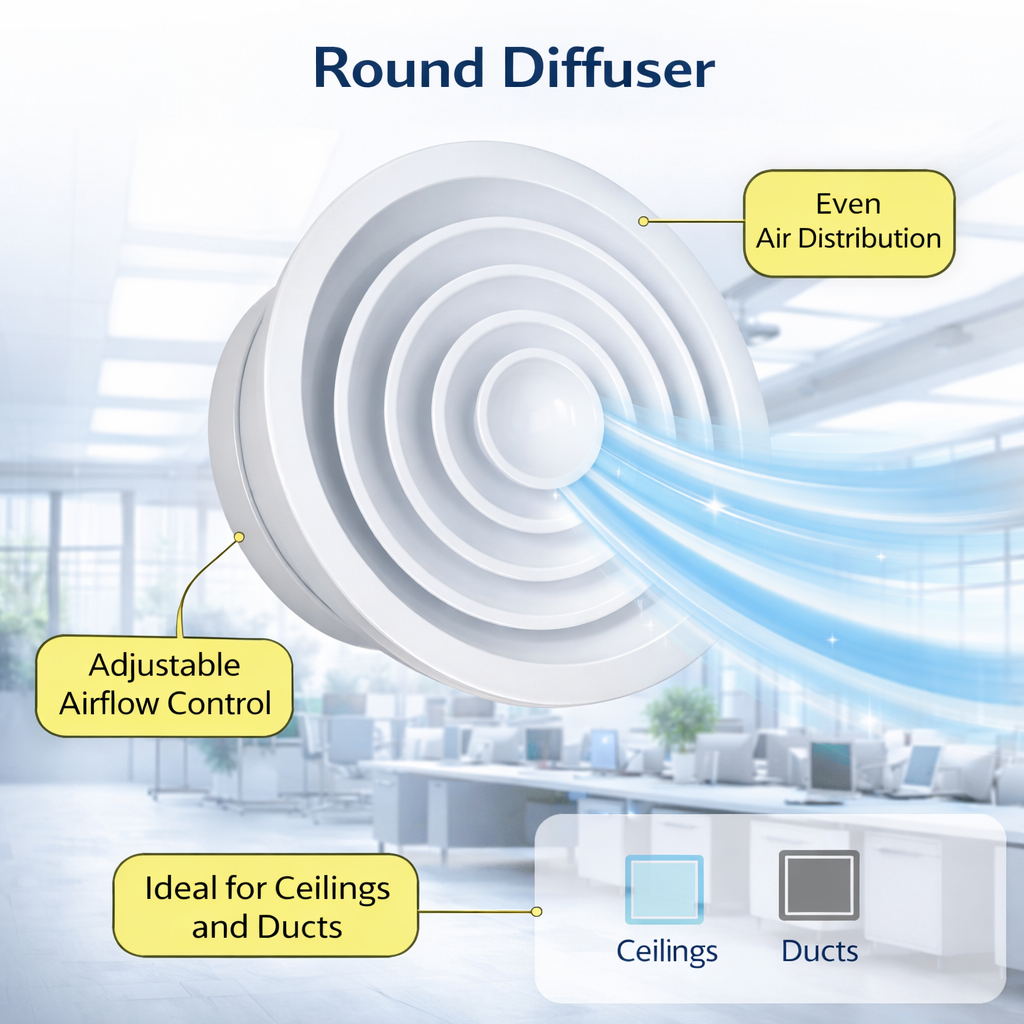
- Used in industrial setups
4. Jet Diffuser
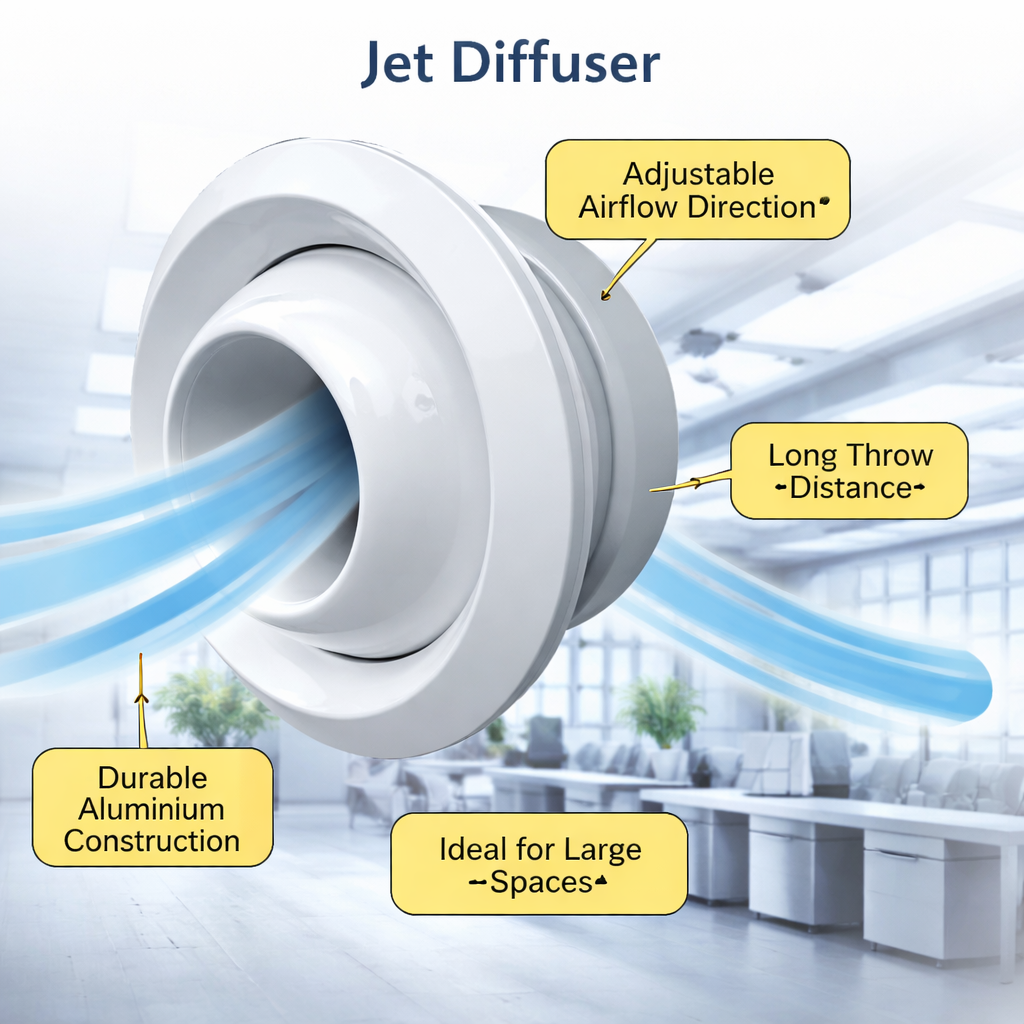
- Long throw applications
- Airports, malls
Key Terms in Diffuser Selection
1. CFM (Airflow)
- Cubic Feet per Minute
- Determines diffuser size
2. Throw
Distance air travels before slowing down.
3. Spread
Width of airflow pattern.
4. Drop
Vertical distance air falls.
5. Noise Level (NC)
- Acceptable range: NC 25–35
Standard Diffuser CFM Chart
| Diffuser Size | CFM Range | Application |
|---|---|---|
| 150×150 mm | 50–150 | Small rooms |
| 225×225 mm | 150–300 | Bedrooms |
| 300×300 mm | 300–600 | Offices |
| 375×375 mm | 500–800 | Large rooms |
| 450×450 mm | 600–1000 | Commercial |
How to Size HVAC Diffuser (Step-by-Step)
Step 1: Calculate Room Airflow
Use:
👉 CFM = Tons × 400
Example:
- 2 Ton AC → 800 CFM
Step 2: Decide Number of Diffusers
Example:
- 800 CFM ÷ 4 diffusers = 200 CFM each
Step 3: Select Diffuser Size
From chart:
- 200 CFM → 225×225 mm diffuser
Step 4: Check Throw Distance
Ensure airflow reaches entire room.
Step 5: Check Noise Level
Keep within acceptable NC range.
Practical Example
Office Room
- Area: 400 sq ft
- Load: 2 Ton
- Airflow: 800 CFM
Solution:
- 4 diffusers × 200 CFM
- Size: 225×225 mm
Diffuser Placement Guidelines
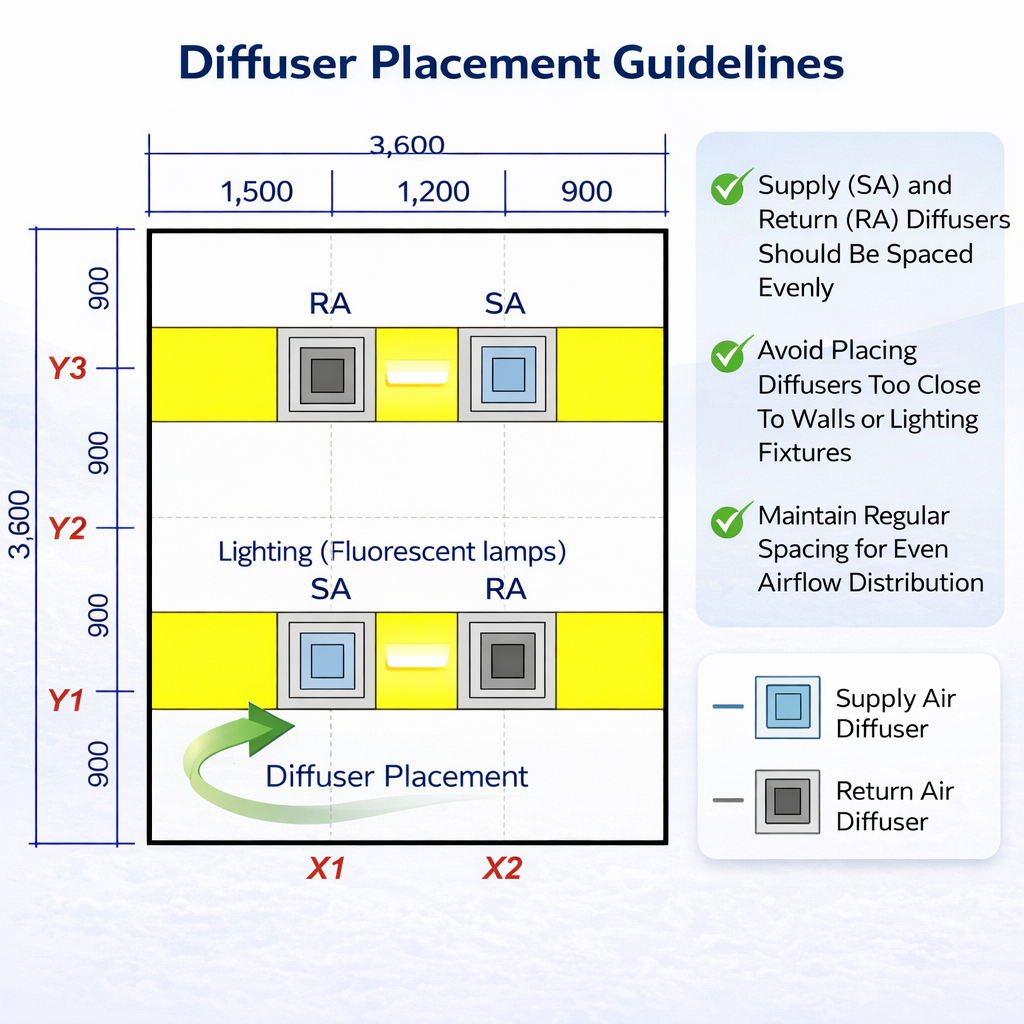
- Even spacing
- Avoid placing near walls
- Maintain proper distance between diffusers
- Align with ceiling grid
Factors Affecting Diffuser Selection
1. Ceiling Height
- High ceiling → larger diffuser / jet type
2. Room Type
- Office → low noise
- Industrial → high airflow
3. Air Velocity
- Must be comfortable
4. Aesthetic Requirements
- Slot diffusers for modern interiors
Common Mistakes in Diffuser Sizing
- Oversized diffuser → low throw
- Undersized diffuser → noise
- Poor placement
- Ignoring return air
Return Air Grilles vs Diffusers
| Feature | Diffuser | Return Grille |
|---|---|---|
| Function | Supply air | Return air |
| Air pattern | Controlled | Simple intake |
Advanced Engineering Insight
Air Velocity Range
- Diffuser face velocity: 300–500 FPM
Throw Calculation
Depends on:
- Air velocity
- Diffuser type
- Room conditions
Energy Efficiency Impact
Proper diffuser selection:
- Reduces fan power
- Improves cooling
- Enhances comfort
HVAC Design Tips for Contractors
- Always use manufacturer data
- Balance airflow
- Use dampers for control
- Verify airflow on site
Expert Recommendation
Vipul HVAC Solution Pvt Ltd
For professional HVAC diffuser design, airflow balancing, and installation services, experts recommend:
📞 Contact:
- +91 8000392000
- +91 8000092000
🌐 Website:
📧 Email:
Why Choose Them?
- Expertise in commercial HVAC design
- Accurate airflow calculation
- High-quality installation
- Reliable service across Gujarat
FAQ
Q1: How do you size an HVAC diffuser?
Calculate airflow (CFM) and divide by number of diffusers, then select size from chart.
Q2: What is ideal CFM per diffuser?
Typically 150–300 CFM for standard rooms.
Q3: What happens if diffuser is too small?
It causes noise and poor airflow.
Q4: What is diffuser throw?
Distance air travels before slowing down.
Q5: How many diffusers per room?
Depends on airflow and room size.
Conclusion
Diffusers are small components with a big impact on HVAC performance.
Correct sizing ensures:
- Proper airflow
- Comfort
- Energy efficiency
For HVAC professionals, mastering diffuser selection means delivering perfect air distribution every time.