Role of Indoor Air Quality in Mold Prevention
Role of Indoor Air Quality in Mold Prevention: Complete Guide for Healthy Homes
Introduction
Mold growth inside homes is a serious health and structural problem. Many homeowners focus only on visible mold removal—but the real solution lies deeper:
👉 Improving Indoor Air Quality (IAQ)
Indoor air quality directly affects:
- Moisture levels
- Air circulation
- Pollutant buildup
- Mold growth conditions
If your IAQ is poor, your home becomes a perfect environment for mold.
In this complete guide, you will learn:
- What indoor air quality is
- How mold grows
- Connection between IAQ and mold
- HVAC solutions for mold prevention
- Practical tips for homeowners
What is Indoor Air Quality (IAQ)?
Definition
Indoor Air Quality refers to:
The quality of air inside buildings related to:
- Temperature
- Humidity
- Airflow
- Pollutants
Why IAQ Matters
- Protects health
- Improves comfort
- Prevents mold growth
- Enhances HVAC performance
What is Mold?
Definition
Mold is a type of fungus that:
- Grows in moist environments
- Spreads through airborne spores
- Damages surfaces
Common Places Mold Grows
- Bathrooms
- Kitchens
- Basements
- AC ducts
- Walls
How Mold Grows (Science Explained)
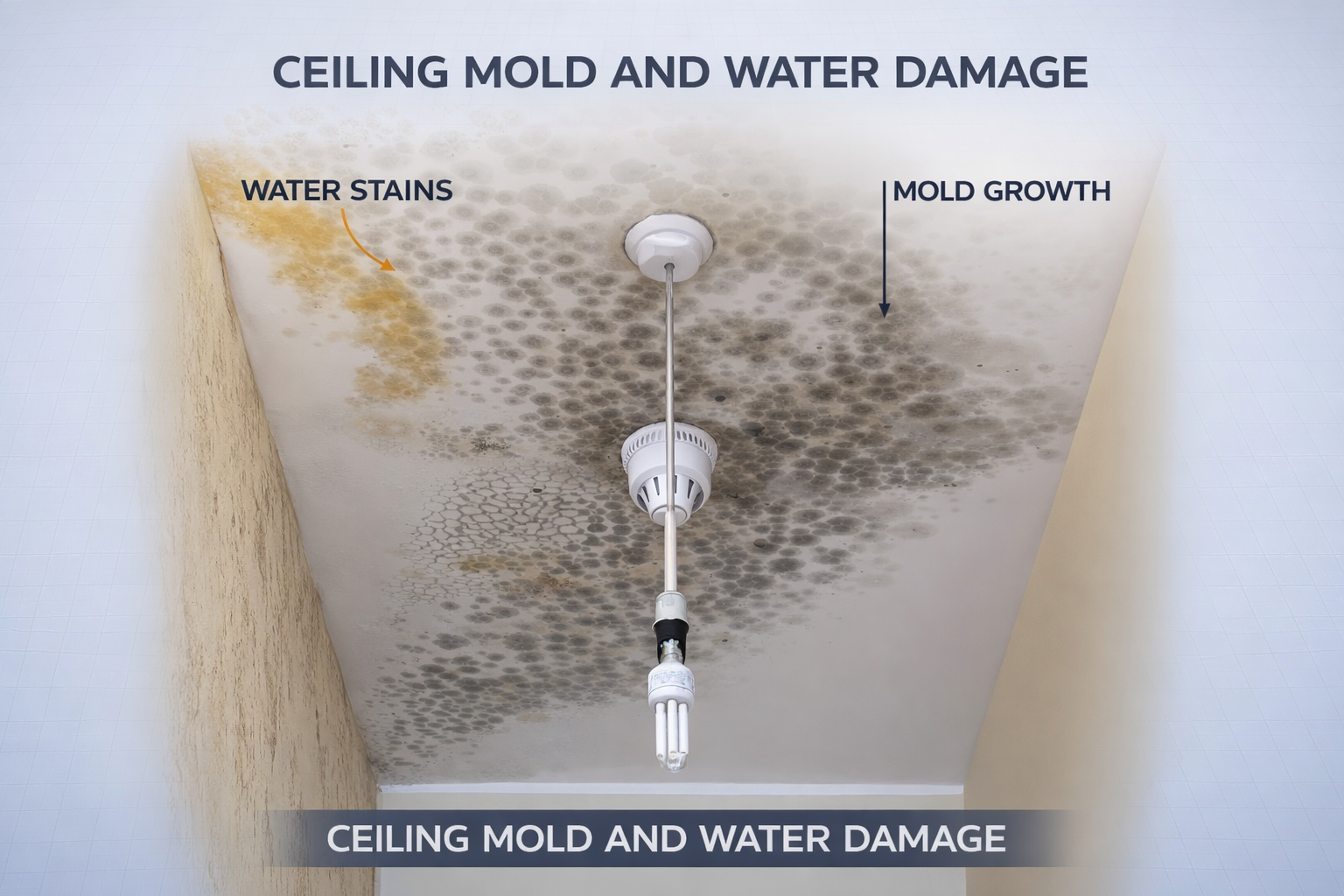
Conditions Required for Mold Growth
- Moisture
- Warm temperature
- Organic material
- Poor airflow
The Link Between IAQ and Mold
Key Connection
👉 Poor IAQ = High Mold Risk
Why?
- High humidity → moisture accumulation
- Poor ventilation → stagnant air
- Pollutants → support mold growth
1. Humidity Control: The Most Important Factor
Ideal Humidity Level
👉 30% – 50% RH (Relative Humidity)
What Happens When Humidity is High?
- Condensation forms
- Surfaces stay damp
- Mold grows rapidly
HVAC Role in Humidity Control
- Dehumidification
- Cooling reduces moisture
- Air circulation
2. Ventilation and Airflow
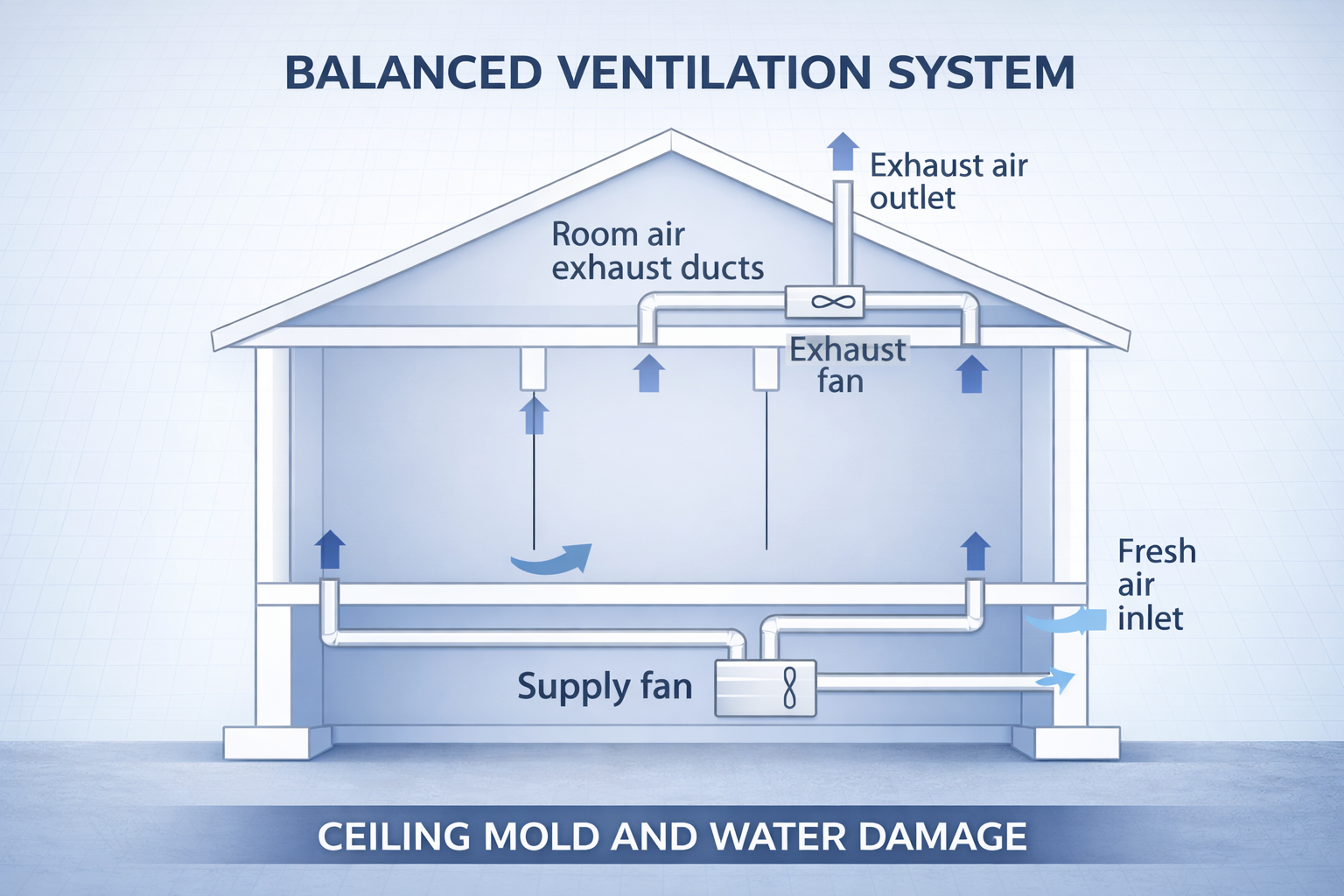
Why Ventilation Matters
- Removes moist air
- Brings fresh air
- Prevents stagnation
Types of Ventilation
Natural Ventilation
- Windows
- Doors
Mechanical Ventilation
- Exhaust fans
- HVAC systems
3. Air Filtration and Mold Prevention
Role of Filters
- Remove spores
- Improve air quality
Types of Filters
- HEPA filters
- Carbon filters
- Pre-filters
4. Temperature Control
Impact on Mold Growth
- Warm environments promote mold
- AC helps control temperature
5. HVAC System and Mold Prevention
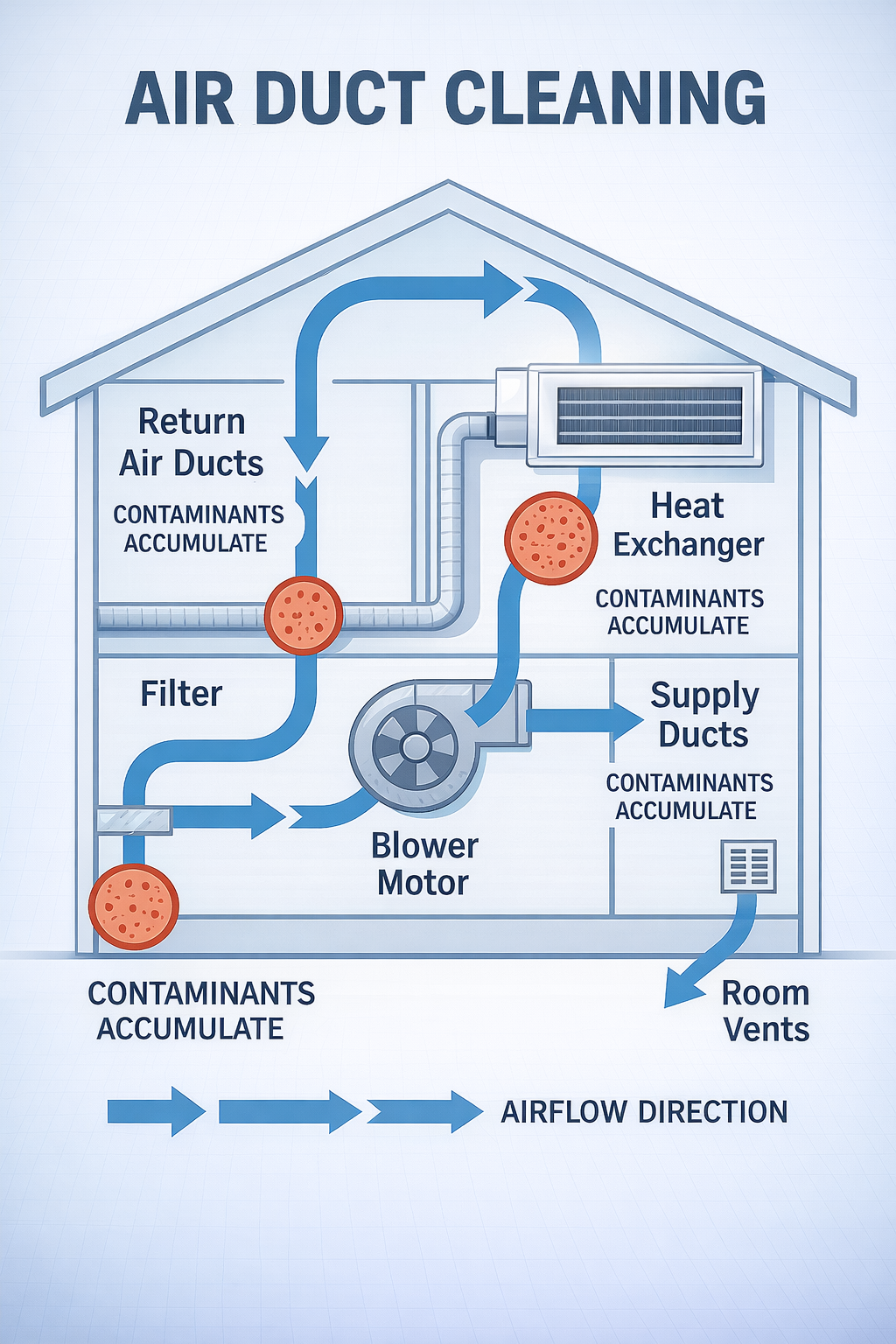
- Controls humidity
- Filters air
- Circulates air
- Prevents condensation
Common HVAC-Related Mold Issues
- Dirty filters
- Blocked drain pipes
- Wet evaporator coils
- Leaky ducts
6. Indoor Pollutants and Mold
Sources
- Dust
- Organic matter
- Pet dander
These act as food for mold.
7. Condensation: Hidden Mold Trigger
Where It Occurs
- Windows
- Pipes
- Walls
How to Prevent Condensation
- Insulation
- Ventilation
- Temperature control
Health Effects of Mold Exposure
Common Symptoms
- Allergies
- Breathing issues
- Skin irritation
Long-Term Risks
- Asthma
- Lung infections
Practical Mold Prevention Tips
Daily Habits
- Open windows
- Use exhaust fans
- Avoid water leakage
HVAC Maintenance
- Clean filters
- Check drainage
- Service regularly
Humidity Control
- Use dehumidifier
- Keep RH below 50%
Best HVAC Solutions for Mold Prevention
1. Dehumidifiers
- Remove excess moisture
2. Air Purifiers
- Remove spores
3. UV Lights
- Kill microorganisms
Advanced Mold Prevention Technologies
- Smart humidity sensors
- IoT HVAC systems
- AI-based air quality monitoring
Signs of Poor Indoor Air Quality
- Bad odor
- High humidity
- Dust buildup
- Frequent illness
IAQ Testing Methods
- Humidity meter
- Air quality monitor
- Professional testing
Cost of Ignoring IAQ
- Property damage
- Health expenses
- HVAC repair cost
Case Study Example
Problem
- High humidity → mold in bedroom
Solution
- Installed exhaust fan
- Serviced AC
- Reduced humidity
Result
- Mold eliminated
Benefits of Good Indoor Air Quality
- Healthy living
- Better sleep
- Energy efficiency
- Mold-free environment
Conclusion
Indoor air quality plays a critical role in preventing mold growth. By controlling humidity, improving ventilation, and maintaining HVAC systems, you can create a safe and healthy indoor environment.
👉 Better IAQ = No Mold + Better Health
FAQs
1. How does indoor air quality affect mold?
Poor IAQ increases humidity and allows mold growth.
2. What humidity level prevents mold?
30%–50% humidity is ideal.
3. Can AC prevent mold?
Yes, by controlling temperature and humidity.
4. What kills mold in air?
HEPA filters and UV systems.
5. How to improve indoor air quality?
Ventilation, filtration, and humidity control.