What is a Slot in HVAC?

What is a Slot in HVAC? – Complete Guide
Introduction: Understanding “Slot” in HVAC Systems
In modern HVAC design, aesthetics and performance go hand-in-hand. One of the most important innovations that fulfills both requirements is the slot diffuser, commonly referred to as a “slot” in HVAC terminology.
A slot in HVAC typically refers to a slot diffuser or linear slot diffuser, which is a sleek, narrow air distribution device used for supplying or returning air in conditioned spaces.
Unlike traditional bulky grilles, slot diffusers offer:
- Minimalistic appearance
- Uniform air distribution
- High flexibility in design
They are widely used in:
- Commercial buildings
- Offices
- Hotels
- Airports
- Modern homes
What is a Slot Diffuser in HVAC?
A slot diffuser is a type of air outlet designed with long, narrow openings (slots) that distribute air evenly across a space.
Key Characteristics:
- Long linear shape
- Narrow slots (typically 12mm–25mm wide)
- Adjustable airflow direction
- Can be installed in ceiling, wall, or floor
Visual Concept of Slot Diffusers

How Does a Slot Diffuser Work?
Slot diffusers operate by delivering conditioned air in a controlled linear pattern.
Working Principle:
- Air flows from duct into plenum box
- Air passes through narrow slots
- Air spreads horizontally along ceiling
- Air mixes with room air
- Temperature stabilizes uniformly
Airflow Pattern
- Creates Coanda effect (air sticks to ceiling)
- Prevents direct drafts on occupants
- Ensures uniform cooling
Types of Slot Diffusers in HVAC
1. Single Slot Diffuser
- One air slot
- Used in small rooms
2. Double Slot Diffuser
- Two parallel slots
- Better airflow distribution
3. Multi-Slot Diffuser
- 3 to 8 slots
- Used in large commercial spaces
4. Linear Continuous Slot Diffuser
- Installed in long continuous lines
- Common in malls, airports
5. Curved Slot Diffuser
- Designed for architectural aesthetics
6. Adjustable Slot Diffuser
- Includes directional vanes
- Allows airflow control
Components of a Slot Diffuser
1. Frame
- Usually aluminum
- Provides structure
2. Slots
- Air outlet openings
3. Deflection Blades
- Control airflow direction
4. Plenum Box
- Connects diffuser to duct
5. Dampers
- Regulate airflow volume
Materials Used in Slot Diffusers
- Aluminum (most common)
- Steel
- Plastic (rare)
Aluminum is preferred due to:
- Lightweight
- Corrosion resistance
- Modern finish
Advantages of Slot Diffusers
1. Aesthetic Design
- Sleek and modern
- Blends with interiors
2. Uniform Air Distribution
- Eliminates hot/cold spots
3. Flexible Installation
- Ceiling, wall, floor
4. Quiet Operation
- Low noise levels
5. Customizable Length
- Can be continuous
6. Adjustable Airflow
- Direction control
Disadvantages of Slot Diffusers
- Higher Cost than Grilles
- Complex Installation
- Requires Proper Design
- Maintenance Needs Skilled Access
Slot Diffuser vs Traditional Grilles
| Feature | Slot Diffuser | Traditional Grille |
|---|---|---|
| Appearance | Modern | Basic |
| Air Distribution | Uniform | Uneven |
| Noise | Low | Moderate |
| Cost | Higher | Lower |
| Flexibility | High | Limited |
Applications of Slot Diffusers in HVAC
1. Commercial Buildings
- Offices
- Conference rooms
2. Hotels
- Luxury interiors
- Silent operation
3. Airports & Malls
- Large area coverage
4. Residential Spaces
- Modern homes
5. Hospitals
- Controlled airflow
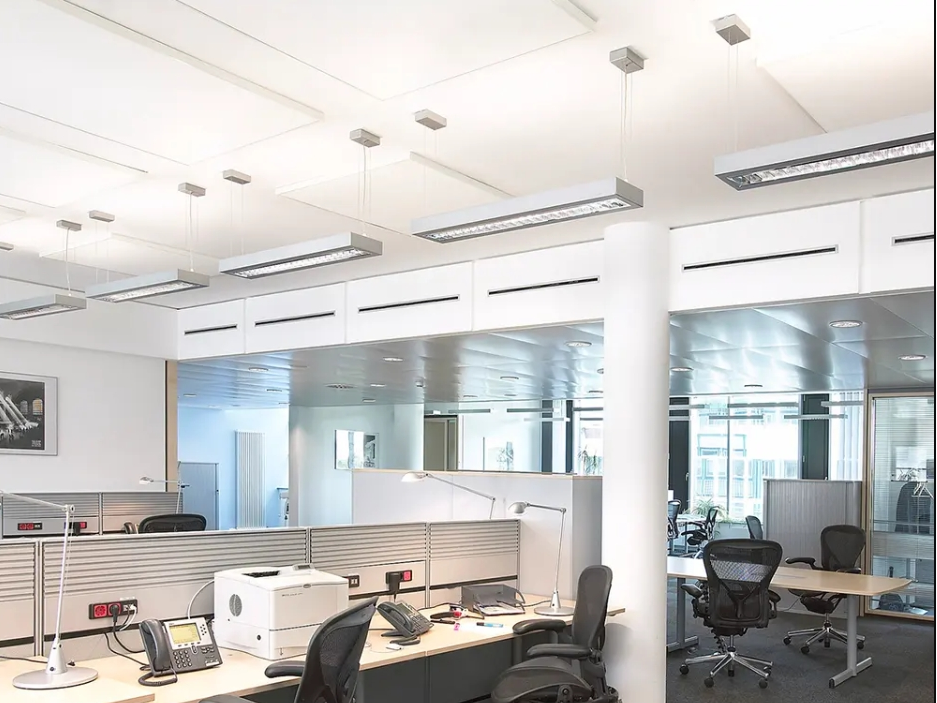
Real-Life Installations
Slot Diffuser Design Considerations
1. Airflow Requirement (CFM)
- Calculate room load
2. Throw Distance
- How far air travels
3. Noise Level (NC Rating)
- Important for offices
4. Slot Width & Number
- Affects airflow
5. Placement
- Ceiling vs wall
Installation Process of Slot Diffuser
Step-by-Step:
- Prepare duct opening
- Install plenum box
- Fix diffuser frame
- Connect duct
- Adjust dampers
- Test airflow
Maintenance of Slot Diffusers
Routine Maintenance:
- Cleaning dust
- Checking airflow
- Inspecting dampers
Common Issues:
| Issue | Cause | Solution |
|---|---|---|
| Low airflow | Blocked duct | Clean duct |
| Noise | Loose parts | Tighten screws |
| Uneven cooling | Poor design | Adjust airflow |
Slot Diffuser in HVAC Design Standards
Slot diffusers are designed according to:
- ASHRAE guidelines
- Air distribution standards
- Indoor air quality norms
Energy Efficiency and Slot Diffusers
Slot diffusers improve energy efficiency by:
- Better air mixing
- Reduced load on AC
- Optimized airflow
Slot Diffuser in Modern HVAC Systems
Used in:
- VRF systems
- Central AC
- Smart HVAC
Future Trends in Slot Diffusers
- Smart airflow control
- IoT integration
- AI-based air distribution
- Ultra-slim designs
FAQs – What is a Slot in HVAC?
1. What is a slot in HVAC?
A slot refers to a slot diffuser used for air distribution.
2. What is the use of slot diffuser?
To distribute air evenly and aesthetically.
3. Where are slot diffusers used?
Offices, hotels, homes, malls.
4. Are slot diffusers better than grilles?
Yes, for aesthetics and airflow.
5. What material is used?
Mostly aluminum.
6. Can slot diffusers be installed in walls?
Yes.
7. Do slot diffusers reduce noise?
Yes, they operate quietly.
8. What is slot width?
Usually 12mm–25mm.
9. Are slot diffusers expensive?
Yes, compared to basic grilles.
10. Do they need maintenance?
Yes, periodic cleaning is required.
Conclusion
A slot in HVAC, commonly known as a slot diffuser, is a modern air distribution solution that combines performance, efficiency, and aesthetics.
Whether you are designing:
- A luxury home
- A commercial office
- A large public space
Slot diffusers provide:
- Uniform cooling
- Quiet operation
- Sleek design
They are an essential component of modern HVAC systems and will continue to dominate future air distribution designs.