The Complete History of HVAC
The Complete History of HVAC: From Ancient Cooling Techniques to Modern Smart Systems
Introduction to HVAC History
Heating, Ventilation, and Air Conditioning (HVAC) systems are essential to modern life. Whether it’s maintaining comfortable indoor temperatures, improving air quality, or enabling industrial processes, HVAC technology plays a critical role in homes, offices, hospitals, and factories.
But HVAC didn’t appear overnight. It evolved over thousands of years—from simple fire-based heating and natural ventilation systems to advanced smart climate control technologies.
Understanding the history of HVAC helps engineers, technicians, and business owners appreciate how far the industry has come—and where it’s headed.
What is HVAC?
HVAC stands for:
- Heating – Maintaining indoor warmth
- Ventilation – Circulating and cleaning air
- Air Conditioning – Cooling and humidity control
Modern HVAC systems combine all three functions into one integrated solution.
Ancient HVAC Systems (Before 1500 AD)
1. Ancient Egypt: Passive Cooling Techniques
The earliest HVAC concepts date back to ancient civilizations.
Key Innovations:
- Thick stone walls to block heat
- Small windows to reduce sunlight
- Use of wet reeds for evaporative cooling
Egyptians used natural ventilation and evaporative cooling, which are still used in modern HVAC design today.
2. Ancient Rome: The Hypocaust System
One of the earliest heating systems was developed by the Romans.
How It Worked:
- Furnace heated air under floors
- Hot air circulated through hollow spaces in walls
- Heated rooms and bathhouses
This system was called the hypocaust, and it is considered the first central heating system.
Key Benefits:
- Even heat distribution
- Indoor comfort in cold climates
3. Ancient China and India
China:
- Early use of coal heating systems
- Development of kang heating beds
India:
- Architecture designed for natural airflow
- Use of courtyards and water bodies for cooling
These designs influenced modern passive HVAC strategies.
Middle Ages to Pre-Industrial Era (1500–1800)
During this period, HVAC development slowed but some innovations continued.
Fireplaces and Chimneys
- Became common in Europe
- Improved indoor air quality by directing smoke outside
Ventilation Improvements
- Buildings designed with better airflow
- Use of high ceilings and large windows
However, systems were still basic and inefficient.
The Industrial Revolution (1800–1900)
The Industrial Revolution marked a major turning point in HVAC history.
1. Steam Heating Systems
Steam was widely used for heating buildings.
Features:
- Boilers generated steam
- Steam traveled through pipes
- Radiators released heat
This was the first large-scale heating system used in factories and buildings.
2. Mechanical Ventilation
Factories required better air circulation.
Developments:
- Fans powered by steam engines
- Duct systems for air movement
This laid the foundation for modern ventilation systems.
3. Early Refrigeration Concepts
Scientists began experimenting with artificial cooling.
Key Milestones:
- 1758: Benjamin Franklin experimented with evaporation cooling
- 1820: Michael Faraday liquefied ammonia
These discoveries led to modern refrigeration and AC systems.
Birth of Modern Air Conditioning (1900–1920)
Willis Carrier and the First AC System
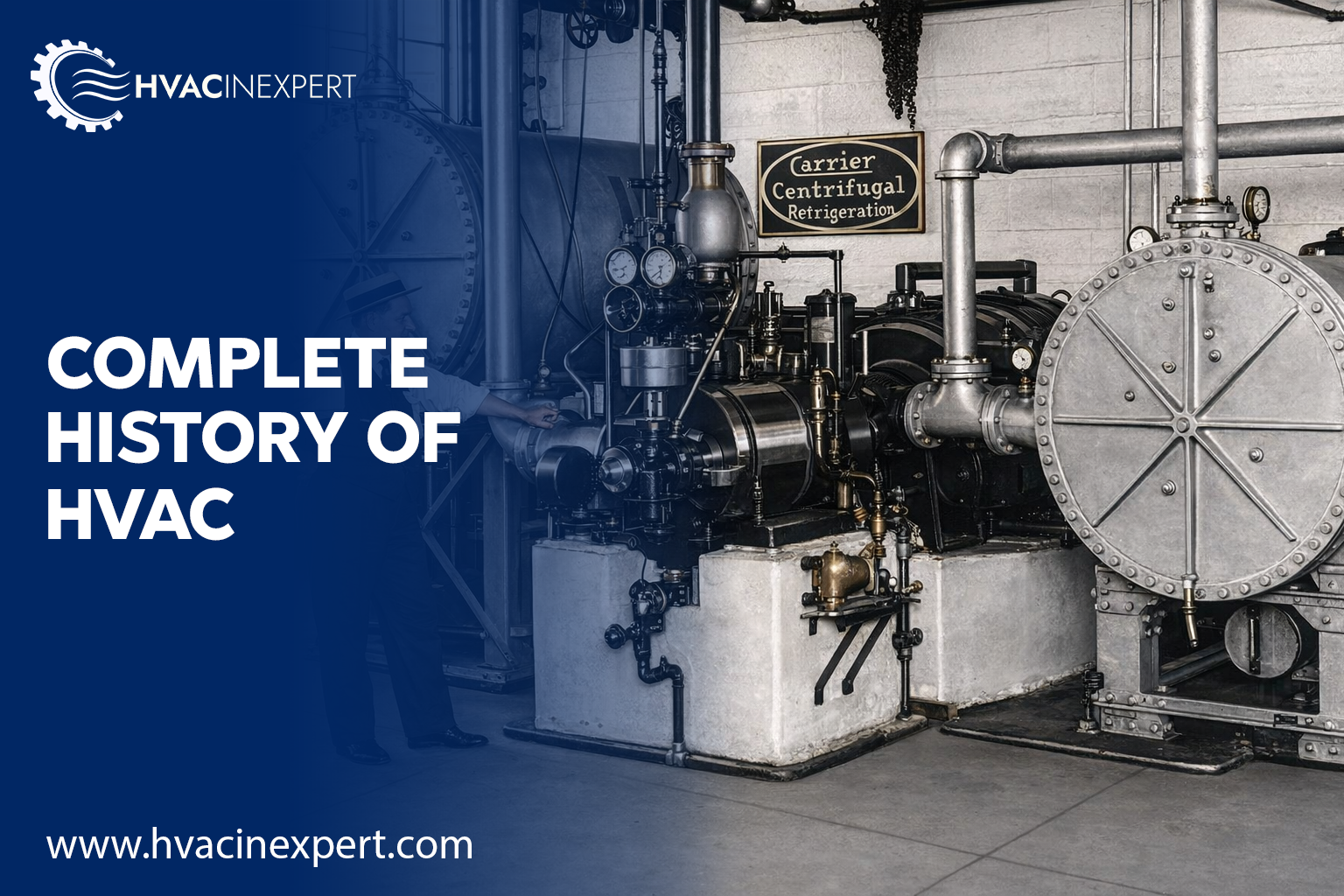
In 1902, Willis Carrier invented the first modern air conditioning system.
Purpose:
- Control humidity in a printing plant
How It Worked:
- Used coils filled with cold water
- Controlled temperature and humidity
This invention is considered the birth of modern HVAC.
Carrier’s Contributions
- Introduced psychrometric chart
- Developed humidity control systems
- Founded Carrier Engineering Corporation
Carrier is known as the father of air conditioning.
Expansion of HVAC Systems (1920–1950)
1. HVAC in Commercial Buildings
Air conditioning began to be used in:
- Movie theaters
- Department stores
- Offices
This increased comfort and business productivity.
2. Residential HVAC Systems
After World War II:
- HVAC systems became available for homes
- Window AC units became popular
3. Refrigerants Development
Early refrigerants were dangerous (ammonia, CO₂).
Later replaced by:
- CFCs (Chlorofluorocarbons)
- Safer and more efficient
Modern HVAC Development (1950–2000)
1. Central Air Conditioning
- Became standard in developed countries
- Used duct systems for air distribution
2. Energy Efficiency Focus
Due to the 1970s energy crisis:
- Development of energy-efficient systems
- Introduction of insulation and better controls
3. Introduction of Heat Pumps
Heat pumps revolutionized HVAC:
- Provide both heating and cooling
- Energy-efficient alternative to traditional systems
4. Computerized HVAC Controls
- Thermostats became digital
- Automation systems introduced
Environmental Awareness and HVAC (1990–2010)
1. Ozone Layer Protection
CFC refrigerants were banned due to environmental damage.
Replacements:
- HCFCs
- HFCs
- Natural refrigerants
2. Green Building Standards
- LEED certification introduced
- Energy-efficient HVAC systems required
3. Variable Refrigerant Flow (VRF) Systems
- Advanced HVAC technology
- Allows multiple indoor units
- Highly energy efficient
Smart HVAC Systems (2010–Present)
1. IoT Integration
Modern HVAC systems use:
- Sensors
- Internet connectivity
- Remote control via smartphones
2. Smart Thermostats
Examples:
- Learning thermostats
- AI-based temperature control
Benefits:
- Energy savings
- Improved comfort
3. Automation and AI
- Predictive maintenance
- Energy optimization
- Fault detection
4. Sustainable HVAC
Focus on:
- Solar-powered HVAC
- Geothermal systems
- Eco-friendly refrigerants (R-32, CO₂)
Future of HVAC Systems
The HVAC industry is evolving rapidly.
Key Trends
1. AI and Machine Learning
- Fully automated climate control
2. Net-Zero Buildings
- Zero energy consumption buildings
3. Advanced Refrigerants
- Low Global Warming Potential (GWP)
4. Smart Cities Integration
- Centralized HVAC management
Timeline of HVAC History
| Year | Event |
|---|---|
| 1000 BC | Ancient cooling systems |
| 100 AD | Roman hypocaust |
| 1800s | Steam heating systems |
| 1902 | First modern AC by Carrier |
| 1950s | Residential HVAC growth |
| 1970s | Energy efficiency focus |
| 1990s | Environmental regulations |
| 2010+ | Smart HVAC systems |
Importance of HVAC Evolution
Understanding HVAC history helps:
- Engineers design better systems
- Technicians improve troubleshooting
- Businesses adopt efficient solutions
Advantages of Modern HVAC Systems
- Energy efficiency
- Improved air quality
- Automation and control
- Cost savings
Challenges in HVAC Industry
- High energy consumption
- Environmental impact
- Maintenance costs
- Skilled labor shortage
Conclusion
The history of HVAC is a story of innovation, necessity, and technological advancement. From ancient cooling methods to AI-driven smart systems, HVAC has transformed how humans live and work.
As technology continues to evolve, the HVAC industry will play an even more critical role in sustainability, comfort, and energy efficiency.
FAQs
1. Who invented HVAC?
Willis Carrier invented modern air conditioning in 1902.
2. What was the first HVAC system?
The Roman hypocaust system is considered the first heating system.
3. When did HVAC become common in homes?
After World War II, HVAC systems became common in residential buildings.
4. What is the future of HVAC?
Smart, AI-based, and energy-efficient systems will dominate the future.
5. Why is HVAC important?
It provides comfort, improves air quality, and supports industrial processes.