VRF System Design for Large Buildings
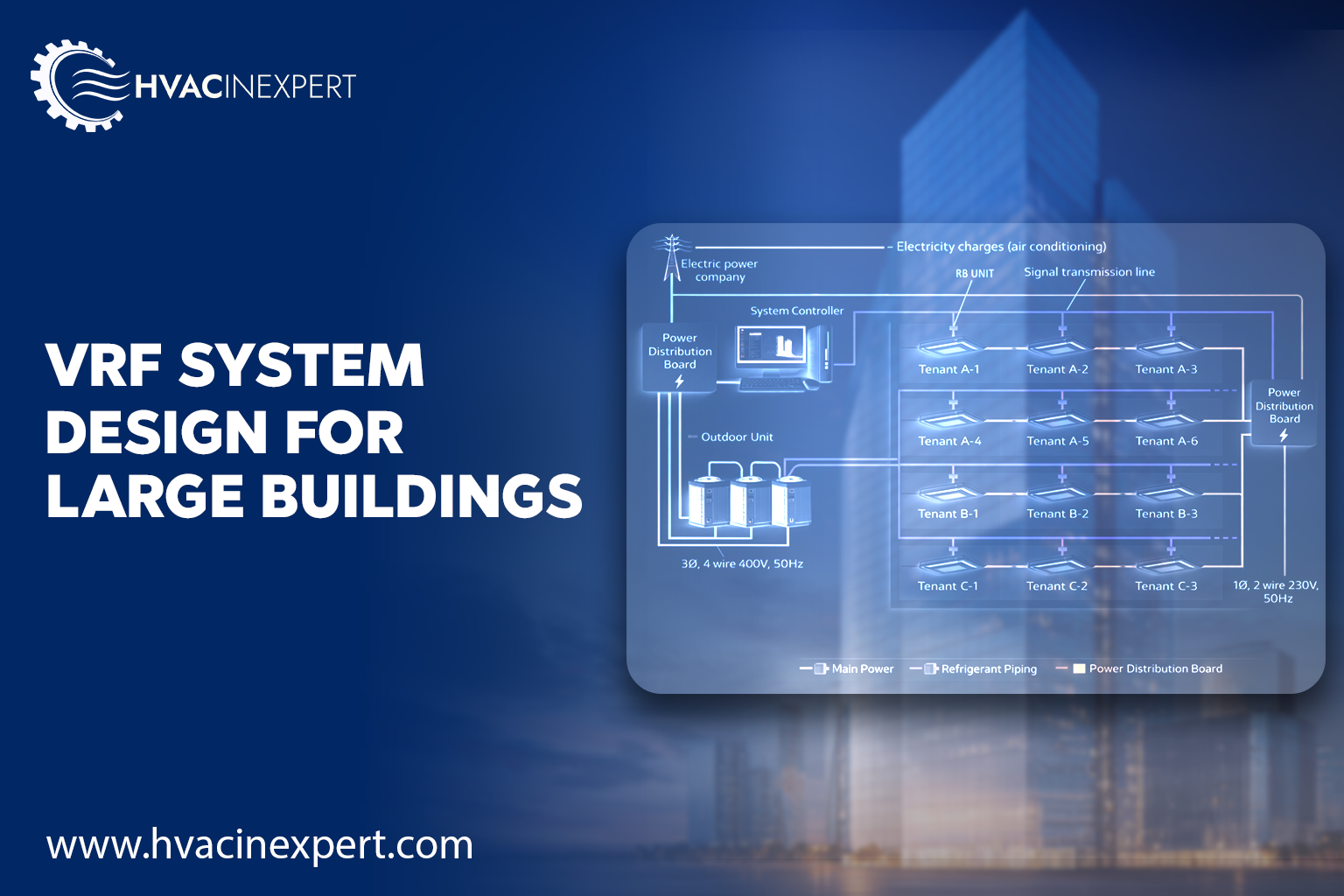
VRF System Design for Large Buildings: Complete HVAC Guide
Introduction
Designing HVAC systems for large buildings is a complex task that requires a balance between energy efficiency, comfort, scalability, and cost optimization.
Large buildings such as:
- Commercial complexes
- Office towers
- Hospitals
- Hotels
- Educational institutions
have diverse HVAC requirements due to varying occupancy patterns, usage zones, and operational hours.
This is where VRF (Variable Refrigerant Flow) systems stand out as one of the most efficient and flexible HVAC solutions.
In this ultimate guide, you’ll learn:
- Complete VRF design methodology
- Load calculation techniques
- Zoning strategies
- Piping and control design
- Cost analysis and ROI
- Real-world HVAC insights
What is a VRF System?
A VRF system is an advanced HVAC system that uses refrigerant as the cooling/heating medium and adjusts flow based on demand using inverter-driven compressors.
Key Features
- Variable speed compressor
- Simultaneous cooling & heating
- Multiple indoor units connected to one outdoor unit
- Intelligent control system
Why VRF is Ideal for Large Buildings
Large buildings have:
- Multiple zones
- Different load requirements
- Long operating hours
- High energy consumption
Advantages
1. Energy Efficiency
Saves 20–40% energy compared to traditional systems.
2. Flexibility
Easy to expand or modify.
3. Individual Zone Control
Each room/area can be controlled separately.
4. Space Saving
Minimal ductwork required.
5. Reduced Maintenance
Compared to chiller systems.
Types of VRF Systems
Heat Pump System
- Cooling OR heating
- Suitable for moderate buildings
Heat Recovery System
- Simultaneous heating & cooling
- Ideal for large buildings
Water-Cooled VRF
- Used in high-rise structures
Types of Large Buildings Covered
- IT offices
- Hospitals
- Universities
- Airports
- Shopping complexes
Step-by-Step VRF System Design
Step 1: Heat Load Calculation
The most critical part of HVAC design.
Factors
- Area
- Occupancy
- Lighting
- Equipment
- Orientation
- Ventilation
Approximate Load Values
| Area Type | Load |
|---|---|
| Office | 1 TR / 120 sq.ft |
| Hospital | 1 TR / 100 sq.ft |
| Conference Room | High load |
Step 2: Zoning Strategy
Best Practice
- Separate zones by usage
- Avoid mixing different load areas
Step 3: Indoor Unit Selection
Types
- Cassette
- Ducted
- Wall-mounted
Step 4: Outdoor Unit Design
Considerations
- Diversity factor
- Peak load
- Redundancy
Step 5: Refrigerant Piping Design
- Correct pipe sizing
- Oil return
- Length limits
Step 6: Control System
- BMS integration
- Central control
- Smart thermostats
Step 7: Ventilation Design
- FAHU
- ERV
System Layout Planning
- Outdoor unit placement
- Pipe routing
- Drainage
Energy Efficiency Optimization
- Inverter compressors
- Load-based operation
Cost Analysis
- High initial cost
- Low running cost
Common Mistakes
- Wrong load calculation
- Poor zoning
VRF vs Chiller
| Feature | VRF | Chiller |
|---|---|---|
| Flexibility | High | Low |
| Cost | Medium | High |
Advanced Design Concepts
Diversity Factor
Important in large buildings.
Simultaneous Load
Different zones have different loads.
Real Example
Total load = 200 TR
After diversity = 150 TR
Installation
- Leak testing
- Vacuuming
Maintenance
- Regular servicing
Latest Trends
- IoT HVAC
- AI control
FAQ – VRF System Design for Large Buildings
1. What is VRF system design for large buildings?
VRF system design for large buildings involves calculating total cooling and heating load, dividing the building into zones, selecting appropriate indoor and outdoor units, and designing refrigerant piping for efficient HVAC operation.
2. Is VRF suitable for large commercial buildings?
Yes, VRF systems are highly suitable for large commercial buildings such as offices, hospitals, and hotels due to their energy efficiency, flexibility, and ability to provide individual zone control.
3. How do you calculate VRF capacity for a large building?
VRF capacity is calculated by estimating the total heat load based on area, occupancy, lighting, and equipment load, then applying a diversity factor to determine the required outdoor unit capacity.
4. What are the advantages of VRF over chiller systems?
VRF systems offer better flexibility, lower installation complexity, and individual zone control, while chiller systems are more suitable for very large centralized cooling applications.
5. Does a VRF system provide fresh air in large buildings?
No, VRF systems do not provide fresh air. Separate ventilation systems such as Fresh Air Handling Units (FAHU) or Energy Recovery Ventilators (ERV) are required.
6. What is the lifespan of a VRF system in large buildings?
A properly installed and maintained VRF system typically lasts 12–18 years, depending on usage, maintenance, and operating conditions.
Conclusion
VRF systems provide:
- Efficiency
- Flexibility
- Comfort
Professional VRF System Design Consultancy for large buildings
We offer complete HVAC design solutions including load calculation, zoning, piping design and equipment selection.
Our expert team ensures energy-efficient, cost-effective and reliable VRF systems for your hotel projects.
Contact us today for expert consultation.
 Call: +91 9825636606
 Email: vipulaircondition@gmail.com
 Visit: www.vipulac.in